Crochet Drawstring Bag Pattern: 9 Step-by-Step Tips (with PDF)
Quick Info: This post contains a crochet drawstring bag pattern with step-by-step instructions and a printable PDF. All measurements are in both inches and centimeters. Yarn amounts are approximate — always buy an extra skein to be safe!
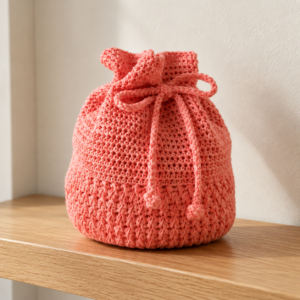
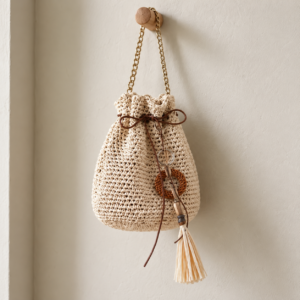
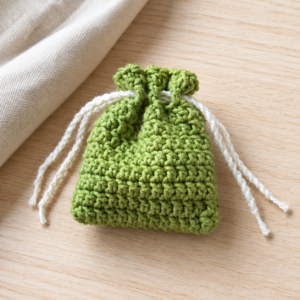
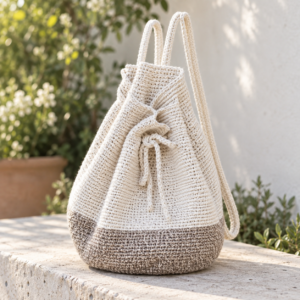
This crochet drawstring bag pattern is the perfect bohemian-inspired project for intermediate crocheters looking to create a stylish, functional accessory. The bag features two rectangular single crochet panels, a reinforced base with built-in handles, and decorative i-cord ties that cinch the bag into a gorgeous gathered silhouette. Whether you are heading to the farmer’s market, the beach, or just out for a casual day, this bag is as practical as it is beautiful. In this detailed pattern, we walk you through every step from start to finish, including gauge swatching, panel construction, i-cord making, handle shaping, and final assembly.

If you are new to crochet, you might want to brush up on the basics first. Check out our guide on how to crochet for beginners and our how to single crochet tutorial before diving in. For more bag inspiration, our easy crochet bag pattern for beginners is another great project to try.
KnotToYarn
Subscribe to KnotToYarn!
Get the best free crochet patterns, tutorials & tips delivered straight to your inbox. Join our growing community!
Crochet Drawstring Bag Pattern Overview
This intermediate-level crochet drawstring bag pattern uses only single crochet stitches, making it an excellent project for crocheters who are comfortable with the basics but want to try a multi-piece construction. The finished bag measures approximately 30 cm wide by 38 cm tall (12 in by 15 in), with a 40 cm (16 in) base and handles that can be customized to your preferred length. The i-cord ties cinch the bag into a beautiful gathered shape, giving it that signature boho-chic look.

Unlike many bag patterns that are worked in the round, this drawstring bag is constructed from flat pieces — two rectangular panels, a base strip, and two i-cord ties — which are then assembled using single crochet seams. This flat-piece construction method is ideal for crocheters who prefer working row by row rather than in continuous rounds. If you struggle with tension, our guide on how to fix crochet tension will help you achieve consistent results across all pieces.
Materials and Yarn for Your Crochet Drawstring Bag
Yarn Choice
This crochet drawstring bag pattern works best with DK weight (Light Worsted, Category 3) yarn. The original bag was made with approximately 600-900 yards of hand-dyed wool, which gives a luxurious, artisanal drape. However, budget-friendly acrylic or cotton also work beautifully. Wool creates a softer, drapier bag, while acrylic produces a sturdier, more structured finish. Cotton is ideal for summer use because it holds its shape well and produces crisp stitch definition.
For help choosing the right yarn for your projects, check out our best yarn for beginner crochet guide. If you want to explore different yarn weights for future projects, our crochet hook size chart will help you match hooks to yarn weights.
Hooks and Notions
You will need a 4.5 mm (US 7) crochet hook as your main hook. If your gauge swatch does not match the target measurements, adjust up or down one hook size. A tighter tension produces a denser, sturdier fabric that is ideal for bags. Our best crochet hooks for beginners guide covers hook materials, ergonomic options, and price ranges if you need a new hook.
Additional notions you will need include at least 4 stitch markers for marking tie placement and handle joins, a tapestry needle for weaving in ends and sewing i-cord through panels, scissors for cutting yarn, a measuring tape for checking dimensions, and optionally a blocking mat with pins. If you want to understand different hook sizing systems, our crochet hook sizes post breaks down metric, US, and UK sizing.
Gauge Swatch for Your Crochet Drawstring Bag
Before beginning, work a gauge swatch to ensure your pieces will match the intended finished size. Create a small swatch of approximately 20 single crochet by 20 rows using your chosen yarn and 4.5 mm hook, then measure flat without stretching.
Target gauge: 15 single crochet = 10 cm (4 in) wide, 20 rows = 10 cm (4 in) tall.
If your gauge is too tight (more stitches per 10 cm), go up a hook size. If too loose (fewer stitches per 10 cm), go down a hook size. Since this bag is constructed from separate pieces that must align during assembly, consistent gauge across all pieces is critical. If you are new to gauge swatching, our how to read a crochet pattern guide explains why gauge matters and how to measure it properly.
Part 1: Front and Back Panels
Foundation Row
Make a slip knot and place it on your hook. Chain 46 stitches. Skip the first chain from the hook (this is your turning chain). Insert your hook into the 2nd chain, yarn over, pull up a loop, yarn over, pull through 2 loops — this completes your first single crochet. Continue making 1 sc in each chain across until you reach the end. You should have 45 single crochets total in Row 1. For a detailed single crochet refresher, see our single crochet stitch tutorial.
Repeat Rows
Chain 1 and turn your work. This chain-1 does not count as a stitch; it simply brings you up to the height for the next row. Starting from the first stitch, make 1 sc in each stitch across the entire row. You will again have 45 sc. Repeat this row until you have completed a total of 76 rows (including Row 1). The panel should measure approximately 30 cm wide by 38 cm tall (12 in by 15 in) when laid flat. If your edges are looking uneven, our why are my crochet edges uneven post has troubleshooting tips.
Finishing the Panel
After completing Row 76, chain 1, cut the yarn, and pull it through the loop to secure. Thread the tail onto your tapestry needle and weave it into the wrong side of the fabric, going under several stitches in one direction then reversing. Repeat at least twice to ensure the tail is fully secure. Make a second identical panel using the exact same steps. You now have a front panel and a back panel.
Part 2: I-Cord Ties for the Crochet Drawstring Bag
Making the I-Cord
The decorative i-cord ties are what give this bag its signature gathered drawstring look. You need two i-cords, each measuring 85-90 cm (33-35 inches). Cut approximately 3 meters of yarn for each cord. Make a slip knot with the tail end, hold the tail in your non-hook hand, wrap the tail around your hook from front to back, yarn over with the working yarn, and pull through both loops. Repeat until your i-cord measures 85-90 cm.

Once you reach the desired length, cut both the tail and working yarn, yarn over, and pull through both loops to secure. Thread both tails onto your tapestry needle and insert them back into the i-cord itself to bury the ends. If you want to learn about other cord techniques, check out our slip stitch crochet guide.
Marking and Weaving the I-Cord
Lay your completed panel flat with the wrong side facing up. Count 38 rows from the bottom to find the middle row. From the middle, count 5 rows up and 5 rows down. On each of those rows, place stitch markers 10 stitches from each edge. You will have 4 markers forming a U-shape. Weave the i-cord from the top-left marker down to the bottom-left, across to the bottom-right, then up to the top-right marker. Do not pull tight — leave it slightly loose until the bag is fully assembled. Repeat for the second panel.
Part 3: Base with Built-In Handles
Base Strip
Chain 61, skip the first chain, and work 1 sc in each of the remaining 60 chains (60 sc total). Chain 1, turn, and repeat for 12 rows total. The base strip should measure approximately 40 cm wide by 8 cm tall (16 in by 3 in).
Handle Foundation and Crease
After Row 12, work along one short side of the base — 12 sc per row (one per base row). Work 4 foundation rows of 12 sc each to establish the handle width. Then create a decorative crease by decreasing: alternate 4 plain rows with 1 decrease row (sc2tog near center), reducing from 12 sc to 8 sc over approximately 20 rows.
Handle Extension
Once at 8 stitches, work 8 sc per row for approximately 78 rows (or until the handle extends 15-20 cm above the panel top). Repeat on the opposite short side of the base. Join both handle ends together using a back-loop/front-loop slip stitch join across all 8 stitches for a nearly invisible seam.
Part 4: Assembly and Finishing
Joining Panels to Base
Lay the base piece flat with handles extending upward. Place one panel right-side-down on top of the base, aligning the bottom edge with the base. Place stitch markers at the corners and where the panels meet the handles. Work 1 sc through both layers, moving down one side (~45 sc), across the base bottom (60 sc), and up the other side (~45 sc).

For more tips on making your projects look polished, our crochet tips for better projects covers 15 small fixes that make a big difference.
Reinforcing Handles
Work an additional round of single crochet along the outer edge of each handle to prevent stretching when the bag is loaded. This reinforcement row is what makes the handles durable enough for everyday use.
Cinching the Bag
Hold the bag right-side facing you. Find the two i-cord tails on one side and gently pull both simultaneously, helping the fabric gather into even, soft folds. Once happy with the gathering, tie into a bow. Repeat on the other side.
Crochet Drawstring Bag Finished Measurements
| Measurement | Value |
|—|—|
| Panel Width | 45 sc wide (approx. 30 cm / 12 in) |
| Panel Height | 76 rows (approx. 38 cm / 15 in) |
| Base Width | 60 sc (approx. 40 cm / 16 in) |
| Bag Depth | 12 rows (approx. 8 cm / 3 in) |
| Handle Length | Approx. 25-30 cm above base (adjustable) |
| I-Cord Length | 85-90 cm / 33-35 in each |
Tips for Customizing Your Crochet Drawstring Bag
Color Play
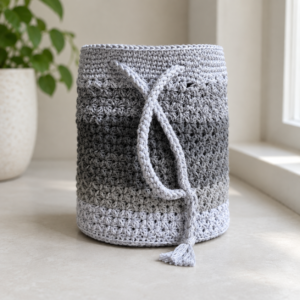
This pattern looks stunning in multiple color combinations. Try a contrasting base color, striped panels by changing colors every 10-12 rows, or a gradient effect. The i-cord ties can also be made in a contrasting color for a pop of visual interest.
Handle Length
The 78-row extension is a guideline. For a shorter tote, use 40-50 rows. For a shoulder bag, use 80-100 rows. Always check the length against your panels before fastening off. If you want to try other projects, our easiest crochet projects for beginners has more ideas.
Optional Lining
For a polished finish, sew a fabric lining inside the bag. Cut fabric rectangles slightly smaller than your panels, sew them together along the sides and bottom, then hand-stitch the lining to the top edge. A lining prevents small items from slipping through the stitches and adds structure.
KnotToYarn
Subscribe to KnotToYarn!
Get the best free crochet patterns, tutorials & tips delivered straight to your inbox. Join our growing community!
Stitch Abbreviations Used in This Pattern
If you are unfamiliar with any abbreviations, our crochet abbreviations guide explains the most common ones in detail.
| Abbreviation | Meaning |
|—|—|
| ch | chain |
| sc | single crochet |
| sl st | slip stitch |
| st(s) | stitch(es) |
| pm / sm | place marker / slip marker |
| dec | decrease (sc2tog) |
| RS / WS | right side / wrong side |
| BLO / FLO | back loop only / front loop only |
| yo | yarn over |
| I-cord | idiot cord (crocheted cord) |
More Crochet Patterns to Try
If you enjoyed this crochet drawstring bag pattern, here are more projects you will love:
- Easy Beanie Crochet Pattern: 7 Beginner Steps
- Crochet Sweater Pattern: 8 Easy Fit Tips for Beginners
- Rose Blanket Crochet Pattern (Free PDF)
- Blissful Hair Towel Crochet Pattern
- Solid Granny Square Pattern (Beginner PDF)
- Magic Circle Crochet Guide (Free PDF)
- Crochet Scarf Patterns for Beginners: 9 Easy, Cozy Picks
- How to Crochet a Hat: 5 Easy Steps for Beginners
- How to Crochet a Blanket: 7 Easy Steps for Beginners
For garment projects, check out our hexagon cardigan crochet and crochet scarf patterns posts.
Frequently Asked Questions
How long does it take to make this crochet drawstring bag?
For an intermediate crocheter working at a steady pace, this drawstring bag typically takes 8-12 hours total. The panels are the most time-consuming part (approximately 3-4 hours each), while the i-cord ties, base, and handle construction take 1-2 hours each. The assembly and finishing steps are relatively quick at under an hour. Of course, your individual speed may vary depending on your experience level and how many hours per day you dedicate to the project.
Can I use a different yarn weight for this drawstring bag pattern?
While DK weight yarn is recommended for the best proportions, you can substitute with other weights by adjusting your hook size. If using worsted weight (Category 4), try a 5.0 mm hook. For sport weight (Category 2), try a 4.0 mm hook. Keep in mind that changing yarn weight will affect the finished size, so always work a gauge swatch first and recalculate your stitch counts accordingly. Our single crochet vs double crochet guide explains how different stitches affect fabric density.
Is this crochet drawstring bag suitable for beginners?
This pattern is rated intermediate because it involves multi-piece construction, i-cord creation, and systematic decreasing for the handle crease. However, confident beginners who have completed a few projects can absolutely tackle it. If you have mastered the single crochet stitch and can maintain consistent tension, you have the skills needed. We recommend reading through the entire pattern before starting so you understand the full construction process.
How do I care for my finished drawstring bag?
Care depends on your yarn choice. For wool bags, hand wash in cool water with gentle wool soap and lay flat to dry. For acrylic bags, machine wash on a gentle cycle and tumble dry on low. For cotton bags, machine wash on cold and lay flat to dry to prevent shrinking. Always check your yarn label for specific care instructions. If your bag needs reshaping, lightly mist with water and block to the correct dimensions.
Can I sell bags made from this crochet drawstring bag pattern?
This is an original KnotToYarn design. Please credit KnotToYarn when sharing finished items online. For commercial use (selling finished bags at craft fairs, Etsy, etc.), please check the specific license terms on the pattern page. Credit is always appreciated and helps support future pattern development.
What if my gauge does not match the pattern?
If your gauge swatch has more stitches per 10 cm than the target, your tension is too tight — switch to a larger hook. If you have fewer stitches per 10 cm, your tension is too loose — switch to a smaller hook. For detailed troubleshooting, our how to fix crochet tension guide covers common causes and solutions for tension issues.

Get the complete printable PDF with all diagrams, step-by-step instructions, and measurement tables. Ravelry link coming soon!