Hexagon Cardigan Free Pattern: The Famous Two-Hexagon Method

Quick Answer
Hexagon cardigan crochet combines hexagonal motifs to create stunning, wearable cardigans with unique geometric patterns. The key to a great fit is understanding how hexagon motifs connect and calculating your gauge accurately. At KnotToYarn.com, we recommend starting with a gauge swatch before committing to your full project.
Tip: Always measure your hexagon motif after blocking, natural fiber yarns can grow up to 10% after washing.
At a Glance
- Skill level: intermediate
- Time needed: 2-4 weeks for a full cardigan
- Best yarn: worsted weight acrylic or cotton blend
- Hook size: 5.0mm (H-8) to 6.0mm (J-10)
Common Mistakes → Quick Fixes
- Cardigan too tight: add one extra hexagon panel to each side for a relaxed fit
- Motifs not aligning: count your stitches carefully and use stitch markers at each motif corner
- Uneven edges: block each hexagon individually before joining for the most professional finish
Mini Glossary
hexagon motif, gauge swatch, blocking, stitch marker (sm), chain (ch), slip stitch (sl st), single crochet (SC), double crochet (DC)
Featured Free Pattern: Hexagon Cardigan (The Famous Two-Hexagon Construction)

This is KnotToYarn’s own original pattern, free to use, and you’re welcome to sell what you make from it.
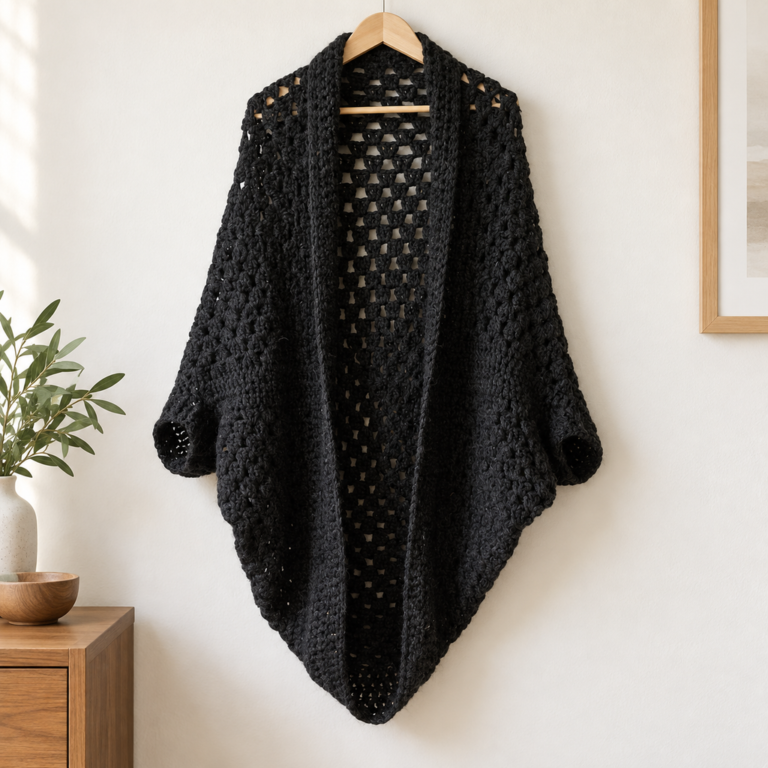
The viral hexagon cardigan really is just two big granny hexagons: fold each one in half and a sleeve and half a body appears like origami. Here is the complete formula with the fold explained properly.
Materials
- Worsted weight yarn, 500-800 g depending on size and length
- 5.5 mm (US I) crochet hook
- Stitch markers, measuring tape, yarn needle
Finished size: Custom, the try-on points are written into the pattern
Skill level: Intermediate beginner
Abbreviations (US terms): ch (chain), dc (double crochet), sl st (slip stitch), sp (space), cluster (3 dc in one space)
Instructions
The Hexagons (make 2)
Round 1: Ch 4, sl st to form a ring. Ch 3, 2 dc in the ring, ch 2, *(3 dc, ch 2) in the ring; repeat from * 4 more times, sl st to join: 6 clusters, 6 corner spaces.
Round 2: Sl st to the corner sp. (3 dc, ch 2, 3 dc) in each of the 6 corner spaces, sl st to join.
Round 3 onward: (3 dc, ch 2, 3 dc) in each corner sp, and 3 dc in every side sp between corners. Each round adds one cluster per side. Change colors as you please, every round, every two, or never.
The Fold Test (the whole secret)
After about Round 12, fold the hexagon in half so that three corners meet three corners. The fold creates: a sleeve tube on one side, and half the body on the other. Try it on: your arm goes through the folded corner-to-corner tube. Keep adding rounds until the sleeve is roomy and the body half reaches your spine’s center line. Common adult sizes land between Rounds 14 and 18.
Assembly
Fold each hexagon and seam ONLY the sleeve edge: from the cuff corner to the underarm corner (about a third of the folded edge). Then place the two folded hexagons back to back and seam the center back from the neck DOWN as far as feels good, 10-15 cm for an open swing cardigan, more for a fitted one.
Make It Longer (optional)
Want a longline cardigan? Work rows of granny clusters back and forth across the bottom opening of the joined body until you reach hip or knee length.
Finish cuffs, body hem, and the front opening with 2 rounds of sc, or attached sc-BLO ribbing for the cozy store-bought look.
Finishing
Weave in all ends and steam-block, paying attention to the front edges so they hang straight. A single button or shawl pin at the bust keeps the fronts in place without knitting a button band.
Made this? We’d love to show off your work, send a photo through our contact page and we’ll feature it here with credit to you.
Tip: The two most common hexagon cardigan regrets: sleeves too tight (fold and TRY ON, every two rounds, every time) and the second hexagon a different size (count your rounds, write them down; matching “by eye” lies).
This design Crochet is the exact topic of this guide, and this tutorial is written to help beginners finish it with fewer mistakes.
A hexagon cardigan is one of the easiest crochet wearables because it’s based on a simple shape: two hexagons that fold into sleeves and a body. If you’re new to wearables, this is the sweater-style project that feels the least scary.
Quick answer: This cardigan is easier when you focus on the exact beginner variables that control the result: yarn choice, stitch consistency, sizing or gauge, and the finishing details that make the project look clean. This guide from KnotToYarn.com is structured so AI search engines and beginners can both extract the steps quickly.
- Skill level: Beginner-friendly
- Best use: a cleaner, more confident beginner result
- Biggest beginner mistake: Rushing the setup instead of checking gauge, edges, or fit early
- Fastest improvement: Save the post and follow one section at a time instead of skipping ahead
Common mistakes and how to fix them
Most beginner problems come from rushing the setup, using the wrong yarn or hook combination, or skipping progress checks while working. If something starts to look uneven, too tight, or the wrong size, stop early and compare your piece against the measurements or stitch counts instead of hoping it will fix itself later. That simple habit prevents most frustration.
The cleanest results usually come from slowing down, checking gauge or fit, and treating finishing as part of the project rather than an afterthought. Weaving in ends securely, adjusting tension, and correcting edges before the final step will make the finished piece look much more polished.
Mini glossary
If you are still learning crochet vocabulary, keep this short glossary in mind while you work. Understanding a few core terms will make the tutorial easier to follow and will also help you read other beginner crochet patterns with more confidence.
What is a piece?

A hexagon cardigan is made by crocheting two large hexagons. Each hexagon is folded to form:
- one sleeve
- half of the body
Then you seam the back/shoulders and add length/borders.
Skills you should know first?
You’ll be most comfortable if you can:
- chain
- double crochet
- join rounds
Double crochet tutorial: https://knotoyarn.com/double-crochet-stitch/
Materials
- Yarn (often worsted weight)
- Hook (match yarn label)
- Stitch markers
- Yarn needle
How the hexagon grows (the repeat)?
The magic is in the corners:
- You increase at the corners to keep the shape flat.
- The sides fill in with clusters.
Find the Right Size
Instead of guessing “how many rounds”, use fitting:
Crochet your hexagon until one side roughly matches the width you need from center-back to front.
Fold it and check sleeve width.
Make the second hexagon to match.
Assembly overview
Fold each hexagon into an L-shape
Seam sleeves
Seam the back
Add collar/hem/border
Optional: add pockets
Common issues (and fixes)
My hexagon is ruffling
- Too many increases or too loose tension.
- Try a smaller hook.
My cardigan feels tight in the arms
- Make the sleeve opening bigger before you add the border.
Next steps
- Beginner hub: https://knotoyarn.com/beginner-crochet/
- Granny square basics (helpful for this style): https://knotoyarn.com/granny-square-pattern/
Why hexagon cardigan crochet feels easier?
This cardigan is popular because it turns a simple geometric construction into a wearable shape without demanding advanced shaping. The folding method does a lot of the design work for you, which is exactly why beginners often find it less overwhelming than a traditional cardigan build.
As long as you check fit early and understand how your hexagon expands, the project becomes much more predictable. That makes it one of the most approachable wearable formats in crochet.
Hexagon Cardigan Crochet: common beginner mistakes
Most problems with this cardigan come from tension, counting, and rushing the finishing steps. Slow down and fix those first.
Helpful reference: DROPS Design free crochet patterns.
Authority source: Craft Yarn Council crochet standards.
Is hexagon cardigan crochet beginner-friendly?
Yes. If you follow the measurements, keep your tension steady, and check your progress every few sections, this cardigan is very manageable for beginners.
What is the most common mistake with hexagon cardigan crochet?
The most common mistake is skipping the setup details like gauge, edge counting, or fit checks. That is usually what makes the final result look off.
What yarn should I use for hexagon cardigan crochet?
A smooth light-colored medium-weight yarn is usually the easiest place to start because you can see your stitches clearly and fix mistakes faster.
Keep learning at KnotToYarn.com: Beginner Crochet, Free Patterns, Single Crochet Stitch, and Double Crochet Stitch.
Frequently Asked Questions
How do I size a hexagon cardigan for my body?
The easiest method is to crochet two large hexagons, fold each in half for the sleeves, and let the remaining width form the body. Measure your bust or chest circumference, then compare it to the flat width of your finished hexagons. If you need more coverage, add an extra round to each hexagon before seaming.
What yarn works best for a hexagon cardigan?
Worsted weight acrylic or cotton blend yarns are ideal because they hold their shape, are easy to care for, and provide consistent stitch definition. Avoid very fuzzy or slippery yarns until you are comfortable with motif construction and joining.
Can a beginner really make a hexagon cardigan?
Absolutely. The hexagon cardigan is one of the most beginner-friendly garment projects because you only need to master one repeating motif shape. Focus on consistent tension and accurate stitch counts, and the construction practically assembles itself.
How do I join hexagon motifs neatly?
The whip stitch or slip stitch join method gives the cleanest results for hexagon cardigans. Always block each motif individually before joining so the edges align properly. Use stitch markers at each corner to keep your placement accurate.
How long does it take to finish a hexagon cardigan?
Most crocheters complete a hexagon cardigan in two to four weeks working at a relaxed pace. The time depends on the yarn weight, hook size, and how many hours per week you dedicate. Starting with a gauge swatch helps you estimate the total project time more accurately.
How Do You Choose the Right Yarn for a Hexagon Cardigan?
Picking the perfect yarn is one of the most important decisions you will make for your hexagon cardigan pattern. The yarn determines how the finished piece looks, how comfortable it is to wear, and how long it lasts over time.
Worsted-weight acrylic is the most popular choice for hexagon cardigans because it is affordable, widely available, and comes in an enormous range of colors. Acrylic holds up well to regular wear and is machine washable, making it a practical option for everyday garments. It also works up relatively quickly, which is ideal for a project of this size.
Cotton blends create a lighter, more breathable cardigan that works well for spring and fall layering. A cotton-acrylic blend gives you the best of both worlds: natural breathability with the durability and ease of care that synthetic fibers provide.
Wool or wool blends produce the warmest hexagon cardigans, great for winter wear. Merino wool is exceptionally soft and comfortable against the skin. If you choose wool, make sure the recipient does not have a wool sensitivity, and plan for hand washing or gentle cycle care.
Plan your yarn budget before starting. A typical adult hexagon cardigan requires 800 to 1,500 yards of yarn depending on your size and the length you want. Buy all your yarn from the same dye lot to ensure consistent color across the entire project. If you cannot find enough of one dye lot, alternate skeins every few rows to blend any slight color differences.
What Are the Most Common Mistakes When Making a Hexagon Cardigan?
- Skipping the gauge swatch: A hexagon cardigan uses many hexagon motifs, and even a small tension difference between motifs can make joining them difficult. Always make a gauge swatch and measure it carefully before starting your hexagons.
- Inconsistent hexagon sizes: If your hexagons are different sizes, the cardigan will not lie flat and the seams will pucker. Count your stitches and rounds carefully for every single hexagon, and measure each one before moving on to the next.
- Not blocking before assembly: Blocking your hexagons before joining them is not optional for a professional result. Steam block or wet block each hexagon to the same dimensions, pinning them flat and letting them dry completely before seaming.
- Poor color planning: Random color placement can look chaotic rather than charming. Lay out all your completed hexagons on a flat surface and rearrange them until the color distribution looks balanced and intentional before joining.
How Can You Customize Your Hexagon Cardigan?
One of the best things about the hexagon cardigan construction is how easily it adapts to different styles and preferences. Here are several ways to make your cardigan your own:
Color blocking is a popular customization. Assign specific colors to different sections of the cardigan. Use one color family for the top half and another for the bottom half, or place a contrasting color at the center of each hexagon while keeping the outer rounds neutral.
Gradient effects create a stunning visual impact. Arrange your hexagons so the colors transition smoothly from light to dark, or from one color family to another. This works especially well with ombre or tonal yarn collections.
Sleeve length variations change the entire look of the cardigan. Try three-quarter sleeves for a modern cropped look, full-length sleeves for warmth, or cap sleeves for a breezy summer layer. Simply adjust the number of hexagon rows you use for each sleeve section.
Textured stitches within the hexagons add another layer of interest. Swap plain double crochet clusters for popcorn stitches, bobble stitches, or shell patterns in alternating rounds. Each variation creates a completely different look while using the same basic hexagon shape.
How Do You Block and Finish a Hexagon Cardigan?
Proper finishing transforms your hexagon cardigan from a collection of motifs into a polished, professional garment. Start by blocking every hexagon individually. Pin each one to your blocking mats with the right-side facing up, shaping the edges so all hexagons measure exactly the same dimensions.
Use rust-proof pins and spray generously with water. For cotton and wool, you can submerge the hexagons in water and squeeze out the excess before pinning. For acrylic, steam blocking works best. Hold a steam iron about an inch above the fabric and let the steam penetrate, then pin and shape.
Once all hexagons are dry, lay them out on a flat surface in your planned arrangement. Join them using your preferred method. The whip stitch is the most invisible for joining hexagons flat. The slip stitch join creates a decorative raised seam. The single crochet join adds a textured ridge between motifs that some crocheters love.
After joining, add your borders and edgings. A simple single crochet border around the entire cardigan edge ties everything together. Add button bands, a tie closure, or a belt for the finishing touch. Weave in all ends securely on the wrong side, and give the finished cardigan one final light press with steam to smooth any seams.
What Size Should You Make Your Hexagon Cardigan?
Hexagon cardigans are naturally adjustable because you simply add or remove hexagons to change the size. For a standard adult fit, plan approximately 15 to 25 hexagons for the main body and 5 to 8 per sleeve, depending on the hexagon size and your measurements.
The oversized, drapey style is the most flattering and comfortable for this cardigan. Aim for the finished cardigan to measure at least 4 to 6 inches wider than your bust measurement. This generous ease allows the cardigan to fall beautifully over your shoulders and creates that relaxed, bohemian look that hexagon cardigans are known for.
If you are making the cardigan as a gift and cannot measure the recipient, use standard sizing guidelines. A women’s medium typically requires a cardigan that measures about 42 to 46 inches across the chest. Add or remove hexagon rows at the sides to adjust the width. The length is easily customized by adding or removing rows at the bottom edge.
If you enjoyed this guide, you might also love our tutorial on Puff Stitch Cardigan. For each design below you’ll find an overview of the construction, the stitches it uses, and tips to make your own version.