Why Are My Crochet Edges Uneven? 7 Beginner Fixes That Work
Quick Answer
Why Are My Crochet Edges Uneven: Crochet edges become uneven when you accidentally add or skip stitches, have inconsistent tension, or miscount the turning chain. The fix is usually as simple as counting stitches at the end of every row and using a stitch marker. Tip: Place a stitch marker in the first and last stitch of every row to prevent accidental increases or decreases.
At a Glance
- Skill level: Beginner-friendly
- Time needed: 15-30 minutes to diagnose and adjust
- Best yarn: Same yarn as your project
- Hook size: Same hook as your project (or one size up if tension is too tight)
Common Mistakes → Quick Fixes
- Not counting stitches at the end of each row: Make it a habit to count your stitches after every row before turning.
- Forgetting the turning chain counts as a stitch: Check your pattern, some patterns count the turning chain as the first stitch and others do not.
Mini Glossary
TCH: turning chain; ST: stitch; INC: increase; DEC: decrease.
Uneven crochet edges are one of the most common frustrations for beginners, and the good news is that almost every cause has a simple fix. When one side of your work grows wider than the other, or the sides ripple in and out, it usually comes down to a handful of small habits, accidentally adding or dropping stitches, misjudging the turning chain, or letting your tension drift as you tire. Below are seven practical fixes you can apply right now, starting with the one that solves the problem for most people.

Why Crochet Edges Get Uneven
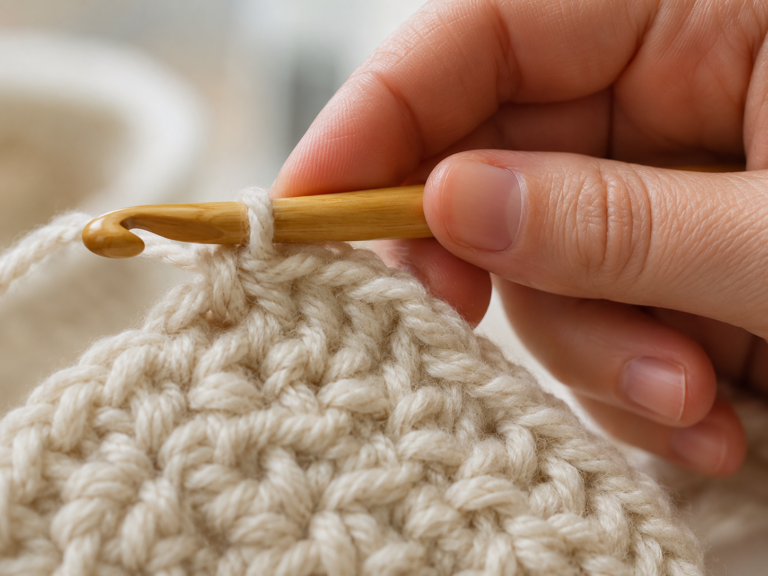
Straight edges depend on having the exact same number of stitches in every row. If even one stitch sneaks in or goes missing each row, the error stacks up and the edge slants or waves. The three usual culprits are missed or extra stitches (most often at the very beginning or end of a row), inconsistent tension between rows, and confusion over whether the turning chain should be counted as the first stitch. The fixes below target each of these directly.
7 Fixes for Uneven Crochet Edges
1. Count your stitches at the end of every row
This single habit fixes most uneven edges. Before you turn your work, count the stitches in the row you just finished and compare it to your starting count. Catching a missed or extra stitch immediately means you only have to rip back one row instead of discovering the problem ten rows later. It feels tedious at first, but after a few projects you will count almost without thinking.
2. Know whether your turning chain counts as a stitch
This is the number-one source of edge confusion. In many patterns the turning chain (for example, chaining 3 at the start of a double crochet row) stands in for the first stitch, so you skip the first actual stitch and work your last stitch into the top of the previous row’s turning chain. In other patterns the turning chain does not count, and you work into the very first stitch. Pick one method, follow it consistently for the whole project, and your edges will stay even.
3. Mark your first and last stitches

Slip a removable stitch marker into the first and last stitch of each row. The markers make it obvious where each row begins and ends, so you never accidentally crochet two stitches into the same place or skip the final one. This is especially helpful when you are working in a stitch pattern where the ends are hard to read.
4. Work the last stitch into the correct place
The end of the row is where extra and missing stitches hide. If your turning chain counts as a stitch, the very last stitch of each row goes into the top of the previous turning chain, a spot beginners often miss, which makes the work narrower over time. If you are gaining width instead, you are probably working both into the turning chain and into the stitch beside it. Slow down on the last two stitches of every row until it becomes automatic.
5. Keep your tension consistent
Tension that tightens when you concentrate and loosens when you relax will make the sides ripple even when your stitch count is perfect. Hold the yarn the same way every time, take breaks before your hands get tired, and try to crochet in similar-length sessions rather than a few stitches here and there. A consistent rhythm produces consistent stitch size, which produces straight edges.
6. Match your hook to your yarn
A hook that is too small for your yarn drags and encourages tight, uneven stitches; a hook that is too large makes loose, floppy edges that are hard to keep straight. Start with the hook size printed on your yarn label, then go up one size if your work feels stiff or down one size if it feels gappy. For a full reference, the Craft Yarn Council yarn weight system matches hooks to every common yarn weight.
7. Add a border to even out the finished piece

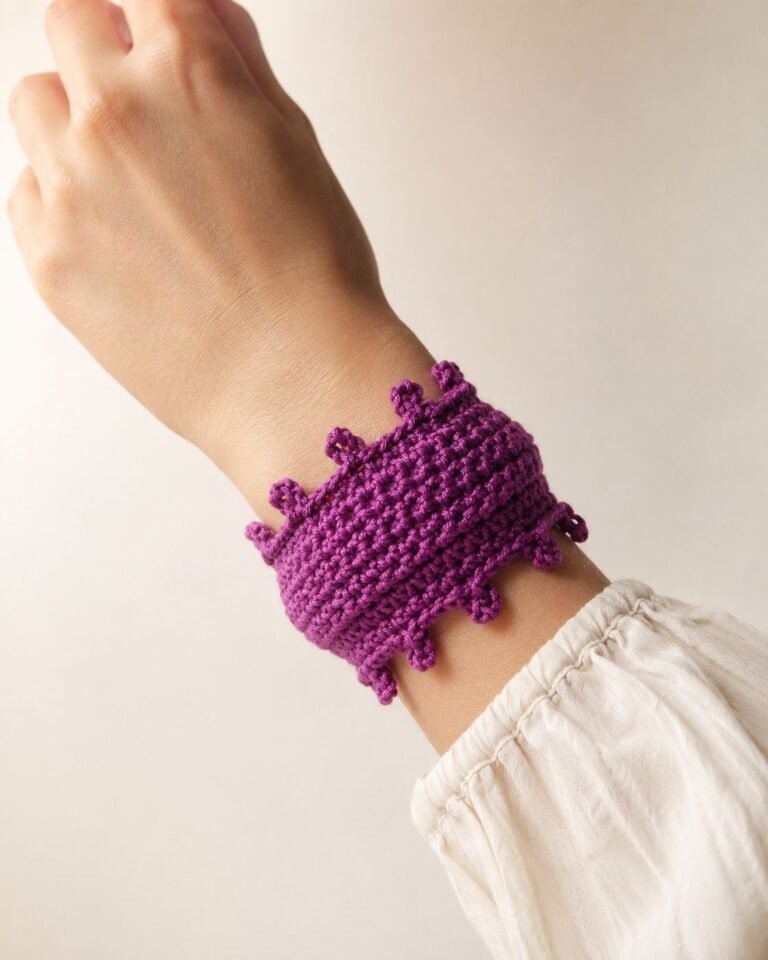
Even careful work can have slightly imperfect edges, and a simple border hides them beautifully. Work a round of single crochet evenly around the whole piece, spacing your stitches so the edge lies flat, not too crowded (which ruffles) and not too sparse (which puckers). A border gives blankets, dishcloths, and scarves a tidy, finished frame and disguises minor unevenness for good.
Common Mistakes to Avoid
- Changing several things at once, so you cannot tell which fix actually helped.
- Skipping the end-of-row stitch count.
- Using a fuzzy or very dark yarn that hides the stitch structure while you are still learning.
- Pulling the yarn tighter when you are nervous, rushing, or tired.
- Ignoring the edges until the project is already large and hard to fix.
How to Practice
The fastest way to fix uneven edges is to make a small practice swatch in a smooth, light-colored worsted-weight yarn. Work about ten rows, counting every row and watching your first and last stitches. Inspect the edge, change just one thing, and try again. A few small swatches teach your hands the right rhythm far faster than struggling through one big project.
Frequently Asked Questions
Why are my crochet edges uneven?
Crochet edges become uneven most often because of missed or added stitches, inconsistent tension between rows, or confusion about whether the turning chain counts as a stitch. Even experienced crocheters deal with this occasionally.
How do I fix uneven edges in crochet?
Count your stitches at the end of every row, use stitch markers on the first and last stitches, and make sure you understand whether your turning chain counts as a stitch. Adding a border at the end can also mask minor unevenness.
Does blocking help even out crochet edges?
Blocking can smooth out minor unevenness, especially when caused by tension differences between rows. However, if the unevenness is from missed or added stitches, you should correct the stitch count first and then block.
Related Troubleshooting
Edge trouble often starts with the stitch itself, review your double crochet or single crochet technique, or see our granny square sizing fixes if it’s happening on motifs.