Hair Towel Crochet Pattern: Free Printable PDF
This crochet hair towel pattern is a practical project you will use every day. Adding a button or snap closure. For a more secure wrap that stays in place during active use, add a simple button and loop closure. Crochet a small chain loop on one end of the wrap and sew a button to the other end. When you wrap the towel around your hair, simply loop the chain over the button to secure it. This is especially useful if you plan to wear the wrap while doing other things around the house.
Caring for Your Crochet Hair Towel

To keep your handmade hair towel looking and performing its best for years to come, proper care is essential. Cotton crochet items are generally low maintenance, but a few simple habits will extend their lifespan significantly.
Washing. Machine wash your hair towel in cold or warm water on a gentle cycle. Avoid hot water, which can cause cotton to shrink. Use a mild detergent without bleach or fabric softener. Bleach weakens cotton fibers and can cause colors to fade prematurely. Fabric softener coats the fibers and reduces absorbency, which defeats the entire purpose of a hair towel.
Drying. Tumble dry on low heat or lay flat to dry. High heat is the biggest enemy of cotton crochet items and can cause significant shrinkage and warping. If you want to maintain the exact size and shape of your towel, flat drying is the safest option. Simply lay it on a clean towel and reshape it gently with your hands.
Best Yarns for Hair Towels and Wraps
The yarn you choose for a hair towel makes a significant difference in how well it works. Hair towels need to absorb moisture quickly while being gentle on your hair cuticle. Regular towel material can be too rough and cause frizz and breakage, especially for curly hair types. Here are the best yarn options ranked by performance.
Cotton is the top choice. Cotton absorbs water exceptionally well and becomes softer with each wash. It is gentle on all hair types and does not create static or frizz. Worsted weight cotton yarn creates a fabric that is thick enough to be absorbent but not so heavy that it pulls on your head. Organic cotton is even better if you have a sensitive scalp.
Bamboo yarn for extra softness. Bamboo fiber is naturally antibacterial and incredibly soft, making it another excellent choice for hair towels. It absorbs moisture slightly faster than cotton and has a beautiful silky sheen. The downside is that bamboo yarn tends to be more expensive and comes in fewer color options than cotton.
Cotton-bamboo blends. A blend of cotton and bamboo gives you the best of both worlds: the absorbency and durability of cotton combined with the softness of bamboo. This is ideal if you want a hair towel that feels luxurious but still performs well after many washes.
Sizing Your Hair Towel
Getting the size right is important for comfort and functionality. A hair towel that is too small will not stay in place, while one that is too large will be heavy and uncomfortable. Here are the recommended sizes for different hair lengths and types.
Short hair or pixie cuts: A small wrap measuring about 6 by 18 inches is plenty. It will absorb the moisture from short hair without feeling bulky. These also make great gifts for men who want a quick-dry option.
Medium hair (shoulder length): Aim for 8 by 22 inches. This provides enough surface area to wrap around medium-length hair and tuck into place. Most standard hair towel patterns are designed for this size.
Long or thick hair: Go with 10 by 26 inches or larger. Long hair holds a lot of water, so you need more fabric to absorb it all. The extra length also makes it easier to twist and secure the wrap.
Afro or very thick curly hair: Consider making an oversized wrap at 12 by 30 inches. Thick curly hair needs maximum coverage, and a larger wrap prevents the frustrating situation where your hair is still dripping after using a standard-size towel.
Quick Answer
Crochet Hair Towel Pattern: A crochet hair towel pattern is a quick beginner project that creates a lightweight, absorbent wrap you can use after washing your hair. It typically uses cotton or cotton-blend yarn and basic stitches like half double crochet. Tip: Always check your gauge before starting so the towel fits comfortably around your head.
At a Glance
- Skill level: Beginner-friendly
- Time needed: 2-4 hours
- Best yarn: Cotton or cotton/linen blend (worsted weight)
- Hook size: 5.0 mm (H-8)
Common Mistakes → Quick Fixes
- Skipping gauge swatch: Make a small swatch first to match the given stitch count per inch.
- Using the wrong yarn weight: Stick to worsted-weight cotton for the best absorbency and drape.
Mini Glossary
HDC: half double crochet; CH: chain; SC: single crochet; SL ST: slip stitch.
What You Will Learn
- the quick answer
- why beginners struggle
- step-by-step fixes or methods
- common mistakes
- helpful next steps
Crochet Hair Towel Pattern is a quick, practical project you’ll actually use after a shower. Below you’ll find the free step-by-step pattern plus a printable PDF download.
Quick answer
A crochet hair towel wrap is a lightweight, absorbent towel alternative you can tie and secure after a shower, perfect if you want less bulk than a bath towel. This pattern is worked in two panels with half double crochet for softness, then joined with single crochet for structure. The #1 fit issue is skipping gauge (it changes length fast): match the given HDC gauge or adjust your hook size before you start.
- Skill level: Easy / advanced beginner
- Key stitches: HDC, DC, FPDC, BPDC
- Gauge: 17 sts and 13.5 rows = 4" in HDC
- Best yarn choice: DK cotton or cotton/linen for absorbency
Common mistakes → quick fixes
- Too long/too short: swatch for gauge; change hook size (not stitch count) first.
- Edges look wavy: count stitches every few rows; don’t miss the last stitch.
- Twist section looks uneven: keep FPDC/BPDC tension consistent; use a lighter grip.
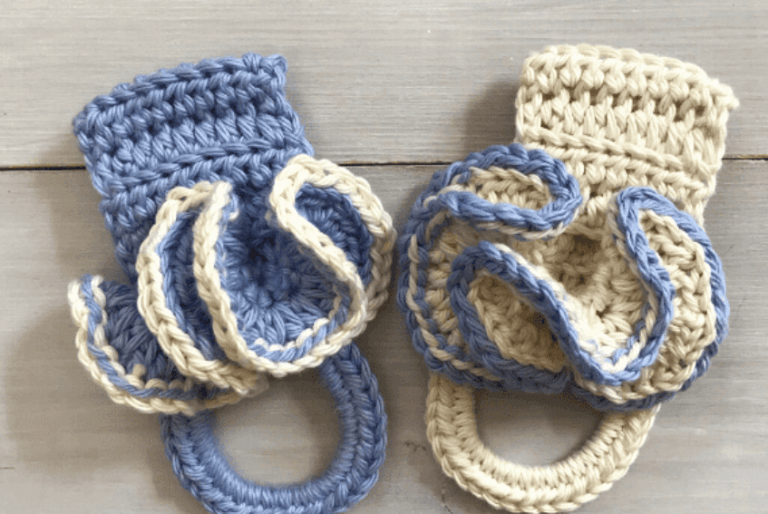
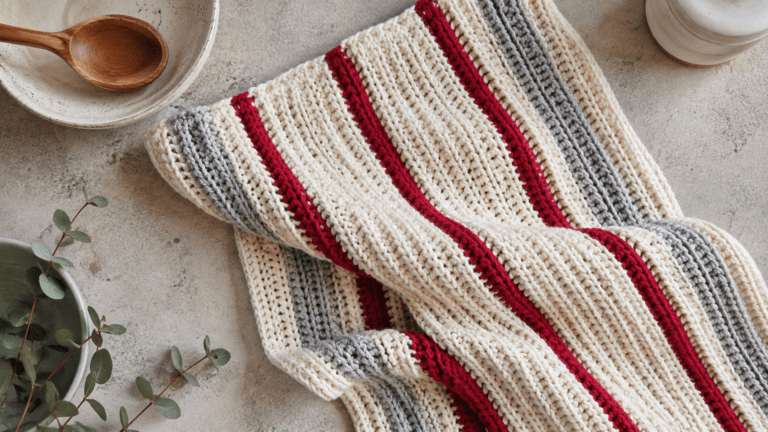
hair towel lovers: if you want a quick, practical project you’ll actually use, this Blissful Hair Towel is it. It’s a classic hair towel wrap crocheted in simple stitches, with a subtle post‑stitch texture near the base.
Join the panels
With the loop still on your hook from the right panel, place both panels together with RS facing each other.
Joining row (worked with WS facing out): Ch 1, turn. Working through both thicknesses, SC evenly up the right angled edge, across the top row, and down the straight left edge to the foundation chain (approx 160 sts). Turn inside out (joining row is now inside). Fasten off and weave in ends.
Hang tag (optional)
Ch 15.
Row 1: HDC in 2nd ch from hook and each ch across, turn. (14 sts)
Row 2: Ch 2 (does not count as st), DC in FLP across, turn.
Row 3: Ch 2, [FPDC around next st, BPDC around next st] across, turn.
Row 4: Ch 1, HDC in FLP across, turn. Fasten off and attach as desired.
Want it emailed? Get the PDF + new free patterns from KnotToYarn. Browse all free crochet patterns on KnotToYarn
Helpful resources
- Yarn fiber details: Lion Brand CotLin yarn
- Optional notion: crochet stitch markers
Related guides on KnotToYarn
- Half double crochet (HDC): step-by-step tutorial
- Crochet hook sizes (US/metric) guide
- Beginner Crochet hub: start here
This hair towel wrap tutorial works best when you check your gauge, keep your edges even, and test the fit before finishing the button loop.
Helpful reference: DROPS Design free crochet patterns.
Authority source: Craft Yarn Council crochet standards.
Related beginner-friendly guides
Frequently Asked Questions
What is a crochet hair towel pattern?
A crochet hair towel pattern is a set of instructions for making a lightweight, absorbent towel wrap you can secure around your head after washing your hair. It is usually worked in two panels with half double crochet stitches.
Is a crochet hair towel pattern suitable for beginners?
Yes, most crochet hair towel patterns are designed for beginners and use simple stitches like half double crochet and single crochet. The rectangular shape means no complex shaping is required.
What materials do I need for a crochet hair towel pattern?
You will need worsted-weight cotton or cotton-blend yarn, a 5.0 mm (H-8) crochet hook, a yarn needle for weaving in ends, and optionally a button or loop for closure.
If you enjoyed this guide, you might also love our tutorials on Crochet Border Patterns 2, and Mothers Day Crochet Gifts. Each one comes with free patterns and step-by-step instructions suited to crocheters of all skill levels.