Granny Stripe Blanket: 7 Essential Beginner Tips You Need
Granny Stripe Blanket at a Glance
- Topic: granny stripe blanket
- Skill level: beginner to intermediate
- Main goal: help you crochet a beautiful, colorful granny stripe blanket from start to finish
- Related topics: granny square crochet pattern, double crochet stitch, half double crochet, how to crochet a blanket
Quick Answer
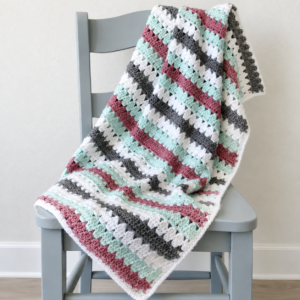
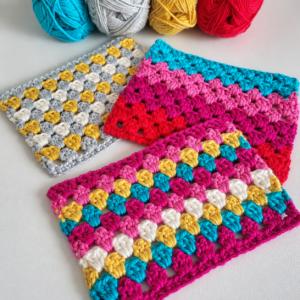
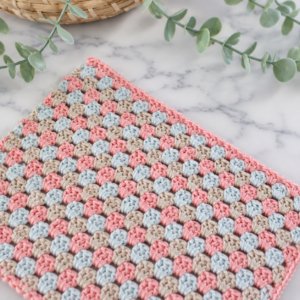
A granny stripe blanket is a crochet blanket made using the granny stripe stitch — a repeating pattern of three double crochet clusters separated by chain spaces, worked in rows instead of rounds. Unlike traditional granny square blankets that require joining multiple motifs, the granny stripe blanket is worked continuously in one piece, making it faster and easier for beginners to complete.
Tip: Change colors every two rows for the classic striped look — this creates clean, defined bands of color without excessive yarn tails to weave in.
At a Glance
- Skill level: beginner (must know chain and double crochet)
- Time needed: 20-30 hours for a throw-size blanket (50″ x 60″)
- Best yarn: worsted weight acrylic or cotton blend (soft and machine washable)
- Hook size: 5.5 mm (I-9) or 6.0 mm (J-10)
Common Mistakes to Quick Fixes
- Blanket getting narrower: count your stitches at the end of every row — missing a chain space is the most common cause
- Wavy or rippled edges: your starting chain is too tight — chain loosely or use a hook one size larger for the foundation chain
- Color changes looking messy: always complete the last stitch of the old color with the new color pulled through both loops
Mini Glossary
DC (double crochet), CH (chain), SP (space), ST (stitch), SK (skip), RS (right side), WS (wrong side), CH-SP (chain space), BLO (back loop only)

KnotToYarn
Subscribe to KnotToYarn!
Get the best free crochet patterns, tutorials & tips delivered straight to your inbox. Join our growing community!
Why the Granny Stripe Blanket Is Perfect for Beginners
The granny stripe blanket is widely considered one of the best first blanket projects for crocheters who have mastered the basic stitches. Unlike a traditional granny square blanket — which requires you to make dozens of individual squares and then join them together — the granny stripe blanket is worked in one continuous piece, row after row, from the foundation chain to the final border. There is no seaming, no joining, and no piecing together at the end. You simply work back and forth until the blanket reaches your desired length.
This simplicity makes the granny stripe blanket incredibly beginner-friendly. The stitch pattern itself — clusters of three double crochets separated by chain-2 spaces — is repetitive and rhythmic, which means you can memorize it after just a few rows. Once you find your groove, it becomes an almost meditative project that you can work on while watching TV or listening to a podcast. The rhythmic nature of the pattern also helps build muscle memory, which translates to improved tension and consistency in all your future crochet projects.
The granny stripe blanket also offers instant gratification. Because each row adds a visible stripe of color, you can see your blanket growing with every pass. This is incredibly motivating for beginners who might get discouraged by projects that only show results after hours of work. If you are brand new to crochet, our how to crochet for beginners guide covers all the foundational techniques you will need to get started.
What Makes the Granny Stripe Blanket Different from Granny Squares?
While both the granny stripe blanket and the classic granny square blanket share the same core stitch — the three-double-crochet cluster — they are constructed in completely different ways. A granny square blanket requires you to make individual squares in the round, typically 4 to 6 inches each, and then seam them together using one of several joining methods. This process involves dozens of yarn tails, color planning across multiple squares, and a potentially tedious seaming step at the end.
The granny stripe blanket eliminates all of that complexity. You start with a single long foundation chain (typically 150 to 200 chains for a throw-size blanket), work your first row of granny clusters across, chain 2, turn, and repeat. The blanket grows width-wise, and you simply keep adding rows until it reaches the length you want. Color changes are made at the start of any row, giving you complete control over the stripe pattern and color sequence without having to plan individual squares.
Another advantage of the granny stripe blanket is that it is much easier to customize the size. Want a baby blanket? Chain 100 stitches. Want a king-size bedspread? Chain 250 stitches. The width is determined entirely by your starting chain, and the length is determined by how many rows you work. This flexibility makes it ideal for any project size. If you want to explore the traditional granny square approach as well, our granny square crochet pattern guide covers everything you need to know.

7 Essential Tips for Your Granny Stripe Blanket
Tip 1: Chain Loosely or Use a Larger Hook for the Foundation
The most common problem beginners face with the granny stripe blanket is a wavy, rippled bottom edge. This happens when the foundation chain is tighter than the rest of the stitches, causing the first row of clusters to bunch up. To prevent this, try chaining with a hook that is one full size larger than the hook you will use for the rest of the blanket. For example, if you plan to work the blanket with a 5.5 mm hook, chain with a 6.0 mm or 6.5 mm hook, then switch back for row one.
Alternatively, you can use the chainless foundation double crochet method (also known as extended single crochet foundation) which creates a starting row that matches the tension of the rest of the work. This technique takes a bit of practice but produces beautifully even edges from the very first row. If you are still getting comfortable with basic chains, our how to start a crochet chain guide covers proper chain tension in detail.
Tip 2: Count Your Stitches at the End of Every Row
The biggest enemy of a neat granny stripe blanket is an accidentally skipped chain space. When you miss a CH-2 space, your blanket gets narrower by one cluster. When you add an extra cluster, it gets wider. These small errors compound over dozens of rows, turning a rectangular blanket into a trapezoid or a wavy, uneven shape.
The fix is simple: count your clusters at the end of every row. If you started with 30 clusters, you should end every row with 30 clusters. If you have 29, you missed a space — go back and find it. If you have 31, you added an extra cluster — rip back to the mistake. Spending five seconds counting after each row saves hours of frustration later. This habit is one of the most important skills you can develop as a crocheter, and it applies to every project you will ever make. For more essential counting techniques, our crochet abbreviations and pattern reading resources can help.
Tip 3: Change Colors Every Two Rows for Clean Stripes
The classic granny stripe blanket look uses two-row stripes — each color gets two rows before switching to the next. This creates defined, even bands of color that look crisp and intentional. Changing colors every single row creates very thin stripes that can look busy, while changing every three or more rows creates wider bands that may not show the stitch pattern as clearly.
To change colors cleanly, work the last double crochet of the second row until you have two loops on your hook. Drop the current color, pick up the new color, yarn over with it, and pull through both remaining loops. This creates a seamless transition that sits perfectly on the edge of the blanket. Do not tie knots or cut yarn between every color change — simply carry the unused color up along the side edge by working the first stitch loosely around the strand. This technique means you only have yarn tails at the very beginning and very end of the blanket, not every two rows.

Tip 4: Plan Your Color Sequence Before You Start
One of the best things about the granny stripe blanket is the color freedom it offers. However, this freedom can also lead to chaotic, unplanned color combinations that look muddled. Before you begin, lay out your yarn colors in the order you plan to use them and take a photo. This simple step lets you evaluate whether the color flow is harmonious or if any adjacent colors clash.
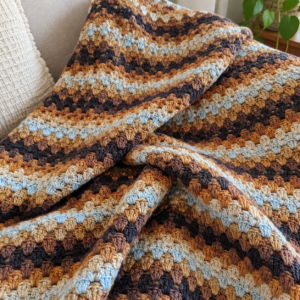
Popular color schemes include rainbow order (red, orange, yellow, green, blue, purple), ocean tones (navy, teal, seafoam, white, sandy beige), and neutral palettes (cream, gray, charcoal, oatmeal). You can also use a variegated or self-striping yarn for a single-color granny stripe blanket that still has visual movement without the work of manual color changes. For help choosing quality yarns that work well together, check out our best yarn for beginner crochet recommendations.
Tip 5: Use Stitch Markers for the First and Last Cluster
Keeping your edges straight on a granny stripe blanket is critical, and the easiest way to do this is to place a stitch marker in the first and last chain-2 space of every row. These edge spaces are where mistakes happen most often — it is easy to accidentally skip the first space or add an extra chain at the end of a row, which shifts everything off by one cluster.
By marking these positions, you always know exactly where your row should start and end. When you reach the end of a row, your last cluster should land exactly on the marker. If it does not, you know immediately that something is wrong and can fix it before continuing. This small habit prevents the gradual narrowing or widening that ruins so many granny stripe blanket projects. Use a different colored marker for each edge so you can tell them apart at a glance.
Tip 6: Add a Simple Border for a Finished Look
A granny stripe blanket without a border looks incomplete — the side edges can be uneven, and the top and bottom edges often do not match. Adding a simple one-round or two-round border pulls everything together and gives your blanket a polished, professional finish. The easiest border is a single round of single crochet all the way around, working 3 SC in each corner. For a slightly more decorative finish, add a second round of half double crochet or a shell stitch border.
The key to a good border is working the correct number of stitches along each edge. Along the top and bottom (the foundation chain and the last row), you should have roughly one stitch per chain or cluster. Along the sides, work roughly 3 stitches for every 2 rows of granny stitch. This ratio prevents the border from ruffling (too many stitches) or pulling in (too few stitches). Our crochet border patterns guide has seven beautiful border ideas that work perfectly with the granny stripe pattern.
Tip 7: Block Your Finished Granny Stripe Blanket
Blocking transforms a good granny stripe blanket into a stunning one. After completing your blanket and adding the border, soak it in cool water for 15 to 20 minutes, gently squeeze out the excess water (do not wring or twist), and lay it flat on a clean surface. Pin the corners first, then pin along all four edges every 3 to 4 inches, making sure the sides are straight and the corners form perfect right angles.
Let the blanket air dry completely — this usually takes 24 to 48 hours for a full-size blanket. Blocking does several important things: it evens out your stitch tension, straightens wavy edges, opens up the stitch pattern so you can see the individual clusters clearly, and gives the entire blanket a soft, drapey hand feel. If you have never blocked a project before, this is the perfect one to start with because the improvement is dramatic and immediately visible.
Granny Stripe Blanket Pattern Summary
Here is the core granny stripe blanket pattern you will follow for every row after the foundation.
KnotToYarn
Subscribe to KnotToYarn!
Get the best free crochet patterns, tutorials & tips delivered straight to your inbox. Join our growing community!
Starting chain: Chain a multiple of 3 + 2 (for example, chain 152 for a throw-size blanket that is about 50 inches wide).
Row 1: 2 DC in the 4th chain from the hook (counts as first cluster). *CH 2, skip 2 chains, 3 DC in the next chain. Repeat from * across to the last 3 chains. Skip 2 chains, 3 DC in the last chain. CH 3, turn.
Row 2 (and all subsequent rows): 3 DC in the first CH-2 space. *CH 2, 3 DC in the next CH-2 space. Repeat from * across. CH 3, turn.
Repeat Row 2 until the blanket reaches your desired length. Change colors every 2 rows for classic stripes.
How Big Should Your Granny Stripe Blanket Be?
Standard granny stripe blanket sizes vary by purpose. A baby blanket (receiving blanket size) is typically 30 inches by 36 inches, which requires a starting chain of about 90 stitches and approximately 80 to 90 rows. A lapghan or throw blanket is usually 50 inches by 60 inches, requiring a starting chain of about 150 stitches and 130 to 150 rows. A full-size bed blanket measures approximately 60 inches by 80 inches, needing about 180 stitches in the starting chain and 180 to 200 rows.
Yarn requirements scale with size. A baby blanket typically uses 800 to 1,000 yards of yarn. A throw-size granny stripe blanket uses 1,500 to 2,000 yards. A full-size blanket can use 3,000 to 4,000 yards depending on the weight of yarn you choose. Worsted weight yarn is the most versatile choice — it works up quickly while still providing good stitch definition. For more blanket-making guidance, our how to crochet a blanket tutorial covers sizing, yarn estimation, and planning in greater detail.
Granny Stripe Blanket FAQ
Is the granny stripe blanket easy for absolute beginners?
Yes. If you can chain and double crochet, you can make a granny stripe blanket. The pattern is just two repeating rows — one setup row and one repeat row — and there is no shaping, increasing, or decreasing involved. It is one of the simplest blanket patterns in crochet.
How much yarn do I need for a granny stripe blanket?
For a throw-size blanket (50″ x 60″), plan for 1,500 to 2,000 yards of worsted weight yarn. A baby blanket needs about 800 to 1,000 yards. Always buy an extra skein or two of each color to account for tension differences.
Can I use a different stitch instead of double crochet?
The classic pattern uses double crochet, but you can substitute half double crochet for a slightly denser, shorter fabric. You can also use treble crochet for a taller, lacier look. Just remember to adjust your starting chain and row count accordingly.
Why is my granny stripe blanket getting narrower?
You are likely missing a chain-2 space somewhere in each row. Count your clusters at the end of every row and make sure you have the same number you started with. Missing even one space per row can remove several inches from the width over 100+ rows.
How do I keep the sides of my blanket straight?
Use the chain-3 at the beginning of each row as your turning chain and place a stitch marker in the first and last CH-2 space. This ensures every row starts and ends in the correct position. Blocking the finished blanket also straightens any minor edge irregularities.
For more free crochet patterns and tutorials, explore KnotToYarn. For standardized crochet terminology and hook sizing, the Craft Yarn Council standards page is an essential reference. For additional blanket inspiration and pattern ideas, check out this granny stripe blanket guide from The Spruce Crafts.