Pastel Granny Square Sweater: 5 Best Free Pattern Tips

Quick Answer
A pastel granny square sweater is a wearable garment made by joining individual granny squares in soft shades, lavender, mint, baby pink, powder blue. You’ll need basic granny square know-how, a 5 mm hook, and worsted-weight yarn in four to six pastel tones. The process is straightforward: make consistent squares, lay them into panels, and seam everything together for a cozy, customizable fit.
If you want to understand how raglan shaping works before customizing your granny square version, our how to crochet a raglan sweater tutorial breaks down the construction step by step.
Tip: block your squares before assembling, it gets every panel lining up evenly and gives the finished garment a polished look.
At a Glance
- Skill level: intermediate
- Time needed: 2 to 4 weeks (depending on size and speed)
- Best yarn: worsted-weight acrylic or cotton blend in pastel tones
- Hook size: 5 mm (US H/8)
Common Mistakes to Quick Fixes
- Inconsistent square sizes: count your stitches strictly and use the same tension throughout every round
- Uneven color transitions: plan your color placement on paper before you start crocheting
- Visible seam lines: use the invisible join or mattress stitch to connect panels cleanly
Mini Glossary
GS (granny square), CH (chain), DC (double crochet), SS (slip stitch), SP (space), FO (fasten off, also called fasten off or finish off), MC (magic circle or magic ring), BLO (back loop only), FLO (front loop only)
It’s one of the more rewarding intermediate projects. There’s something satisfying about watching individual squares, each a little piece of work in lavender, blush, or seafoam, come together into something you can actually wear. Unlike a seamless top-down sweater with its tricky shaping, this is modular, so it’s easy to tweak the fit, change the length, or swap colors.
If you’ve got the basic granny square down, you’ve got the foundation. The fun part is choosing the pastel palette, keeping tension consistent across dozens of squares, and assembling it into something that looks boutique-made. This guide walks through it all, from yarn to final seams.
Before you begin, make sure you are comfortable reading crochet patterns. If you need a refresher, our how to read a crochet pattern guide is a great place to start. You might also want to bookmark the solid granny square pattern if you prefer a denser, less lacy look for your sweater panels.
Why Choose a Pastel Granny Square Sweater?
It stands out from other crochet garments for a few reasons. Pastels are versatile, they go with jeans, skirts, even layered over a dress, with a soft, feminine feel that suits spring brunches, beach cover-ups, and cozy evenings alike. And the granny square build means you can work one square at a time, so it’s a great portable project.
Customization is the other big plus. Since each square is its own unit, you size the sweater by adding or removing squares, an extra column for a larger bust, fewer rows for a cropped look. It’s also a good way to use up leftover yarn. If you’ve made a crochet sweater before, you know how much easier it is to work in pieces than wrestle one big seam-heavy garment.
Best Yarn for Your Pastel Granny Square Sweater
Yarn choice is one of the bigger decisions here. You want something soft against the skin, washable, and able to show off those pastels without looking washed out. The main options:
Worsted-weight acrylic: Brands like Caron Simply Soft or Bernat Premium offer an enormous range of pastel shades at an affordable price point. Acrylic is durable, easy to care for, and widely available, making it a go-to choice for a design that you will wear frequently.
Cotton blends: If you prefer natural fibers, a cotton-acrylic blend such as Lion Brand Coboo or Drops Paris gives you the softness of cotton with the structural stability of acrylic. Cotton blends drape beautifully, which means your motif will have a lovely, fluid silhouette rather than feeling stiff or boxy.
Merino wool blends: For a luxurious feel, consider a merino-nylon blend like Paintbox Yarns Simply DK. Merino provides incredible softness and warmth, while nylon adds strength. This is a wonderful option if your pattern is intended for cooler weather or as a special-occasion piece.
For more guidance on choosing the right material, check out our detailed guide on the best yarn for beginner crochet. The Craft Yarn Council also offers an excellent resource on yarn weights and fiber types that can help you make an informed decision.
How to Pick the Perfect Pastel Color Palette
The palette is what makes it. A good mix of pastels takes it from “homemade” to “made on purpose.” Three approaches that work well:
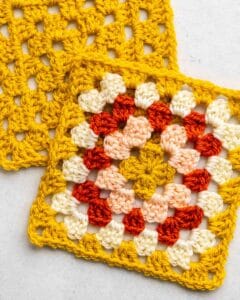
Monochromatic soft: Choose three to four shades within the same color family, for example, light pink, rose, blush, and mauve. This creates a subtle, sophisticated ombre effect across your motif panels. It is the safest option if you are unsure about mixing colors, and the result always looks elegant.
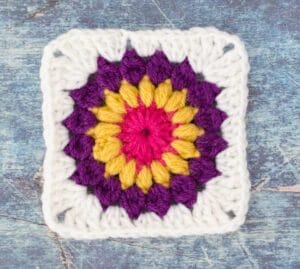
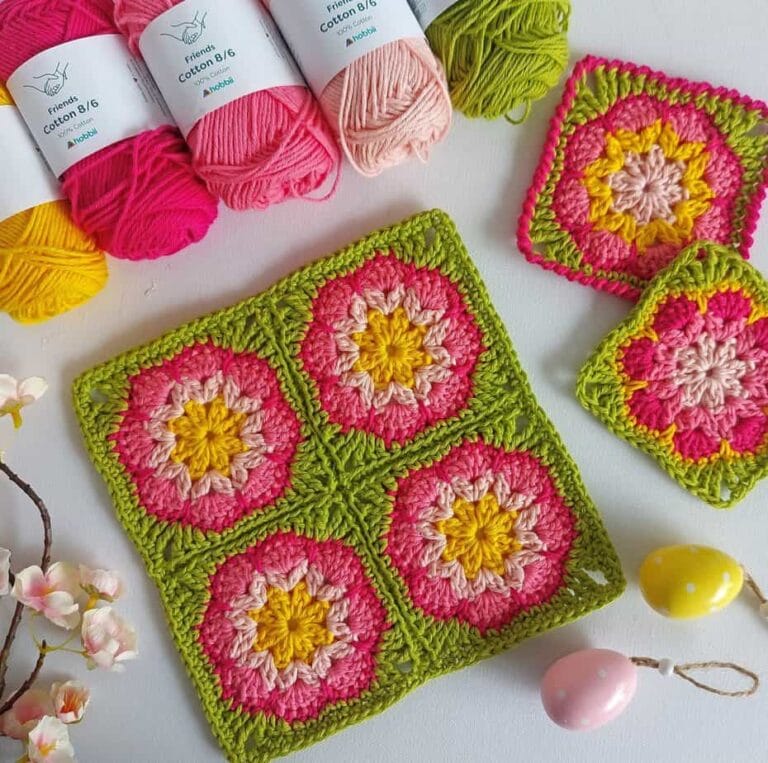
Rainbow pastels: Use five to six different pastel colors, lavender, mint green, baby blue, soft yellow, blush pink, and lilac, to create a cheerful, eye-catching design. Arrange them in a planned gradient or go fully random for a playful bohemian vibe. This palette works especially well if each square uses a single color, making the pastel granny square sweater look like a patchwork quilt of soft candies.
Neutral base with pastel accents: use cream, white, or light gray for most squares and scatter pastel ones as accents. Good for a more understated sweater that still has pops of color.
Step-by-Step: Crocheting Your Granny Square Panels
Making the Basic Granny Square
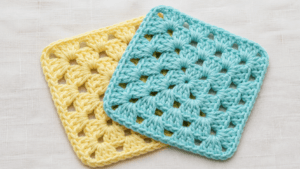
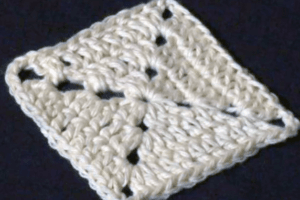
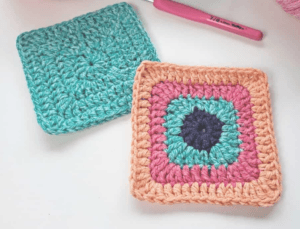
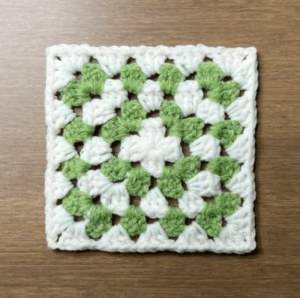
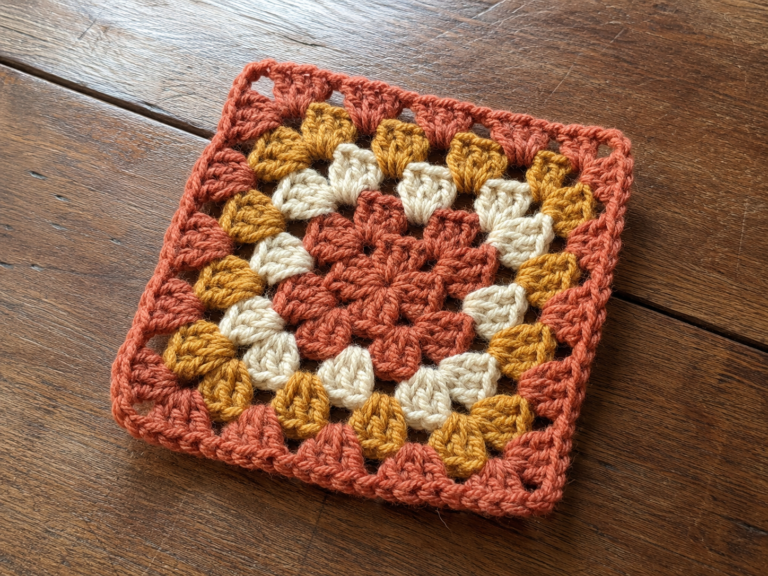
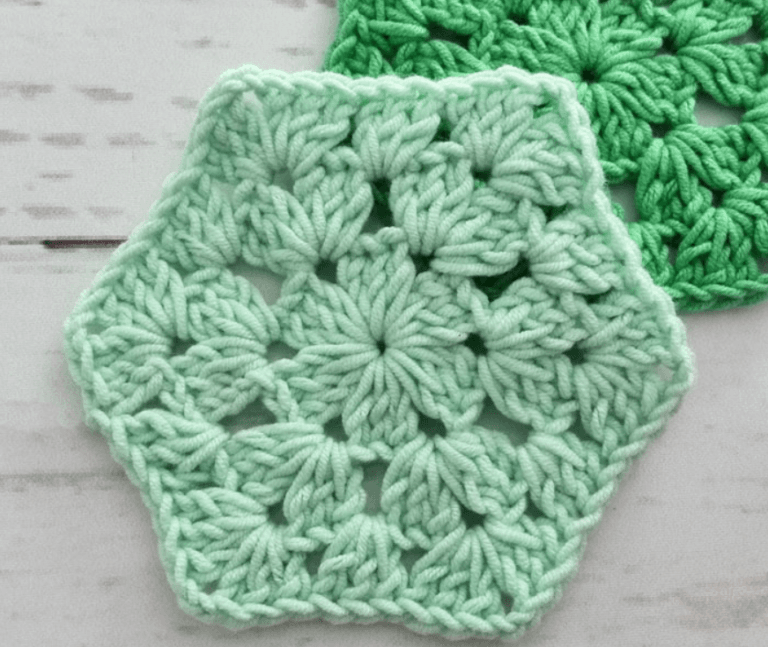
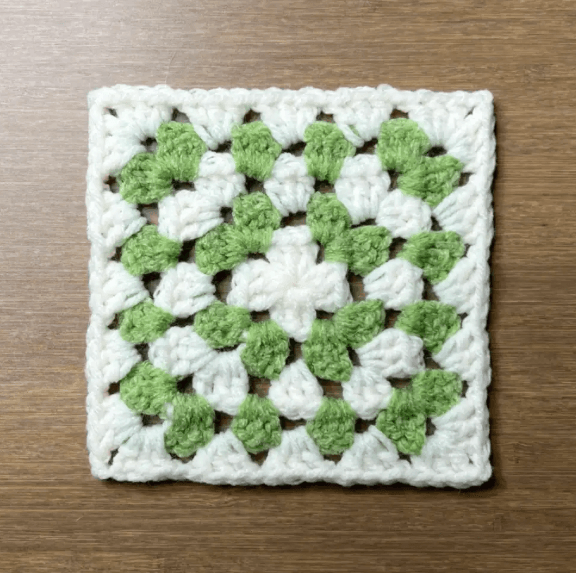
Every sweater starts with a stack of consistently sized granny squares. Begin with a magic circle and chain 3 (counts as your first DC). Work 2 more DC into the ring, then chain 2. Repeat the 3-DC cluster and chain-2 space three more times, then slip stitch to join, that’s round one, a center cluster with four chain-2 corners.
For round two, chain 3, work 2 DC in the same corner space, chain 1, then work 3 DC, chain 2, and 3 DC in the next corner space. Continue around, joining with a slip stitch at the top of the beginning chain-3. Round three and beyond follow the same logic: 3 DC in each chain space along the sides, and 3 DC, chain 2, 3 DC in each corner. Continue until your square measures the size you need for your motif panels, typically 4 to 6 inches for an adult garment.
The most critical tip here is consistency. Every single square in your sweater must be the same size. Count your stitches on every round, use the same hook throughout, and do not switch yarn brands mid-project. If your squares are coming out uneven, check out our troubleshooting guide on why your granny square might be crooked for quick fixes.
Joining Granny Squares into Panels
Once your squares are done, lay them out flat to plan the panels. A typical sweater needs a front, a back, and two sleeves. How many squares per panel depends on your size and square size, a medium with 5-inch squares might be a 4×6 grid for front and back, and 4×3 for each sleeve.
There are several methods for joining squares. The mattress stitch creates an invisible seam by working through the outer loops of adjacent squares with a tapestry needle. The slip stitch join is faster and creates a subtle ridge that can actually look decorative. For a more textured look, try the double crochet join, which adds an extra row of stitches between each square. Choose the method that best fits the aesthetic you want for your sweater.
Assembling Your Pastel Granny Square Sweater
With all four panels done, it’s time to assemble. Put the front and back together, right sides facing out, and seam the shoulders first, leaving an opening for the neckline, about 6 to 8 inches wide for an adult, centered on the top edge.
Next, attach each sleeve panel to the body. Align the top edge of the sleeve with the armhole opening, matching stitch for stitch. Seam the sleeve to the body on both sides, then close the underarm seam by connecting the sleeve bottom to the body side seam. Repeat for the second sleeve. Once all seams are complete, work a round of single crochet around the neckline and sleeve edges for a clean, finished border. This step improves the look of your sweater and prevents the edges from stretching or rolling.
For more wearable ideas, see our granny square boleros, a lot of the assembly and seaming carries straight over. There’s more on construction and sizing at Yarnspirations too.
5 Essential Tips for a Perfect Pastel Granny Square Sweater
These five tips will help you dodge the common pitfalls and end up with something polished:
1. Block every single square. Before assembling your sweater, wet-block or steam-block each granny square. Pin them to a blocking mat to the exact same dimensions. This small investment of time ensures all your squares are perfectly uniform, which makes seaming dramatically easier and gives the finished garment a crisp, even appearance.
2. Make a gauge swatch first. Even though you are working in squares, your overall garment size depends on the individual square size. Crochet a test square, measure it carefully, and adjust your hook size if needed before committing to dozens of squares. This prevents the heartbreak of finishing your pattern only to discover it is two sizes too small.
3. Weave in ends as you go. A sweater can have hundreds of loose ends from color changes. Do not wait until the end, weave in the tails immediately after fastening off each square. This keeps your workspace tidy and prevents the dreaded end-weaving marathon that can stall your project for weeks.
4. Plan your layout on a flat surface. Before joining any squares, arrange every single one on a large table or bed. Step back and check the color distribution. You might find that two identical colors ended up next to each other, or that one panel looks noticeably different from another. Adjusting the layout now is infinitely easier than ripping out seams later.
5. Use stitch markers for seam alignment. When sewing panels together, place a stitch marker every 2 to 3 inches along the seam line. This ensures your pastel granny square sweater seams stay aligned and do not shift or stretch as you work. It is a simple trick that makes a huge difference in the final quality of your garment.
Styling Your Finished Pastel Granny Square Sweater
Once it’s done, the fun continues with styling. A pastel crochet sweater goes with high-waisted jeans and white sneakers for daytime; layer it over a collared shirt or slip dress for something dressier. The soft colors also play well with neutrals, cream trousers, tan sandals, a woven tote.
Accessorizing is half the fun too. A simple pendant, a few delicate bracelets, or a silk scarf all suit the handmade feel. Because pastels are so versatile, this’ll become one of the pieces you reach for most, from weekend errands to evenings out.
Hopefully this gets you started on your own pastel granny square sweater. Every square brings you one closer to a handmade garment that’s genuinely yours, and when it’s done, share it with the crochet community; it might be just the nudge someone else needs to pick up a hook.
Frequently Asked Questions
What skill level do I need for this pattern?
It’s aimed at confident beginners through intermediate crocheters, basic stitches plus a little shaping. The step-by-step instructions make it manageable even as a first wearable.
How do I choose the right size to crochet?
The pattern has a size chart from XS to 5XL, measure yourself and compare. Check your gauge before starting for the best fit.
What yarn is recommended for crochet clothing?
A soft, draping yarn in medium or light weight works best, acrylic blends, cotton blends, or merino. The pattern gives exact recommendations.
Can I adjust the length of the garment?
Yes, adjust the length by adding or removing rows in the body. The pattern shows where to do it while keeping the shaping correct.
How do I care for my crocheted clothing?
Most crochet garments do best hand washed in cold water and laid flat to dry, which keeps the shape. Always check the yarn label for specifics.