Easy Crochet Blanket Pattern: A Free First Blanket + 7 Smart Choices
For more project inspiration and variations, browse projects on Ravelry.
Care instructions for your blanket. Once your blanket is finished, proper care will keep it looking beautiful for years. Always check the yarn label for specific washing instructions, but in general, hand washing or machine washing on a gentle cycle in cold water is safest. Lay the blanket flat to dry to prevent stretching. Store it folded in a cool, dry place away from direct sunlight, which can cause colors to fade over time. With proper care, a handmade crochet blanket can last for decades and become a treasured family heirloom.
Gift wrapping a handmade blanket. A handmade crochet blanket makes one of the most thoughtful gifts you can give. To present it beautifully, fold the blanket neatly and wrap it in tissue paper tied with a ribbon. Include a small card with care instructions so the recipient knows how to wash and dry it properly. For baby blankets, consider pairing with a matching burp cloth or bonnet for a complete gift set. The recipient will appreciate not just the blanket itself but the time, effort, and love that went into making it by hand.
Budget-Friendly Yarn for Your First Blanket
You do not need to spend a fortune on yarn for your first blanket project. In fact, we recommend starting with an affordable option because your first blanket will have some imperfections no matter what. Here are the best budget yarn options ranked by value. For more guidance, check out Craft Yarn Council weight system.
Red Heart Super Saver. This is one of the most popular acrylic yarns in the world, and for good reason. It costs around three to five dollars per skein, comes in over 100 colors, and each skein contains enough yardage to make significant progress on a blanket. It is not the softest yarn, but it is durable and easy to care for since it is machine washable and dryable.
Bernat Blanket yarn. This is a super bulky weight yarn specifically designed for blankets. Because it is so thick, you can finish a throw blanket in just a weekend using a large hook. The chenille-style texture creates a luxuriously soft blanket. Each skein is around five to seven dollars, and you typically only need five to eight skeins for a throw.
What Are the Most Common Mistakes to Avoid?

Even the most experienced crocheters made plenty of mistakes when they first started. The good news is that most of these are easy to avoid once you know what to look out for. Here are the most common pitfalls beginners run into when tackling their first crochet blanket, and more importantly, how to sidestep them completely. For more guidance, check out LoveCrafts blanket patterns.
Choosing the wrong yarn weight. This is hands down the number one mistake. Many beginners gravitate toward thin yarns like fingering or sport weight because the finished blanket looks delicate and refined. The problem? Thin yarn means hundreds more stitches, hundreds more rows, and a project that can easily take months to finish. For your first blanket, stick with worsted weight (category 4) or bulky weight (category 5). You will see progress much faster, and that momentum is what keeps you motivated to finish.
Not checking your gauge. We mentioned gauge earlier, but it deserves repeating here because the consequences are amplified with blankets. If your gauge is even slightly off, a blanket meant to be 50 inches wide could end up at 45 or 56 inches. That is a massive difference. Spend ten minutes making a gauge swatch before you start. It saves hours of frustration later.
Inconsistent tension. When you are working on a large project like a blanket, your tension naturally changes over time. You might crochet tighter when you are focused and looser when you are relaxed. To keep your blanket looking uniform, try to work on it at the same time each day when you are in a similar frame of mind. Some crocheters find that taking a short break every 30 minutes helps reset their hands. A well-executed easy crochet blanket pattern can completely transform your finished project.
How Do You Choose the Right Blanket Size?
One of the first decisions you need to make is how big your blanket should be. There is no single right answer, but here are the most popular blanket sizes with their standard dimensions so you can plan your project with confidence.
- Lovey or stroller blanket: 10 x 10 inches. Great for babies to hold and chew on. These make fantastic quick gifts.
- Baby blanket: 30 x 36 inches. The most popular size for baby shower gifts. It is large enough to wrap a newborn but not so big that it drags on the floor.
- Throw or lap blanket: 50 x 60 inches. The ideal size for curling up on the couch. This is what most beginners should aim for as their first big project.
- Twin bed blanket: 66 x 90 inches. A serious commitment, better suited for your second or third blanket project.
- Queen bed blanket: 90 x 90 inches or larger. Save this for when you are comfortable with large projects.
For your very first blanket, we strongly recommend starting with a baby blanket or a throw. The baby blanket is especially great because you get the satisfaction of finishing a complete project in a reasonable timeframe, and you end up with a beautiful handmade gift.
Quick Answer
An easy crochet blanket pattern for beginners should use a single repeating stitch (like double crochet or half double crochet), work in simple rows, and require no complex shaping or color changes. The best first blankets use worsted-weight yarn with a 5mm hook and measure about 36 by 48 inches for a crochet baby blanket. Tip: Always make a small gauge swatch before starting your blanket, it saves hours of unraveling later.
At a Glance
- Skill level: beginner
- Time needed: 15-30 hours for a throw blanket
- Best yarn: worsted-weight (#4) acrylic or cotton blend
- Hook size: 5mm (H/8) or 5.5mm (I/9)
Common Mistakes → Quick Fixes
- Uneven edges: Count your stitches at the end of every row and adjust before turning.
- Blanket curling: Make sure your foundation chain is loose or go up one hook size for the chain only.
Mini Glossary
sc (single crochet), dc (double crochet), hdc (half double crochet), ch (chain stitch), FO (fasten off), gauge (stitches per inch), tension (yarn tightness while crocheting), worsted weight (medium-thickness yarn).
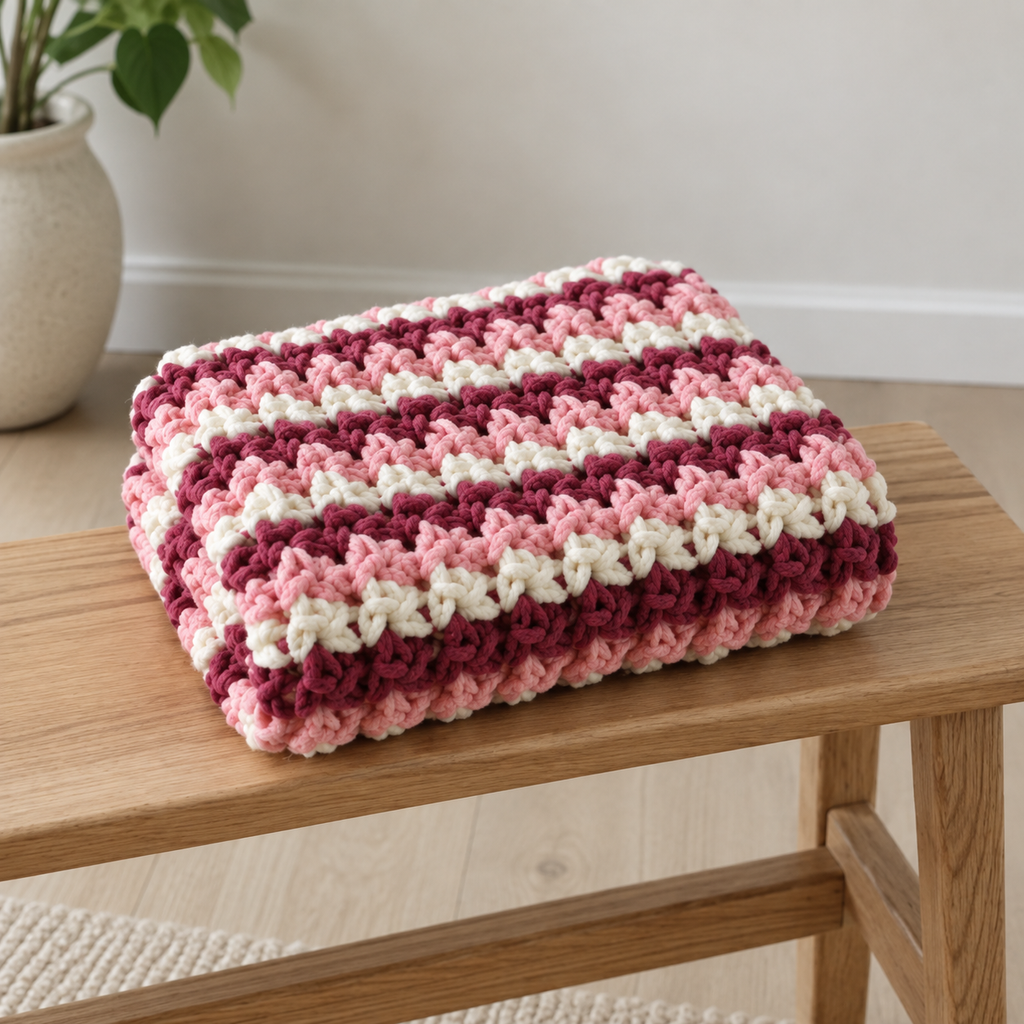
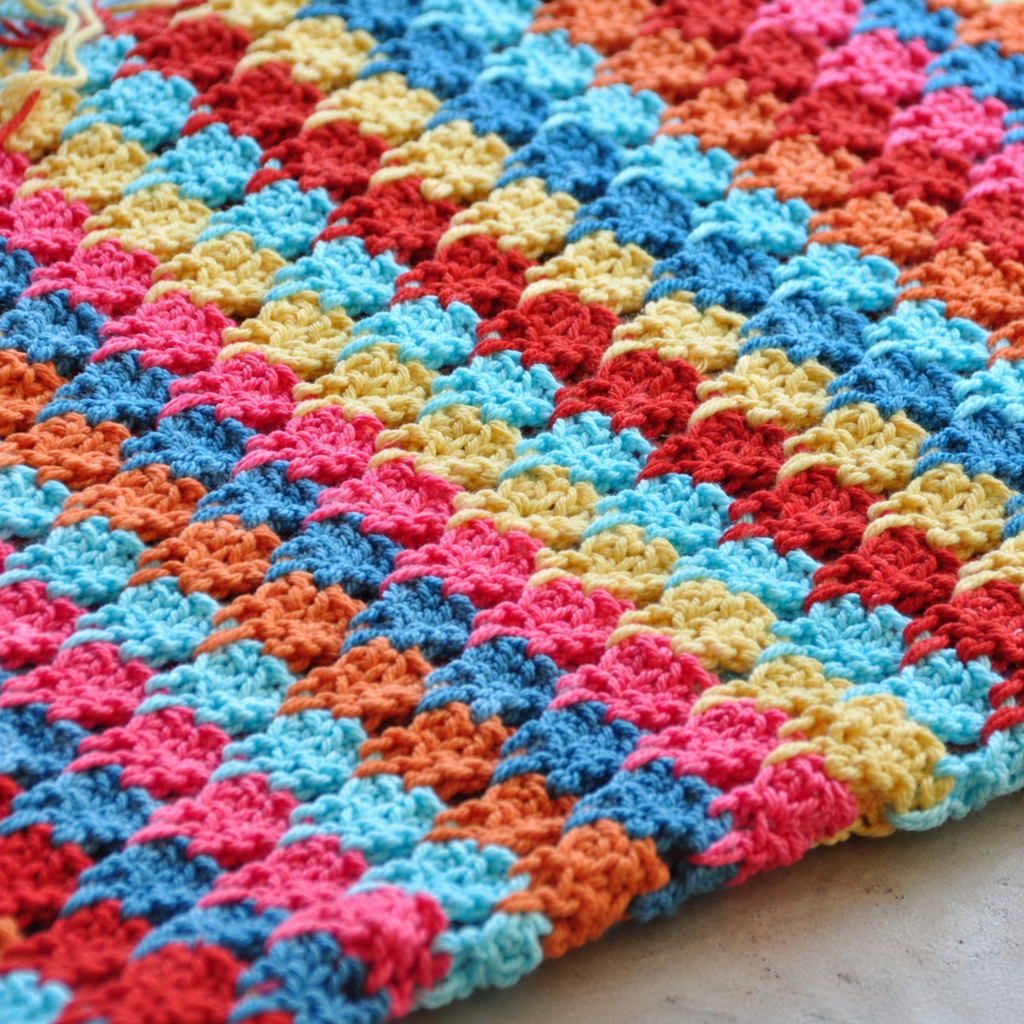
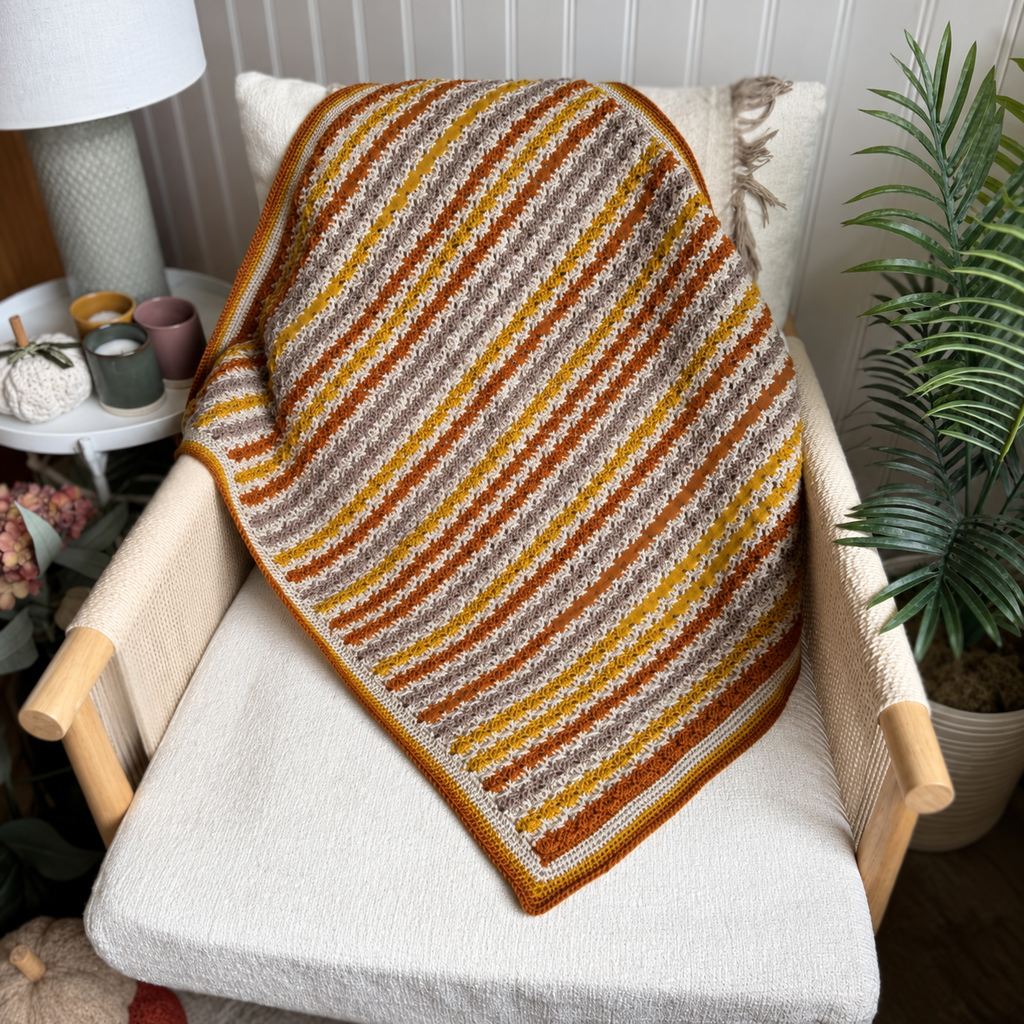
Featured Free Pattern: First Granny Stripe Blanket
This is KnotToYarn’s own original pattern, free to use, and you’re welcome to sell what you make from it.
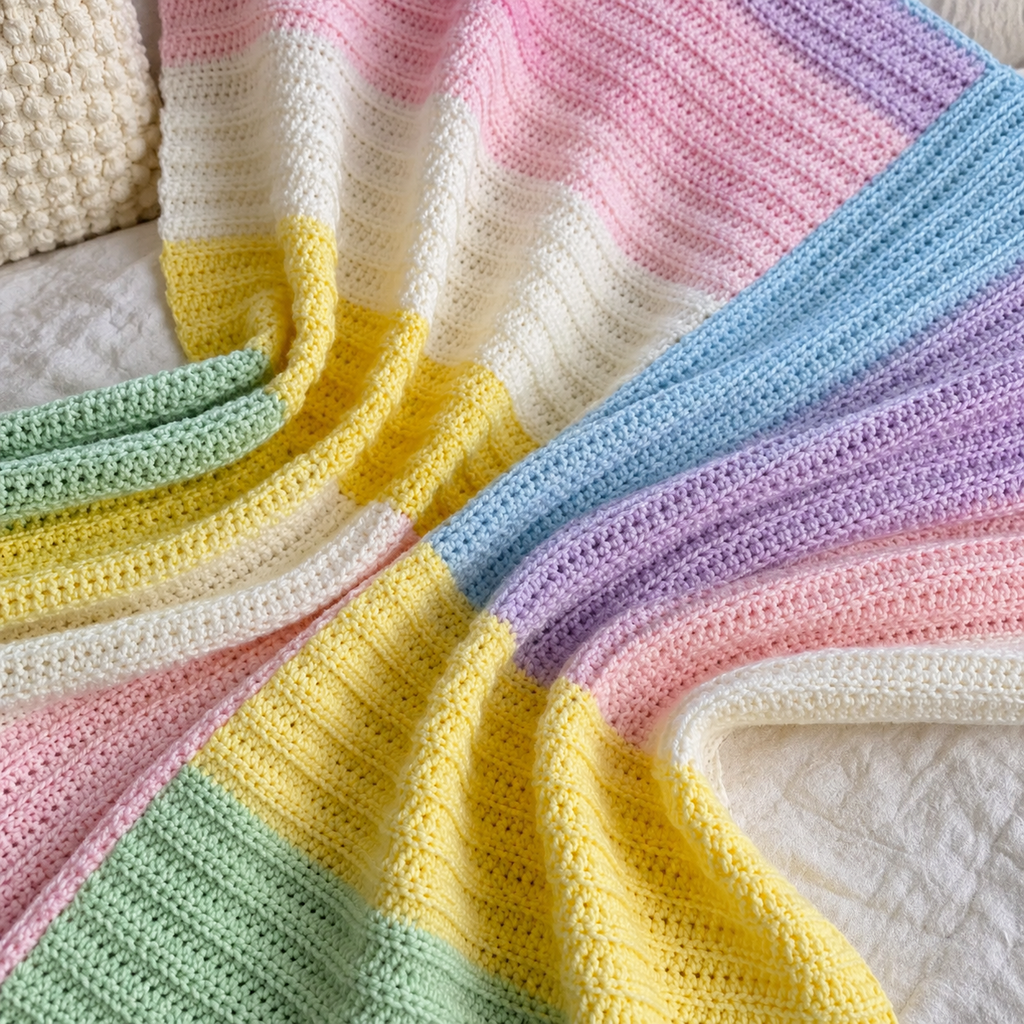
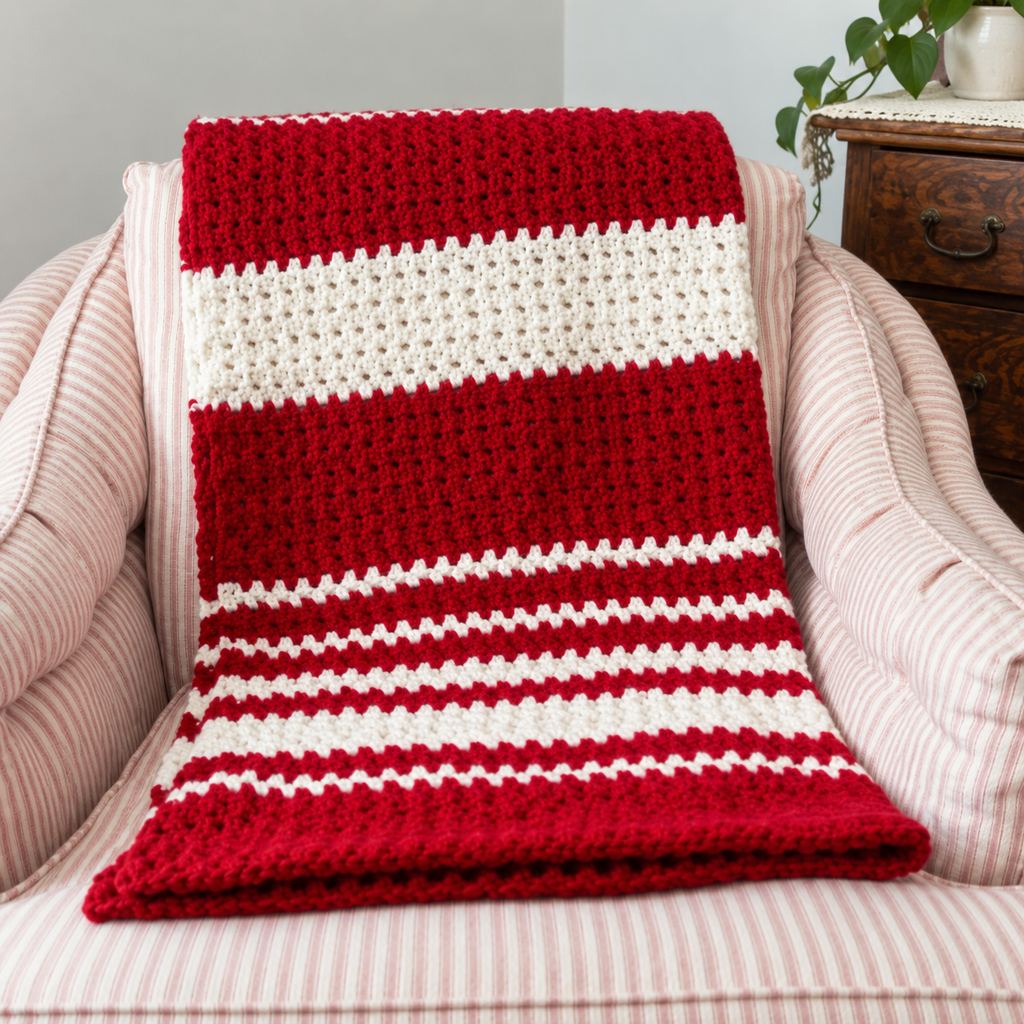
If this is your first blanket, the granny stripe is the right call: two-row rhythm, no seams, no counting after the setup. Here is the complete lap-blanket pattern, the seven choices below help you pick yarn, size, and style.
Materials
- Worsted weight (category 4) acrylic yarn, about 700 g in 3-6 colors
- 5.5 mm (US I) crochet hook
- Yarn needle, scissors
Finished size: Lap blanket, about 100 x 130 cm (40 x 51 in), adjust by changing the starting chain
Skill level: Beginner
Abbreviations (US terms): ch (chain), sc (single crochet), dc (double crochet), sp (space), cluster (3 dc in the same space), st(s) (stitch/es)
Instructions
Foundation: Ch 152 (any multiple of 3 + 2 works, that is the whole resizing rule).
Row 1: Sc in the 2nd ch from the hook and each ch across: 151 sc. Ch 3, turn.
Row 2: 2 dc in the first st. *Skip 2 sts, 3 dc in the next st;* repeat across, ending with 3 dc in the last st: 50 clusters. Ch 3, turn.
Row 3: 2 dc in the first st (the top of the turning chain), then 3 dc in each gap BETWEEN the clusters of the row below, ending 3 dc around the turning chain, the clusters land in a brick-like offset. Ch 3, turn.
Rows 4 onward: Repeat Row 3. That is the entire pattern. Change color every two rows for the classic stripe look, carrying nothing, cut and change at the edge.
Continue to 130 cm (51 in) or your target length.
Finishing
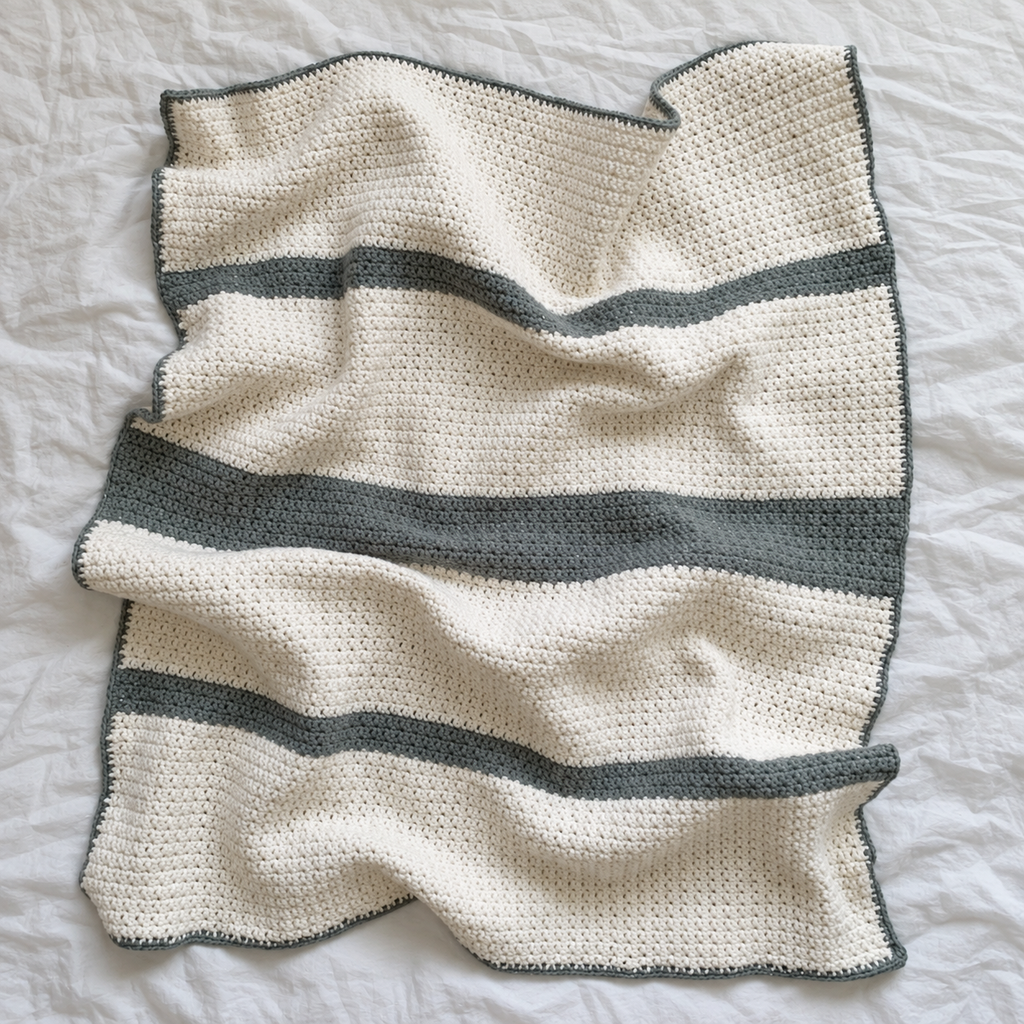
Border: Round 1, sc evenly around all four edges, 3 sc in each corner (about 2 sc per row-end on the sides). Round 2, dc in each st, (2 dc, ch 1, 2 dc) in corners. Round 3, sc around. Weave the stripe ends into their own color stripes as you go, not at the end, sixty deferred ends has killed more first blankets than any stitch ever has.
Made this? We’d love to show off your work, send a photo through our contact page and we’ll feature it here with credit to you.
Tip: Buy all the yarn for a blanket at once and check the dye lots match. Mid-blanket dye-lot shifts are invisible in the skein and glaring in the stripe.

What Are the Most Common Mistakes to Avoid?
Beginners usually struggle when the first project combines too many new skills at once. A cleaner starting point almost always leads to a better result.
Related guides
- Easiest Crochet Projects for Beginners
- Best Yarn for Beginner Crochet
- Best Crochet Hooks for Beginners
- Free Patterns hub
Helpful next steps
Easy Crochet Blanket For Beginners mistakes beginners make
Beginners usually improve faster when they know the exact mistakes to watch for early. The most common issues come from changing too many variables at once, rushing the first rows or rounds, and skipping simple checks that would prevent frustration later.
If you enjoyed learning about quick crochet projects, you might also love our guide on crochet coaster.
If you enjoyed learning about beautiful blanket patterns, you might also love our guide on rose blanket crochet pattern.
If you enjoyed learning about practical crochet accessories, you might also love our guide on crochet hair towel.
If you enjoyed learning about fun and easy crochet ideas, you might also love our guide on easy crochet patterns.
If something looks off, test one correction at a time and compare the result after a small sample. That makes it easier to understand what actually helped.
Keep in mind that easy crochet blanket pattern skills improve with every project you complete, so do not get discouraged if your first few attempts are not perfect.
Frequently Asked Questions
What is the best easy crochet blanket pattern for a first project?
The best easy crochet blanket pattern for a first project is a simple row-by-row design using only one or two basic stitches like single crochet or half double crochet. A one-stitch blanket lets you focus on maintaining consistent tension and even edges without worrying about complex pattern repeats. An easy crochet blanket pattern worked entirely in double crochet is another excellent choice because it works up quickly and builds confidence.
How many skeins do I need for an easy crochet blanket pattern?
The number of skeins you need for an easy crochet blanket pattern depends on the size and yarn weight, but a standard throw blanket typically requires 10 to 15 skeins of worsted weight yarn. A baby blanket usually needs 4 to 6 skeins, while a king-sized blanket may require 25 or more. Always check your easy crochet blanket pattern for specific yarn requirements and buy an extra skein or two to be safe.
How long does it take to finish an easy crochet blanket pattern?
An easy crochet blanket pattern can take anywhere from a weekend to a few weeks to complete, depending on the blanket size, your skill level, and how much time you dedicate to crocheting each day. A baby blanket worked in double crochet can often be finished in just a few days, while a large afghan may take two to three weeks. Choosing an easy crochet blanket pattern means less time spent on complicated stitches and more time enjoying the process.
What is the best stitch for an easy crochet blanket pattern?
The best stitches for an easy crochet blanket pattern are the double crochet, half double crochet, and granny stripe because they work up quickly and create beautiful, cozy fabric. The moss stitch is another excellent choice for beginners because it is rhythmic, easy to memorize, and produces a modern, textured look. Any of these stitches will give you beautiful results when following an easy crochet blanket pattern.
If you enjoyed this guide, you might also love our tutorials on Crochet Dish Towel Pattern, and Crochet Garland Pattern. For each design below you’ll find an overview of the construction, the stitches it uses, and tips to make your own version.