
The single crochet stitch (abbreviated SC) creates a tight, dense fabric used in amigurumi, dishcloths, and bags. The steps below show how to work it.
As an Amazon Associate we earn from qualifying purchases: some supply links in this post are affiliate links, at no extra cost to you.
Tip: For this practice swatch, work through both top loops of each stitch for an even fabric.
What Is the Single Crochet Stitch?
The single crochet stitch, abbreviated SC, is the most fundamental stitch in crochet and the one used most frequently across all pattern types. It creates a tight, dense fabric well suited to amigurumi, bags, dishcloths, and any project that needs a sturdy, close-woven texture. If you are brand new to crochet, this stitch is typically the first one you should learn after mastering the foundation chain.
Unlike taller stitches such as the half double crochet or double crochet, single crochet produces a shorter, more compact stitch. This makes it ideal for projects where you want minimal gaps between stitches. It is also the foundation for many textured stitch patterns, including the moss stitch, basketweave, and ribbing.
In US crochet terminology, “sc” is the standard name. In UK terminology, this same stitch is called “double crochet”, so always check which terminology your pattern uses before starting.
How to Single Crochet: Step-by-Step?
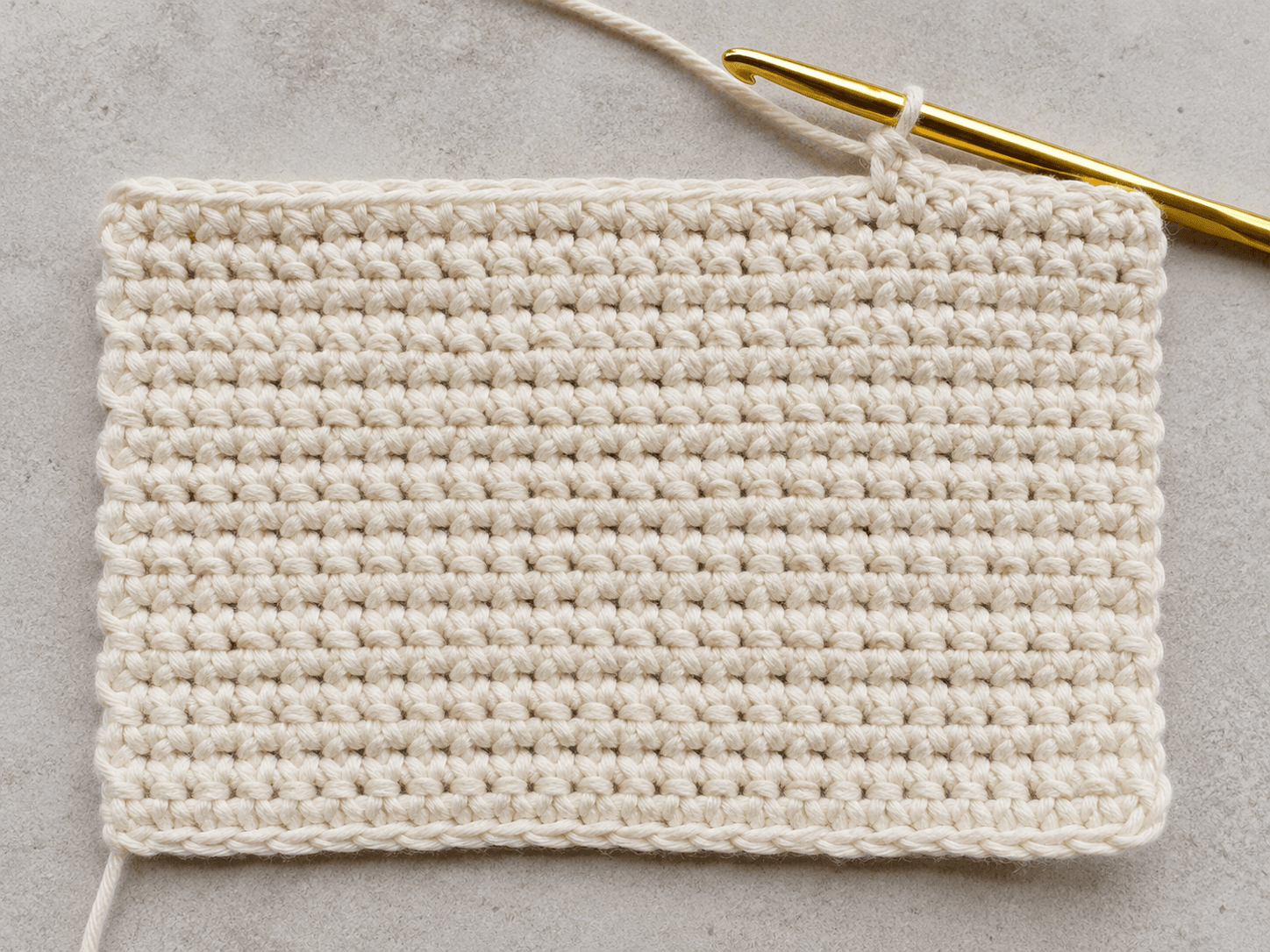
Here is the method most instructors recommend, six steps that become second nature once you find your rhythm. To create your first single crochet: If you have already made a foundation chain, start at step 1. If not, chain 20 stitches to practice on.
Step 1, Insert your hook. Insert your crochet hook into the second chain from your hook. The “second chain” means you skip the very first chain stitch closest to the hook and go into the next one. Insert the hook under the top two loops of the chain stitch (the V shape on top).
Step 2, Yarn over. Wrap your yarn over the hook from back to front. This is called a “yarn over” and is abbreviated as YO in patterns. Keep the yarn tension gentle but consistent, not too tight, not too loose.
Step 3, Pull through. Pull the yarn through the chain stitch. You should now have two loops on your hook. This is sometimes called “pull up a loop.”
Step 4, Yarn over again. Wrap the yarn over your hook once more, just like in step 2.
Step 5, Pull through both loops. Pull the yarn through both loops that are on your hook. You should now have only one loop remaining on your hook. That completes one sc stitch.
Step 6, Repeat. Move to the next chain stitch and repeat steps 1 through 5. Continue across your foundation chain until you reach the end. At the end of the row, chain 1 and turn your work to start the next row.
Tip: The chain 1 at the end of each row does NOT count as a stitch in single crochet. Always place your first sc of the new row into the very first stitch of the previous row, not into the chain-1 space.
Single Crochet Tips for Beginners
- Count your stitches after every row. This is the single most important habit for beginners. If you started with 20 stitches, you should end every row with exactly 20 stitches. If you have more, you accidentally increased. If you have fewer, you missed a stitch.
- Watch your tension. Consistent tension creates even, uniform stitches. If your stitches are getting tighter as you go, try relaxing your grip on the yarn. If they are getting looser, hold the yarn slightly tighter.
- Work under both loops. Unless a pattern tells you otherwise, always insert your hook under both top loops (the V shape) of each stitch. This creates the neatest, most even fabric.
- Use stitch markers. Place a stitch marker in the first and last stitch of each row. This makes it much easier to see where each row begins and ends, especially as your project grows.
- Do not overthink it. Single crochet is the simplest stitch. If your first few rows look a little uneven, that is completely normal. Keep going, your tension and consistency will improve with every row.
Free Single Crochet Practice
This practice pattern uses only single crochet.
Quick & Easy Single Crochet Dishcloth
Yarn: Worsted weight cotton yarn (any color)
Hook: 5.0 mm (H-8)
Abbreviations: CH = chain, SC = single crochet
Instructions:
Chain 28.
Row 1: SC in the 2nd chain from hook and in each chain across. Turn. (27 SC)
Row 2: Chain 1. SC in each stitch across. Turn. (27 SC)
Rows 3-24: Repeat Row 2.
Fasten off, leaving a 6-inch tail. Weave in both ends with your tapestry needle.
That is it. One stitch, one simple pattern, and you have a finished dishcloth. Once you are comfortable with this, check out our free crochet patterns page for more beginner-friendly projects.
You Might Also Like
Related Tutorials
Once single crochet feels comfortable, try moving on to double crochet, or see how the two stitches compare side by side in our single vs double crochet guide.