Granny Square Afghan: 7 Stunning Blanket Layout Patterns
Granny Square Afghan at a Glance

- Topic: granny square afghan
- Skill level: beginner to intermediate
- Main goal: help the reader design and assemble a stunning granny square afghan using professional layout patterns, yarn calculations, and joining techniques
- Related topics: granny square patterns, granny square crochet patterns, afghan crochet, blanket layout design, yarn yardage for crochet
Quick Answer
A granny square afghan is a large crocheted blanket made by arranging and joining multiple granny squares into a cohesive design. The secret to a stunning result lies in choosing the right layout pattern — diagonal, chevron, medallion, or color-block — and mastering professional joining techniques like the invisible seam or join-as-you-go method. Planning your square count and yarn yardage before you start ensures a polished finish.
Tip: Always crochet a gauge swatch of your granny square first so you can calculate exactly how many squares and how much yarn you will need for your desired afghan size.
At a Glance
- Skill level: beginner to intermediate
- Time needed: 2–6 weeks depending on size and complexity
- Best yarn: worsted weight acrylic or cotton blend (see our yarn guide for beginners)
- Hook size: 5.0 mm (H-8) or 5.5 mm (I-9)
Common Mistakes → Quick Fixes
- Uneven square sizes: check your crochet tension regularly and block each square before joining
- Visible seams between squares: switch to the invisible join or mattress stitch for seamless results
- Running out of yarn mid-project: calculate yardage using the formula provided in the size calculator section below
Mini Glossary
AFG — Afghan (a crocheted or knitted blanket, typically larger than a throw), GA — Gauge (the number of stitches and rows per inch), JAYG — Join As You Go (a technique for connecting squares as you crochet them), MC — Main Color (the dominant color used throughout the afghan), FO — Fasten Off (finishing a stitch by pulling the yarn through the last loop), CH — Chain Stitch (the foundation stitch in crochet), DC — Double Crochet (the primary stitch used in traditional granny squares).
KnotToYarn
Subscribe to KnotToYarn!
Get the best free crochet patterns, tutorials & tips delivered straight to your inbox. Join our growing community!
There is nothing quite as satisfying as finishing a granny square afghan — watching dozens of individually crocheted squares come together into one cozy, heirloom-quality blanket. Whether you are a first-time blanket maker or an experienced crocheter looking for fresh layout inspiration, this guide will walk you through seven stunning arrangement patterns, yarn yardage calculations, and professional joining methods that will elevate your next granny square afghan from simple to show-stopping.

Why Layout Matters for Your Granny Square Afghan

Most crocheters spend hours perfecting their granny square patterns but give surprisingly little thought to how those squares will be arranged. The layout of your granny square afghan determines its visual rhythm, color flow, and overall impact. A well-planned layout turns a collection of squares into a cohesive design that looks intentional and professionally crafted.
According to the Craft Yarn Council, afghans are among the most popular crochet projects worldwide — and the granny square afghan remains the undisputed classic. The beauty of this style lies in its modularity: each square is a building block, and the way you arrange those blocks completely transforms the finished piece.
The 7 Stunning Granny Square Afghan Layout Patterns
Below are seven proven layout patterns that work beautifully for a granny square afghan of any size. Each one creates a distinct visual effect and suits different skill levels and design goals.
1. Classic Grid Layout
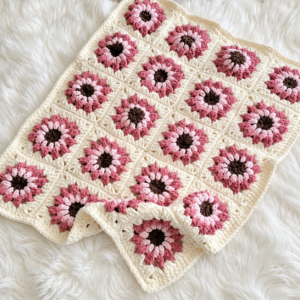
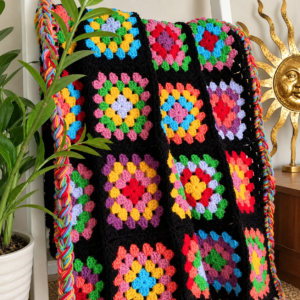
The classic grid is the most straightforward arrangement for a granny square afghan. Squares are placed in straight rows and columns, creating a clean, structured look. This layout works especially well when you are using two or three alternating colors in a repeating sequence. It is the best starting point for beginners tackling their first granny square afghan because it is easy to plan and simple to assemble.
2. Diagonal Stripe Layout
In a diagonal stripe layout, squares of the same color are placed along diagonal lines running from one corner of the afghan to the other. This creates a dynamic, eye-catching pattern that makes even a simple two-color granny square afghan look complex and modern. To achieve this effect, plan your color placement on graph paper before you begin crocheting, or use a digital stitch diagram tool to map out your diagonal rows.
3. Chevron (Zigzag) Layout
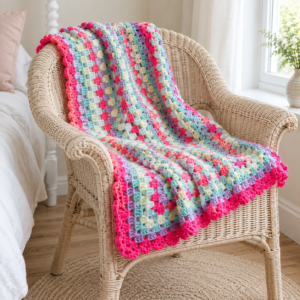
The chevron layout arranges squares in repeating V-shaped or zigzag rows across the afghan. This is an especially stunning option when each chevron stripe uses a different color from a gradient or rainbow palette. A chevron granny square afghan looks beautiful draped over a couch or bed and creates a sense of movement and energy that a standard grid simply cannot match.
4. Medallion (Center-Out) Layout
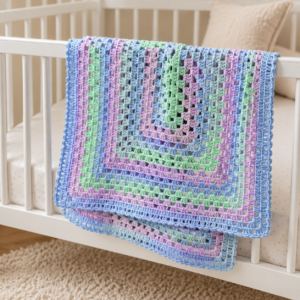
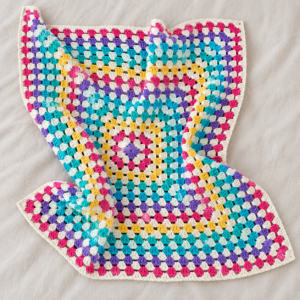
Instead of joining squares side by side, the medallion layout builds the afghan outward from a large center square or circular motif. Surrounding rounds of progressively smaller squares create a mandala-like design that is truly breathtaking. This layout is ideal for a statement piece — think a decorative bedspread or a large living room throw. It requires more planning but rewards you with a one-of-a-kind granny square afghan.
5. Color-Block Layout
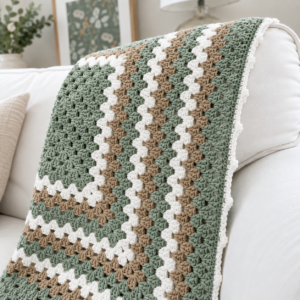
Color-blocking divides your afghan into large sections of solid or semi-solid color, with each section made up of multiple squares in the same hue. For example, the top third of your granny square afghan might be navy, the middle third cream, and the bottom third burgundy. This modern, minimalist approach looks incredibly sophisticated and works well with contemporary home decor styles.
6. Staggered (Brick) Layout
The staggered layout offsets every other row by half a square, similar to how bricks are laid in a wall. This breaks up the rigid grid pattern and creates a softer, more organic look for your granny square afghan. It works particularly well with scrappy afghans where each square uses a different color combination.
7. Picture Frame Layout
The picture frame layout uses a contrasting color of squares to create a border or “frame” around the entire afghan, often with a secondary border partway through the interior as well. This gives your granny square afghan a polished, finished appearance — like a piece of art. Use neutral tones for the frame to let the colorful center squares really pop. Browse Ravelry’s granny square afghan patterns for layout inspiration from the community.
Granny Square Afghan Size Calculator
One of the most common questions crocheters ask is how many squares they need for a specific afghan size. Use this simple calculator to plan your project:
Standard Afghan Sizes
- Baby blanket: 30″ x 36″ — approximately 42 squares (6 x 7 grid of 5″ squares)
- Lapghan / throw: 50″ x 60″ — approximately 120 squares (10 x 12 grid)
- Full-size afghan: 50″ x 70″ — approximately 140 squares (10 x 14 grid)
- King-size afghan: 90″ x 100″ — approximately 360 squares (12 x 30 grid or larger squares)
How to Calculate Square Count
Measure your finished granny square (after blocking), then divide the desired afghan width by the square width and round up. Do the same for the length. Multiply the two numbers together for your total square count. For example, if your blocked square measures 5 inches and you want a 50-inch-wide by 60-inch-long throw: 50 ÷ 5 = 10 squares wide, 60 ÷ 5 = 12 squares long, giving you 120 total squares.
Yarn Yardage for a Granny Square Afghan
Calculating yarn yardage before starting your granny square afghan prevents the frustrating experience of running out of your dye lot mid-project. Here is a reliable method:
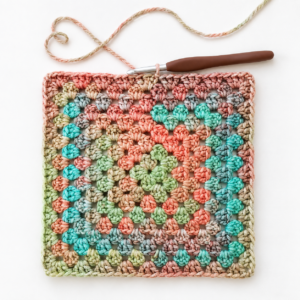
Step 1: Crochet one complete granny square using your chosen pattern and yarn. Weigh it on a digital kitchen scale. Most 5-inch worsted-weight squares weigh approximately 15–20 grams.
Step 2: Check the yarn label for the total weight per skein (typically 100 grams for worsted weight). Divide the skein weight by the single square weight to get the number of squares per skein.
Step 3: Divide your total square count by the squares-per-skein number, then round up. Add 10–15% extra for tails, joining, and border work. This gives you the total number of skeins needed.
For a 120-square throw using 15-gram squares, you would need approximately 120 × 15 = 1,800 grams of yarn, or about 18 skeins of 100-gram worsted weight yarn — plus 2–3 extra skeins for the border and joining. For more guidance on choosing the right yarn, check out our best yarn for beginner crochet guide.
Professional Joining Methods for Your Granny Square Afghan
How you join your squares can make or break the final look of your granny square afghan. Here are four professional methods, ranked from easiest to most refined:
1. Slip Stitch Join
The slip stitch join is the fastest method and creates a visible ridge on the right side of the afghan. Hold two squares with right sides together and slip stitch through the outer loops of both squares. This is a great option for a beginner-friendly granny square afghan where speed is the priority.
KnotToYarn
Subscribe to KnotToYarn!
Get the best free crochet patterns, tutorials & tips delivered straight to your inbox. Join our growing community!
2. Single Crochet Join
Similar to the slip stitch join but using single crochet, this method creates a more substantial seam with a decorative raised line. It works beautifully on a chunky granny square afghan where the seam itself becomes part of the design.
3. Invisible (Mattress Stitch) Join
The mattress stitch creates a nearly invisible seam by working through the inner loops of both squares. It produces the cleanest, most professional finish for a granny square afghan. While it takes more time, the result is well worth the effort — the finished afghan looks almost as if it was crocheted in one continuous piece. If your squares are not matching up evenly, check your crochet tension and block your squares before attempting this join.
4. Join As You Go (JAYG)
The JAYG technique connects each new square to the afghan as you crochet its final round, eliminating the need to seam squares at the end. This is a favorite among experienced crocheters because it provides instant gratification — you can see your granny square afghan growing with every square. The granny square crochet pattern you choose may include JAYG instructions, but the technique can be adapted to most standard patterns.
Adding the Perfect Border to Your Granny Square Afghan
A border does more than finish the edges of your granny square afghan — it unifies the design, hides any minor size inconsistencies between squares, and gives the blanket a polished, professional appearance. For a classic look, work 2–3 rounds of double crochet in a neutral shade around the entire perimeter. For more texture, try a scalloped shell border or a crab stitch (reverse single crochet) edging. Always block your afghan after adding the border for the smoothest, flattest finish.
Frequently Asked Questions
How many granny squares do I need for a full-size afghan?
For a standard full-size afghan measuring 50 inches by 70 inches, you typically need around 140 granny squares if each square measures 5 inches after blocking. This assumes a 10-by-14 grid layout. If you use larger 6-inch squares, you will need approximately 98 squares in a grid of roughly 8 by 12. Always crochet a gauge swatch first and calculate based on your actual finished square size rather than the pattern estimate.
What is the best joining method for a granny square afghan?
The best joining method depends on your skill level and the look you want. The invisible mattress stitch gives the cleanest, most professional finish and is ideal for a polished granny square afghan. The join-as-you-go method saves time by connecting squares as you crochet them, which is excellent for intermediate crocheters. Beginners may prefer the slip stitch or single crochet join because they are straightforward and the visible seam can actually become a design element.
How much yarn do I need for a granny square afghan?
Yarn requirements vary based on square size, pattern complexity, and afghan dimensions. As a general rule, a 50-by-60-inch throw afghan made with 5-inch worsted-weight granny squares requires approximately 1,800 to 2,000 grams of yarn, which is roughly 18 to 20 skeins of standard 100-gram worsted weight yarn. Always add 10 to 15 percent extra for tails, seaming, and the border to avoid running short.
Can I mix different granny square patterns in one afghan?
Absolutely — mixing different granny square patterns in one afghan creates a rich, sampler-style look that is very popular. The key is to ensure all your squares finish at the same size. You can do this by adjusting the number of rounds or the hook size for each pattern. Blocking every square to identical dimensions before joining is essential for a neat result. A sampler-style granny square afghan is a wonderful way to use up leftover yarn from other projects too.
What is the easiest granny square afghan layout for beginners?
The classic grid layout is the easiest option for beginners because it requires no special planning — simply join your squares in straight rows and columns. It works well with any number of colors and is very forgiving of minor size variations between squares. Start with a small lapghan or baby blanket size to build confidence before moving on to more complex layouts like diagonal stripes, chevrons, or medallion designs.