Granny Square Table Runner: 7 Seasonal Patterns
As an Amazon Associate we earn from qualifying purchases: some supply links in this post are affiliate links, at no extra cost to you.
A handmade table runner transforms any dining space from ordinary to extraordinary, and a granny square table runner pattern is a great way to put your crochet skills to use while creating something practical and beautiful. Whether you’re decorating for a holiday, refreshing your home decor for a new season, or looking for a thoughtful handmade gift, this guide has everything you need.
Below are six seasonal designs, each with a materials list, measurements in both centimeters and inches, a hook size, and assembly notes. They all share one base square, so you can make a single runner or build out a set that changes with the season.
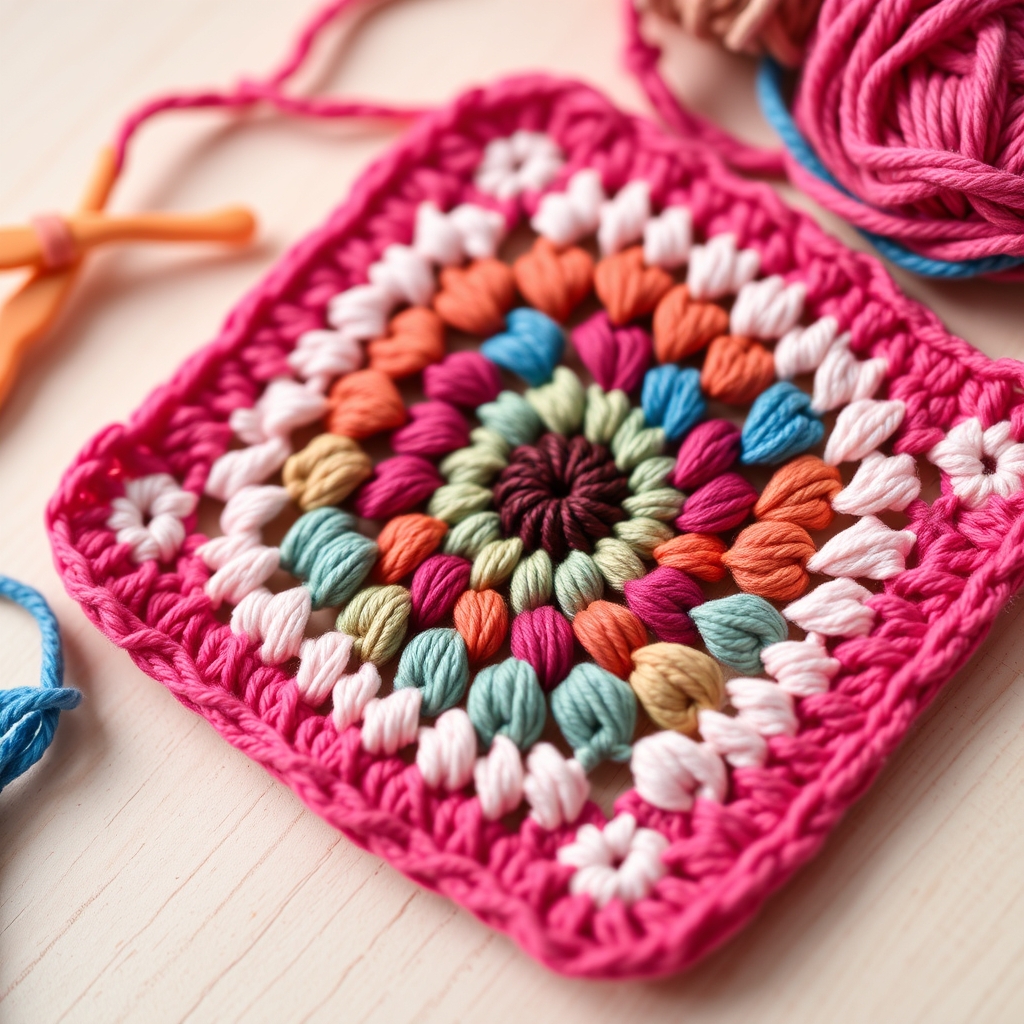
granny square table runner pattern: Why a Granny Square Table Runner?
A table runner is a great middle-ground project. It uses the same modular squares as a blanket, but only 15-30 of them, so you can finish one over a weekend or two instead of committing to months of crochet.
Benefits of a Crocheted Table Runner
| Benefit | Details |
|---|---|
| Quick to Complete | 15-30 squares (5-15 hours depending on design) |
| Low Yarn Investment | 300-600 yards (275-550 m) total, 1-4 skeins |
| Modular Design | Easy to customize length for any table |
| Seasonal Versatility | Make one for each season/holiday |
| Great for Gifts | Personalized, handmade, and practical |
| Portable Project | Individual squares are perfect for on-the-go crafting |
| Skill Building | Practice joins, edgings, and colorwork in a small project |
Pro Tip: A table runner is one of the best easy crochet projects for practicing new joining techniques. Because the runner is relatively small, you can experiment with different join methods and see results quickly. It’s a low-risk way to build skills before tackling larger projects like a blanket or bag.
Standard Table Runner Sizes
Runners come in a few standard sizes, pick whichever suits your table. Our table runner guide has more on sizing.
| Table Size | Runner Length | Runner Width | Overhang Each Side | Squares Needed (10 cm) | Squares Needed (12.5 cm) |
|---|---|---|---|---|---|
| Small / Side table | 60 cm (24 in) | 20 cm (8 in) | 10 cm (4 in) | 12 (6 × 2) | 8 (4 × 2) |
| Dining table (4-person) | 120 cm (48 in) | 25 cm (10 in) | 15 cm (6 in) | 30 (10 × 3) | 20 (8 × 2) |
| Dining table (6-person) | 150 cm (60 in) | 30 cm (12 in) | 15 cm (6 in) | 48 (12 × 4) | 30 (10 × 3) |
| Console / Entry table | 90 cm (36 in) | 20 cm (8 in) | 10 cm (4 in) | 18 (9 × 2) | 12 (6 × 2) |
| Holiday / Buffet | 180 cm (72 in) | 30 cm (12 in) | 15 cm (6 in) | 60 (15 × 4) | 42 (14 × 3) |
How to Measure Your Table
- Measure table length: Run a tape measure from one end to the other
- Measure table width: Across the narrowest dimension
- Add overhang: Add 15-20 cm (6-8 in) to each end for the drape
- Determine width: Standard runner width is 20-30 cm (8-12 in), which is roughly 1/3 of your table width
- Calculate squares: Divide your total dimensions by your square size to get the grid
Pro Tip: For a standard 6-person dining table (150 × 90 cm / 60 × 36 in), a runner that’s 150 cm long and 25 cm wide is ideal. Using 10 cm (4 in) squares, that’s 15 squares long × 3 squares wide = 45 squares total. This is a very manageable number for a weekend project.
Essential Materials?
Yarn Selection
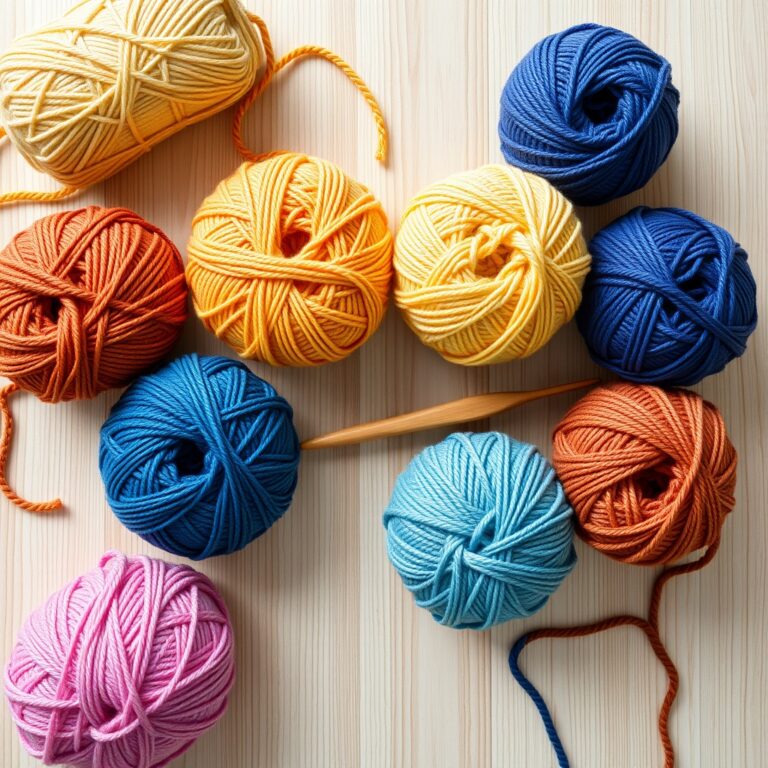
Go with a durable, washable yarn that keeps its shape, cotton or a cotton-acrylic blend is ideal. Our yarn guide has specific picks.
| Yarn Type | Pros | Cons | Best For |
|---|---|---|---|
| 100% Cotton | Durable, holds shape, machine washable, matte finish | Can be stiff, no stretch | Everyday runners, kitchen decor |
| Cotton-Acrylic Blend | Soft, slight drape, affordable, wide color range | Slight pilling possible | All-purpose, seasonal designs |
| Acrylic | Very affordable, soft, wide color range | Can pill, less heat resistant | Holiday/occasional use only |
| Bamboo | Beautiful sheen, eco-friendly, antibacterial | More expensive, can stretch | Special occasion runners |
| Linen | Beautiful texture, very durable, elegant drape | Expensive, can be stiff before washing | High-end, heirloom pieces |
Hook Sizes
Refer to our hook size chart for conversions. For most table runner projects:
Sport / DK weight: 3.5-4.0 mm (US E-G), produces a finer, more delicate runner
Worsted weight: 4.5-5.0 mm (US 7-H), the most common choice for durability
Bulky weight: 5.5-6.5 mm (US I-K), for quick, chunky designs
Notions
- Stitch markers for round counting
- Tapestry needle for weaving ends
- Measuring tape (cm and inches)
- Blocking mats and T-pins
- Row counter
The Universal Granny Square Base
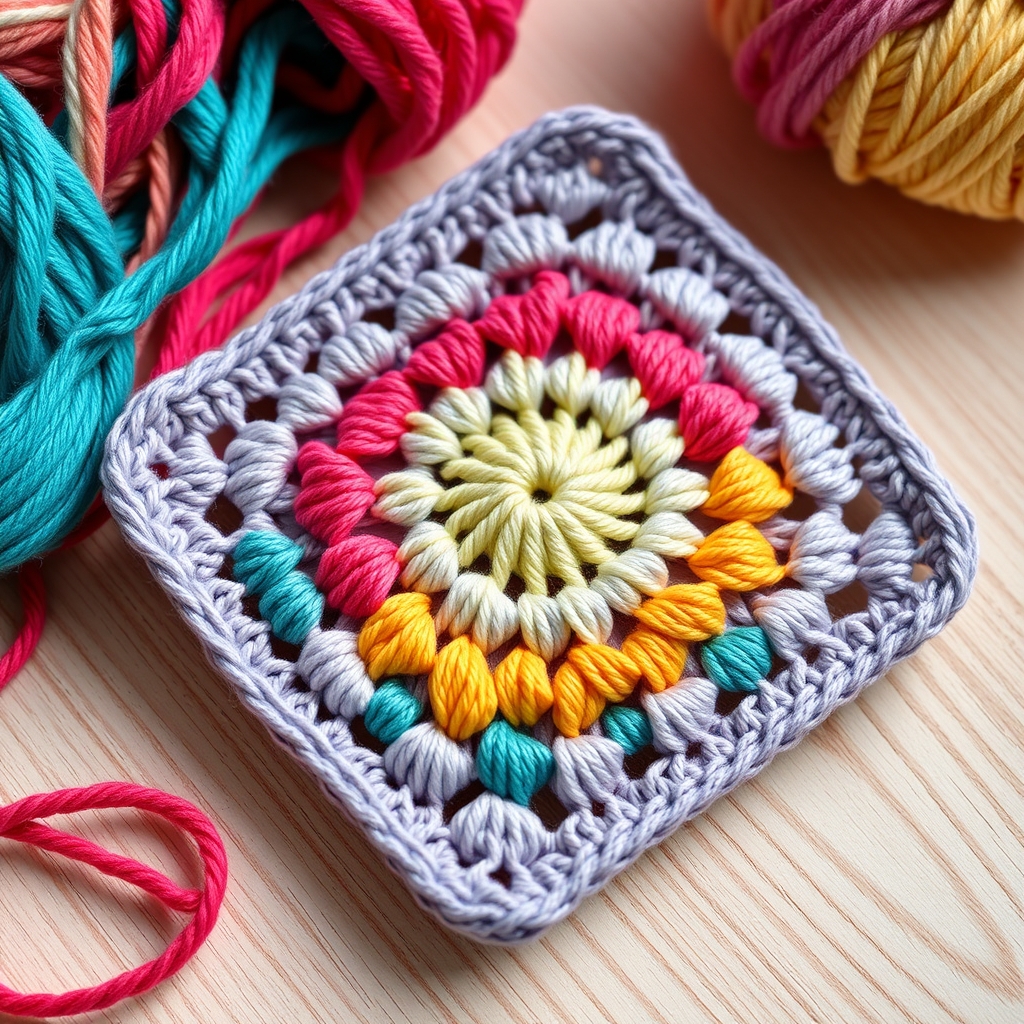
Every design here is built on the same basic granny square, just with different colors and the odd stitch tweak. Learn the one square and you can make all six.
The 4-Round Square (10 cm / 4 in)
It’s the same square from our basic granny square pattern, sized to finish at 10 cm (4 in) with worsted yarn and a 4.5 mm (US 7) hook.
Round 1
Magic ring, chain 3 (counts as first dc), work 2 dc in the ring, *ch 2, 3 dc in the ring*. Repeat from * to * two more times. Ch 2, join with a sl st to the top of the beginning ch-3. (4 groups of 3 dc, 4 ch-2 spaces)
Round 2
Sl st to the first ch-2 space. Ch 3, (2 dc, ch 2, 3 dc) in the same space (corner made). *3 dc in the next ch-2 space, (3 dc, ch 2, 3 dc) in the next ch-2 space (corner).* Repeat from * to * around. Join. (8 dc per side, 4 ch-2 corners)
Round 3
Sl st to the first ch-2 space. Ch 3, (2 dc, ch 2, 3 dc) in the same space (corner). *3 dc in each ch-2 space across the side, (3 dc, ch 2, 3 dc) in the corner space.* Repeat around. Join. (12 dc per side, 4 ch-2 corners)
Round 4
Sl st to the first ch-2 space. Ch 3, (2 dc, ch 2, 3 dc) in the same space (corner). *3 dc in each ch-2 space across the side, (3 dc, ch 2, 3 dc) in the corner space.* Repeat around. Join. Fasten off. (16 dc per side, 4 ch-2 corners)
Finished size: approximately 10 cm × 10 cm (4 in × 4 in). For a solid version, substitute chain-1 spaces for chain-2 and fill with dc.
Pro Tip: For a table runner, consistency is more important than speed. Every square must be the same size for a flat, even runner. If your squares are coming out different sizes, check our guide on why granny squares are different sizes and block all squares to identical measurements before joining.
Design 1: Spring Garden Table Runner
Soft pastels and fresh greens, for that just-stepped-into-the-garden feel. It suits Easter brunch, Mother’s Day, or really any spring table.
Specifications
- Finished Size: 120 cm × 25 cm (48 in × 10 in)
- Squares: 30 (12 × 2 with alternating sizes) or 24 (8 × 3 grid)
- Square Size: 10 cm × 10 cm (4 in × 4 in)
- Yarn: DK weight cotton (4.0 mm / US G hook)
- Yarn Needed: 400 m (440 yards), approximately 3 skeins of 100g DK cotton
Color Palette
- Color A. Leaf Green: Rounds 1-2 of all squares
- Color B. Pink: Round 3
- Color C. Cream: Round 4
- Accent. Lavender: Center flower detail (optional)
Optional Flower Center
For select squares (every other one), add a small crochet flower in the center before beginning Round 1. Work 6 sc in the magic ring, pull tight, then start Round 1 of the granny square around the flower center. This adds a charming floral detail without significantly increasing the square size.
Layout
Arrange 12 squares in a single row (or 8 squares × 3 rows for a wider runner). Alternate between plain squares and flower-center squares for a rhythmic, garden-like pattern. The border will tie everything together.
Pro Tip: Spring colors photograph beautifully in natural light. For the most Instagram-worthy results, photograph your finished runner on a white or light wood table near a window with indirect sunlight. Pair with fresh flowers for a styling touch that makes the crochet really pop.
Design 2: Summer Coastal Table Runner
A breezy coastal palette, blues, whites, sandy neutrals. This is the one for patio dinners and long summer lunches outside.
Specifications
- Finished Size: 150 cm × 25 cm (60 in × 10 in)
- Squares: 36 (18 × 2) or 30 (10 × 3)
- Square Size: 10 cm × 10 cm (4 in × 4 in)
- Yarn: Worsted weight cotton-acrylic blend (4.5 mm / US 7 hook)
- Yarn Needed: 550 m (600 yards), approximately 4 skeins
Color Palette
- Color A. Navy: Round 1
- Color B. Sky Blue: Round 2
- Color C. Sandy Beige: Round 3
- Color D. White: Round 4
Wave Pattern Variation
On alternate squares, replace Round 3 with a moss stitch round using Color B. This creates a subtle textural variation that mimics the rhythm of waves. The moss stitch round is worked as: *sc in next dc, ch 1, skip next dc* around. This adds approximately 0.5 cm (0.2 in) to the square size, so adjust your hook to 4.0 mm for these squares if needed.
Pro Tip: Cotton yarn is essential for summer table runners. It’s heat-resistant, so you can place warm dishes directly on the runner without worrying about melting (which can happen with acrylic yarn). It’s also machine washable, making cleanup after outdoor dining easy. See our yarn guide for cotton recommendations.
Design 3: Autumn Harvest Table Runner
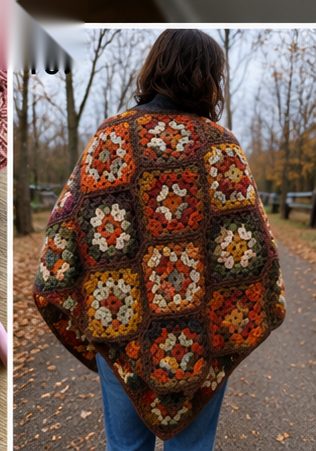
Deep autumn colors with optional little leaf motifs. It carries a table from September through Thanksgiving and adds some cozy warmth to the room.
Specifications
- Finished Size: 150 cm × 30 cm (60 in × 12 in)
- Squares: 48 (16 × 3) or 45 (15 × 3)
- Square Size: 10 cm × 10 cm (4 in × 4 in)
- Yarn: Worsted weight cotton-acrylic blend (4.5 mm / US 7 hook)
- Yarn Needed: 700 m (765 yards), approximately 5 skeins
Color Palette
- Color A. Burnt Orange: Round 1
- Color B. Mustard Gold: Round 2
- Color C. Burgundy Wine: Round 3
- Color D. Cream: Round 4
- Accent. Forest Green: Optional leaf appliqués
Optional Leaf Appliqué
Crochet small leaf shapes using simple shaped crochet techniques and sew them onto select squares. Each leaf uses approximately 3 m (3 yards) of yarn and measures 4 cm × 2 cm (1.5 in × 0.75 in). Place one leaf in the center of every third square for a scattered autumn leaf effect.
Simple Leaf Pattern
Chain 8. Sc in 2nd ch from hook, hdc in next, dc in next 2, hdc in next, sc in next. Now work along the other side of the chain: sc, hdc, dc, dc, hdc, sc. Fasten off, leaving a 15 cm (6 in) tail for sewing. Use the tail to attach the leaf to the center of a square.
Pro Tip: For a fully seasonal table setting, coordinate your runner with matching crochet coasters and a centerpiece basket in the same color palette. The cohesive look ties your entire dining experience together.
Design 4: Winter Wonderland Table Runner
Crisp whites, icy blues, and soft greys for a quieter, more formal winter look, Christmas dinner, New Year’s Eve, that kind of evening.
Specifications
- Finished Size: 150 cm × 25 cm (60 in × 10 in)
- Squares: 30 (10 × 3)
- Square Size: 10 cm × 10 cm (4 in × 4 in)
- Yarn: DK weight cotton or cotton-acrylic (4.0 mm / US G hook)
- Yarn Needed: 450 m (490 yards), approximately 3-4 skeins
Color Palette
- Color A. Icy Blue: Round 1
- Color B. Silver Grey: Round 2
- Color C. White: Round 3
- Color D. Ice Blue (lighter): Round 4
Snowflake Center Detail
For select squares, add a tiny snowflake appliqué to the center. Using white crochet thread and a 2.0 mm hook, work a 6-petal flower motif: chain 6, sl st to form a ring, *ch 3, sl st in ring* 6 times, then *ch 3, sl st in 2nd ch of petal, ch 3, sl st in next petal* around. Attach to the center of the square with matching thread.
Pro Tip: White crochet shows every speck of dust and food stain. While cotton is machine washable, pre-treat your white runner with a fabric protector spray before the first use. This makes spot cleaning between washes much easier, a lifesaver during holiday entertaining.
Design 5: Everyday Neutral Table Runner
Creams, beiges, and greys, the one that goes with everything and never looks out of season. If you want a runner you’ll actually use all year, this is it.
Specifications
- Finished Size: 120 cm × 25 cm (48 in × 10 in)
- Squares: 24 (8 × 3), using solid granny squares
- Square Size: 10 cm × 10 cm (4 in × 4 in)
- Yarn: Worsted weight cotton (4.5 mm / US 7 hook)
- Yarn Needed: 350 m (385 yards), approximately 3 skeins
Color Palette
- Color A. Warm Cream: Rounds 1-2
- Color B. Taupe: Rounds 3-4
Why Solid Squares Work Best Here
This design looks best in solid granny squares. Without the open chain-space holes, the fabric reads more like woven linen than classic crochet, which is exactly the point if you like a understated, modern look.
Pro Tip: A neutral table runner is the most versatile home decor investment. It pairs with any tableware, works for casual breakfasts and formal dinners alike, and moves easily between seasons. If you only make one granny square table runner pattern, make it this one. You can always layer seasonal doilies or coasters on top for holiday-specific styling.
Design 6: Holiday Festive Table Runner
Classic red-and-green Christmas, with optional jingle-bell accents if you want a bit of fun. This is the showpiece of the bunch.
Specifications
- Finished Size: 180 cm × 30 cm (72 in × 12 in)
- Squares: 60 (15 × 4)
- Square Size: 10 cm × 10 cm (4 in × 4 in)
- Yarn: Worsted weight acrylic or cotton-acrylic (4.5 mm / US 7 hook)
- Yarn Needed: 900 m (985 yards), approximately 6-7 skeins
Color Palette
- Color A. Forest Green: Rounds 1 and 3
- Color B. Classic Red: Rounds 2 and 4
- Color C. Gold (optional): Every 5th square, Rounds 3-4
Holly Berry Center
For special squares, add a tiny holly motif in the center: work 5 sc in a magic ring in red for berries, then attach 2 small green leaves on opposite sides. Each holly motif uses approximately 2 m (2 yards) of red and 3 m (3 yards) of green yarn.
Pro Tip: The holiday runner is the largest project in this collection. Don’t feel pressured to finish it all at once. Make 5-10 squares per week, and you’ll have it done in 6-12 weeks. Store completed squares in a dedicated crochet storage container to keep them organized and clean while you work.
Joining Techniques for Table Runners
How you join the squares matters more here than on most projects. A runner sits flat under plates and glasses, so the seams need to be smooth, or things wobble.
Recommended Method: Invisible Flat Join
For the flattest finish, use the invisible join-as-you-go method from our JAYG tutorial, worked through front loops only, the seam basically disappears on the right side.
Alternative: Whip Stitch (Wrong Side)
Or keep it simple: hold two squares wrong sides together and whip stitch through both layers with a tapestry needle, one stitch per dc. Secure, flat, and beginner-friendly.
Method Comparison for Runners
| Method | Flatness | Speed | Visibility | Dish-Friendly |
|---|---|---|---|---|
| Invisible JAYG | Excellent | Medium | Nearly invisible | Yes, very flat |
| Whip Stitch (WS) | Very Good | Slow | Invisible on RS | Yes, flat |
| Single Crochet Join | Good | Fast | Visible ridge | Acceptable |
| Chain-Loop JAYG | Fair (lumpy) | Fast | Decorative loops | No, uneven surface |
| Slip Stitch JAYG | Excellent | Fast | Minimal | Yes, very flat |
Pro Tip: For a table runner, always choose the flattest joining method possible. A lumpy or raised seam will cause plates and glasses to wobble. Test your chosen method by joining 3 squares and placing a plate on top, if it wobbles, switch to a flatter method. If you’re struggling with tension causing uneven joins, practice on scrap yarn first.
Border Options
A border frames the whole thing and gives it a finished edge. Four options, from plain to fancy:
Border 1: Simple Single Crochet (Beginner)
Work 1-2 rounds of sc around the entire perimeter. Work 3 sc in each corner. This provides a clean, minimal edge. For a 120 × 25 cm runner, you’ll work approximately 290 sc stitches for one round.
Border 2: Shell Border (Intermediate)
Round 1: Sc evenly around (3 sc in each corner).
Round 2: *Skip 2 sc, 5 dc in next sc, skip 2 sc, sl st in next sc.* Repeat around. This creates evenly-spaced shells along the edge. For a 120 cm runner, expect approximately 20-22 shells on the long sides and 6-7 on the short sides.
Border 3: Picot Edge (Decorative)
Work 1 round of sc. On the next round: *sc in next 3 stitches, (ch 3, sl st in first ch) for picot*. Repeat around. The tiny picots add a delicate, lace-like finish that suits spring and winter designs.
Border 4: Granny Stripe (Coordinated)
Work 2 rounds of granny clusters (3 dc groups) around the perimeter. This echoes the square design and creates visual continuity. Work (3 dc, ch 2, 3 dc) in each corner. This border adds approximately 2.5 cm (1 in) to each dimension.
Blocking and Care Instructions
Why Blocking Is Essential for Table Runners
Because a runner lies flat in plain view, any wave or curl shows. Blocking is what takes it from homemade to handmade, and if you’re fighting curling, blocking is almost always the fix.
How to Block Your Table Runner
- Wet block: Soak the completed runner in cool water with wool wash for 15-20 minutes
- Remove and squeeze: Gently squeeze out excess water (never wring or twist)
- Roll in a towel: Roll the runner in a clean towel and press to remove more moisture
- Pin to measurements: Pin the runner to a blocking mat at the exact finished dimensions from your pattern
- Pin every 5 cm: Place a pin every 5 cm (2 in) along all edges, plus pins along any seams that are wavering
- Pin corners: Use T-pins at each corner, pulling slightly to create crisp 90-degree angles
- Dry completely: Allow to air dry for 24-48 hours, or use a fan for faster drying
Care Instructions
| Yarn Type | Washing | Drying | Ironing | Storage |
|---|---|---|---|---|
| Cotton | Machine wash cold, gentle cycle | Lay flat or tumble dry low | Low heat if needed | Folded, in a cool dry place |
| Cotton-Acrylic | Machine wash cold | Lay flat to dry | Do not iron | Folded, avoid compression |
| Acrylic | Hand wash cool water | Lay flat absolutely | Do not iron (will melt!) | Folded loosely |
| Bamboo | Hand wash cool | Lay flat | Cool iron | Folded, away from sunlight |
| Linen | Machine wash warm | Lay flat or tumble low | Medium-high heat | Roll or fold |
Pro Tip: For everyday runners, make a simple cotton backing. Cut a piece of cotton fabric 1 cm (0.4 in) larger than your finished runner on all sides. Hem the edges, then hand-stitch the backing to the wrong side of the crochet runner. This protects your table surface, adds weight so the runner stays in place, and makes the runner reversible, crochet on one side, fabric on the other.
Frequently Asked Questions
How many granny squares do I need for a table runner?
It depends on your table and square size. For a 6-person table (about 150 cm / 60 in), figure roughly 15 ten-cm (4 in) squares for a single row, or 45 for a wider three-row runner. For a 4-person table (120 cm / 48 in), plan on 12-30. The sizing section above has the exact math.
What is the best yarn for a crochet table runner?
Cotton, or a cotton-acrylic blend. Cotton is tough, washable, holds its shape, and shrugs off heat from hot dishes, which matters here. Paintbox Cotton DK, Lion Brand 24/7 Cotton, and Berroco Vintage all work well. Skip 100% acrylic; it can melt under a hot pan. More in our yarn guide.
Should I block my granny square table runner?
Yes, don’t skip it. A runner has to lie dead flat, and unblocked crochet tends to wave and curl. Wet-block it (soak, pin to size, let it dry), and budget a day or two for drying before you actually need it.
Can I make a table runner with different sized granny squares?
You can, with a bit of planning. A common trick is larger squares in the middle and smaller ones at the ends for a tapered look, say twelve 15 cm squares in a 3×4 grid, or a medallion layout around one big center square. Just make sure any edges that join have the same stitch count.
How do I keep my table runner from sliding on the table?
For additional patterns, see Ravelry table runner patterns and Spruce Crafts table runner guide.
Three fixes: add a cotton fabric backing (the weight keeps it put), slip a thin non-slip liner underneath, or crochet a mesh backing that grips the table.
How long does a granny square table runner take to make?
For a standard runner (120-150 cm long, 25 cm wide) in 10 cm squares, plan on about 8-15 hours of crochet, roughly 5-10 making squares, 2-3 joining, 1-2 on the border, plus a day or two of (hands-off) blocking. A solid weekend project. New to crochet? Our beginner guide and pattern-reading guide cover the basics.
Pick the season that fits your table, grab your yarn, and enjoy the make. For more around the home, see our decor patterns, coasters, and baskets.