Crochet Wide Leg Pants: 7 Boho Ideas + a Free Any-Size Pattern

Crochet Wide Leg Pants: 7 Boho Ideas + a Free Any-Size Pattern

Crochet Wide Leg Pants: 7 Boho Ideas + a Free Any-Size Pattern

Quick Answer

Crochet wide-leg pants are a fun, satisfying garment project. Beginner or experienced, they’re a great make, and easier than they look. Tip: start with a small swatch to check your gauge before beginning the full project.

At a Glance

  • Skill level: beginner to intermediate
  • Time needed: 4-12 hours depending on complexity
  • Best yarn: worsted weight cotton or acrylic blend
  • Hook size: 5.0 mm (H-8) or 5.5 mm (I-9)

Common Mistakes → Quick Fixes

  • Tension too tight: relax your grip and use a larger hook if needed
  • Uneven edges: count your stitches at the end of every row
  • Wrong yarn weight: always check the pattern recommended yarn and match your gauge

Mini Glossary

SC, Single Crochet, DC, Double Crochet, CH, Chain, SL ST, Slip Stitch, HDC, Half Double Crochet, MR, Magic Ring

This is KnotToYarn’s own original pattern, free to use, and you’re welcome to sell what you make from it.

Wide-leg boho pants are simpler than they look: each leg is one big rectangle, seamed and joined with a gusset-free rise, finished with a drawstring waist. This formula pattern works for any size because you build it from your own four measurements.

Materials

  • DK or sport weight cotton or cotton-linen yarn, about 400-600 g depending on size (drapey plant fibers are essential, acrylic wide-legs sag)
  • 4.0 mm (US G) crochet hook
  • 2 m of cord, ribbon, or a crocheted chain for the drawstring
  • Measuring tape, stitch markers, yarn needle

Finished size: Custom, built from your own measurements (instructions include the formula)
Skill level: Intermediate
Abbreviations (US terms): ch (chain), dc (double crochet), sc (single crochet), st(s) (stitch/es), BLO (back loop only)

Instructions

Step 1: Measure and Swatch

Take four measurements: hip circumference (the widest point), waist-to-floor length, inseam (crotch to ankle), and your desired leg opening width. Then crochet a 15 x 15 cm swatch in dc and count your stitches and rows per 10 cm. Do not skip the swatch, every number below depends on it.

Step 2: The Math

Each leg rectangle’s WIDTH = (hip circumference ÷ 2) + 10 cm of ease. Convert to stitches using your swatch. Example: 100 cm hips → 60 cm wide rectangle → at 18 dc per 10 cm, chain enough for 108 dc.

Each rectangle’s HEIGHT = waist-to-floor minus 4 cm (the waistband adds the rest). The RISE (the unseamed top section) = height minus inseam.

Step 3: Make Two Rectangles

Row 1: Ch your calculated width plus 2. Dc in the 3rd ch from the hook and each ch across. Ch 2, turn.

Following rows: Dc in each st across. Repeat until the rectangle reaches your calculated height. Make a second rectangle identical. For airy summer pants, substitute a granny stripe or filet mesh row pattern, the geometry stays the same.

Step 4: Seam

Fold each rectangle in half lengthwise, right sides together. Seam the long open edge from the bottom hem UP to the start of the rise, this is the inner leg. You now have two tubes, each with an unseamed top flap. Turn right side out, place the tubes side by side, and seam the two rises together front and back: the front rise seam and back rise seam connect the two legs into pants.

Step 5: The Waistband

Round 1: Join yarn at the back seam and sc evenly around the entire waist opening. Rounds 2-5: Dc around. Round 6 (drawstring channel): *Dc 3, ch 1, skip 1*; repeat around. Round 7: Dc in each st and ch-1 sp around. Thread the drawstring through the ch-1 holes.

Finishing

Try the pants on and mark your preferred final length, then add or remove hem rows, wide legs look best hitting at the ankle bone. Finish each hem with one round of sc (or a picot round for a boho edge). Weave in all ends and wet-block the pants flat: plant-fiber fabric relaxes and drapes dramatically better after its first soak.

Made this? We’d love to show off your work, send a photo through our contact page and we’ll feature it here with credit to you.

Tip: Crochet fabric grows with gravity. Hang the finished pants overnight BEFORE hemming, then hem to the length they actually settle at, this is the step that separates handmade-looking pants from boutique-looking ones.

Pair this with our oversized openwork shirt pattern for a complete boho-inspired crochet wardrobe that works well for summer layering.

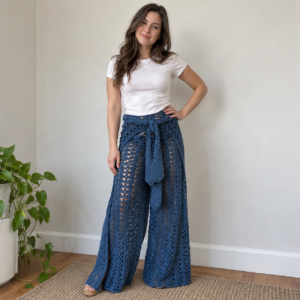
Crochet wide-leg pants hit a nice sweet spot between boho style and everyday comfort, a loose, flowing shape that works for summer wear, beach cover-ups, and relaxed lounging. New to garment crochet or just after your next warm-weather project, these are more approachable than they look and deliver real style.

Below you’ll find seven free patterns for flared crochet trousers, plus which yarns and stitches give that signature drape and how to customize the fit. Let’s dive in.

this design: At a Glance

Quick Answer: Crochet wide-leg pants are loose-fitting, ankle-length trousers worked from the waist down in the round, typically using lightweight cotton or bamboo yarn and simple stitch patterns like double crochet or granny stitch.

  • Best yarn: Worsted or DK weight cotton or bamboo blend
  • Skill level: Beginner to intermediate
  • Common stitches: Double crochet, half double crochet, granny stitch, shell stitch
  • Average yardage: 800-1,500 yards depending on size

Common Mistakes to Avoid for crochet wide leg pants

  • Using a stiff yarn (like acrylic), it won’t drape properly for flared trousers
  • Skipping a gauge swatch. For the best results with crochet wide leg pants, always check your gauge before starting the main piece, which leads to pants that are too tight or too baggy
  • Forgetting to increase gradually for the hip area before working the leg straight

Mini Glossary

  • Flare: The gradual widening of the leg opening from hip to hem
  • Drape: How fabric hangs and flows; soft yarns have better drape
  • Worked in the round: Crocheting in continuous spirals or joined rounds without turning
  • Rise: The measurement from waistband to crotch (high-rise, mid-rise, or low-rise)

Why Wide Leg Crochet Pants Are Having a Moment

Boho fashion never really goes away, but flared crochet trousers have come back in a big way. That flowing, floor-grazing shape pairs effortlessly with crop tops, oversized linen shirts, and swimsuits for a layered beach look. Unlike fitted crochet, wide-leg designs are all about comfort, the relaxed fit moves with you and breathes in warm weather.

The appeal goes beyond looks. Making your own pants means you control every detail, the fiber, the colors, the rise, the exact amount of flare. Ready-to-wear options can be pricey and rarely fit everyone well, so a handmade pair gets you a custom garment for a fraction of the cost.

Best Yarn for Wide Leg Crochet Pants

The yarn is arguably your most important decision here. The whole look comes down to how the fabric drapes, and not all yarns behave the same.

Cotton Yarn: The Top Choice

The Craft Yarn Council recommends cotton for warm-weather garments, and for good reason. Cotton is breathable, machine-washable, and softens beautifully with wear. Look for worsted or DK weight cotton yarns with a mercerized finish for a subtle sheen that improves the finished piece.

Popular cotton yarns for this type of project include:

  • Lion Brand 24/7 Cotton: smooth, mercerized, excellent stitch definition
  • Bernat Handicrafter Cotton: soft and affordable for larger projects
  • Drops Paris Cotton: a budget-friendly option with a wide color range

Bamboo and Cotton Blends

Bamboo adds lovely drape and a soft sheen, and a cotton-bamboo blend gives you the best of both, cotton’s durability plus bamboo’s fluid drape. It’s ideal if you want the trousers to flow and sway as you walk. Look for a smooth twist to minimize splitting.

If you’re newer to choosing yarns, our guide on the best yarn for beginner crochet covers fiber basics that apply here too.

Essential Stitches for Flowing Crochet Pants

Part of why these are beginner-friendly is that they rely on simple, repetitive stitch patterns. You don’t need complex colorwork or intricate lace to make a stunning garment.

Double Crochet (DC)

The workhorse of crochet garments. Double crochet is fast to work, makes a relatively open fabric, and drapes well with the right yarn. Many patterns use a straightforward double crochet fabric worked in the round from the waistband down.

Half Double Crochet (HDC)

Half double crochet makes a slightly denser fabric than DC while still draping well. It’s a good choice if you want more opacity in the finished pants, handy if you’ll wear them as standalone trousers rather than a beach cover-up.

Granny Stitch

The classic granny stitch (clusters of three double crochets separated by chain spaces) adds visual interest and a distinctly boho vibe. It’s also one of the fastest-growing stitch patterns, meaning your project will work up quickly. If you’ve already tried a granny stitch top pattern, you’ll feel right at home here.

Shell Stitch

Shell stitch creates a wavy, scalloped texture that looks gorgeous in cotton yarn. It’s a bit more open than double crochet, making it well suited to lightweight summer layers.

If you’re still mastering your stitches, our beginner crochet guide walks through each one step by step.

How Flared Crochet Trousers Are Constructed

Most patterns for flared crochet trousers follow a similar construction method:

1. Waistband: Start with a chain, then work in the round to create a fitted or slightly elasticized waistband. Some patterns use a drawstring or folded-over waistband for adjustability.

2. Hip increases: Gradually increase stitches over several rounds to accommodate the hips. The number and frequency of increases depend on your measurements and the rise height.

3. Crotch split: Once the hip area is complete, the work splits into two leg tubes. You’ll chain across the gap for the crotch, then continue each leg separately in the round.

4. Legs with flare: Work the legs straight or with a subtle decrease at the thigh, then gradually increase toward the ankle to create the wide leg opening. The amount of flare is up to you, a gentle A-line looks classic, while a dramatic bell-bottom creates maximum boho drama.

5. Hem and finishing: Add a decorative border or simply fasten off with a clean edge. Many patterns include a simple single crochet or reverse single crochet (crab stitch) hem.

Keeping track of your rounds is essential for symmetrical results. If you struggle with this, check our tutorial on how to count crochet rows for reliable methods.

7 Free Crochet Wide Leg Pants Patterns

Now for the fun part, seven gorgeous, free patterns to get you started. Each one brings a unique take on the flared silhouette. Whether you prefer bold color blocks or understated neutrals, there’s a pair here for every style.

1. The Boho Bell-Bottom Pants

A classic high-rise design with a dramatic flare starting at the knee. Worked in double crochet with a granny stripe color block pattern, these flared trousers are great for festivals and summer evenings. Uses approximately 1,200 yards of worsted cotton.

2. Linen-Blend Beach Palazzo Pants

Designed specifically as a beach cover-up, these palazzo-style pants use an open shell stitch pattern that creates beautiful airflow. The mid-rise waistband with a drawstring tie makes them adjustable and comfortable. Worked in DK weight cotton, they require about 900 yards.

3. The Minimalist Summer Trousers

For a cleaner, more modern look, these pants use a simple half double crochet fabric with subtle shaping. The gentle A-line flare is understated and versatile, pair them with a tucked-in blouse for brunch or a bikini top for the pool. Requires 1,000 yards of cotton-bamboo blend yarn.

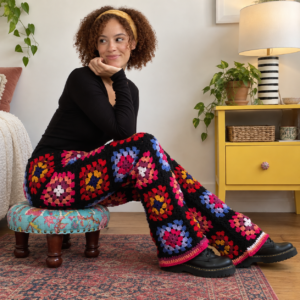
4. Granny Square Flow Pants

This design takes the boho aesthetic to the next level by incorporating granny square motifs into the garment. The upper portion is worked solid, and the lower legs feature joined granny squares that create a stunning geometric pattern. A conversation starter for sure.

5. The High-Waisted Crochet Flare

A flattering high-waisted silhouette with ribbing at the waistband for a secure fit. The legs feature a subtle ripple stitch that adds texture without bulk. This pattern includes detailed instructions for five sizes, making it one of the most accessible options for beginners. Uses around 1,100 yards of worsted cotton.

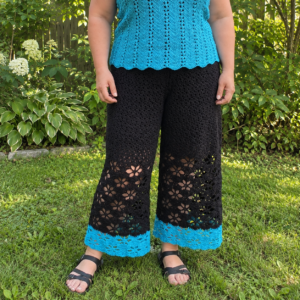
6. Lace Panel Wide Leg Pants

These elegant trousers combine a solid double crochet upper panel with a delicate lace stitch pattern on the lower legs. The lace panels create a peek-through effect that works well for layering over swimwear or wearing as evening loungewear on vacation.

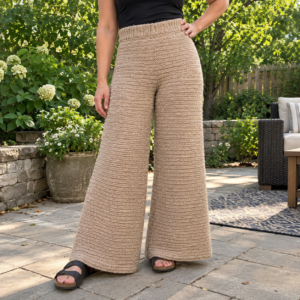
7. The Everyday Crochet Palazzos

Designed for daily wear, these palazzo pants use a dense enough stitch pattern to be worn as regular trousers. The moderate flare, mid-rise waist, and clean finishing make them versatile enough for running errands, casual outings, or relaxing at home. Works up beautifully in any solid or tonal cotton yarn.

Styling Your Flowing Crochet Pants

The beauty of handmade flared trousers is their versatility. Here are some popular ways to wear them:

  • Beach day: Layer over a swimsuit with a wide-brim hat and sandals
  • Festival wear: Pair with a cropped tank top and layered jewelry
  • Casual summer: Tuck in a simple tee and add espadrilles or slides
  • Evening relaxed: Combine with a lightweight linen button-up for a resort-ready look
  • Lounging at home: Wear with your favorite oversized sweater for ultimate comfort

The key is choosing the right underlayer. Since crochet is inherently textured and sometimes slightly open depending on the stitch pattern, lightweight slip shorts or a similar undergarment ensure comfort and confidence.

Tips for a Perfect Fit

Even though wide leg designs are forgiving, a few adjustments make a big difference:

  • Always swatch: Crochet a gauge swatch in the round before starting. A too-tight swatch means finished pants will be too small; a too-loose swatch means they’ll be oversized.
  • Try on as you go: The hip section is the hardest to adjust after the fact. Try the pants on after completing the hip increases to verify fit before splitting for the legs.
  • Customize the rise: Prefer high-waisted? Add extra rounds before the hip increases. Want mid-rise? Start your increases sooner.
  • Adjust the flare: More increases toward the hem = more dramatic flare. Fewer increases = a subtler, straighter leg.
  • Block your finished pants: Wet-blocking cotton yarn smooths out stitches, evens the fabric, and gives the best possible drape. It’s worth the extra step.

For garment-making beginners, building your skills with simpler wearable projects first can help. Our crochet skirt pattern guide is a great stepping stone to pants since many construction principles are the same.

Related Patterns You Might Enjoy

Frequently Asked Questions

Are wide leg crochet pants difficult to make?

Not at all. Most patterns use basic stitches like double or half double crochet worked in the round. If you’re comfortable with those and can follow increases, you can absolutely make these. Start with a simpler solid-fabric pattern before trying colorwork or lace.

What yarn weight is best for wide leg crochet pants?

Worsted (weight 4) or DK (weight 3) cotton or cotton-bamboo blend yarn is ideal. These weights provide the right balance of drape, durability, and stitch definition. Avoid bulky yarns, which create stiff, heavy fabric, and lace-weight yarns, which may be too sheer for comfortable wear. For crochet wide leg pants specifically, a worsted cotton will give you the best combination of structure and movement.

How much yarn do I need for a pair of flared crochet trousers?

Most adult sizes require between 800 and 1,500 yards of yarn, depending on the pattern, stitch density, size, and length. Check your specific pattern for exact yardage requirements, and always buy an extra skein to account for gauge differences.

Can I wear crochet wide leg pants as regular clothing?

Yes, absolutely. If you choose a dense stitch pattern (like half double crochet) and a quality cotton yarn, your handmade pants can be worn as everyday trousers. For more open stitch patterns, they work best as beach cover-ups or layered over leggings.

How do I care for my finished crochet wide leg pants?

Hand washing in cold water with a gentle detergent is the safest method, then lay flat to dry. Many cotton yarns are machine-washable on a delicate cycle, but always check your yarn label first. Avoid hanging wet pants to dry, as this can stretch them out of shape.

Final Thoughts on Your New Flared Trousers

Crochet wide-leg pants are one of the most rewarding garments you can make. They’re comfortable, surprisingly straightforward to construct, and the result is a one-of-a-kind piece you won’t find in stores. Beach, festival, or the patio, a handmade pair quickly becomes a warm-weather favorite.

If you’re looking for even more pattern ideas, browse the community on Ravelry, it’s an incredible resource for discovering new designs and connecting with fellow crocheters.

Happy hooking, and enjoy the process of creating your perfect pair!

Similar Posts

Leave a Reply

Your email address will not be published. Required fields are marked *