Chick Crochet Pattern: 5 Easy Pieces for an Adorable Spring Amigurumi
Looking for a pattern that actually works? You are in the right place. This guide breaks everything down step by step so you can finish your project with confidence.
\nChick Crochet Pattern at a Glance
- Topic: chick crochet pattern
- Skill level: beginner
- Main goal: help the reader crochet a cute amigurumi chick for Easter or spring decor using simple stitches and super bulky yarn
- Related topics: amigurumi patterns, Easter crochet, magic ring, single crochet stitch, crochet toys
Quick Answer
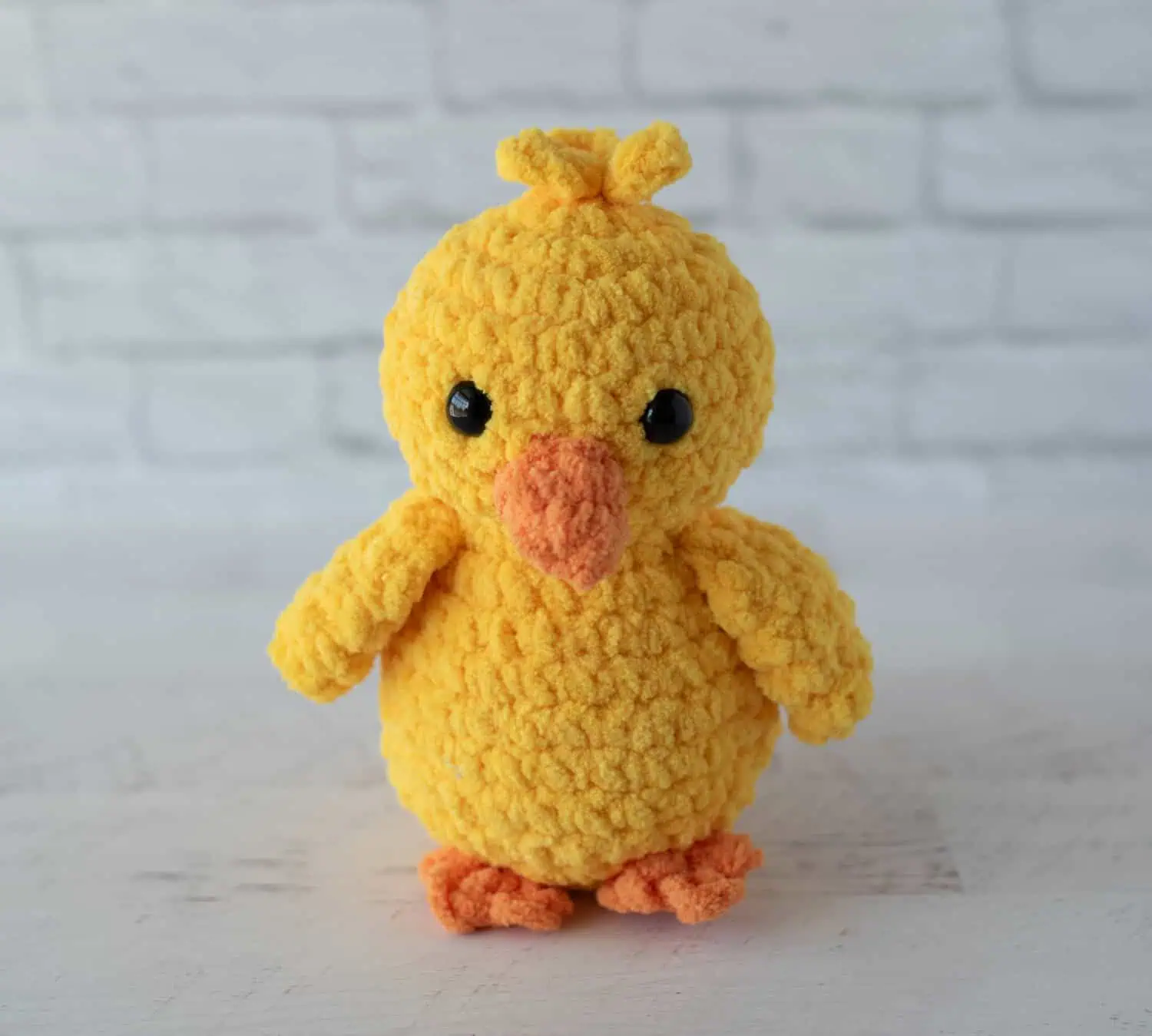
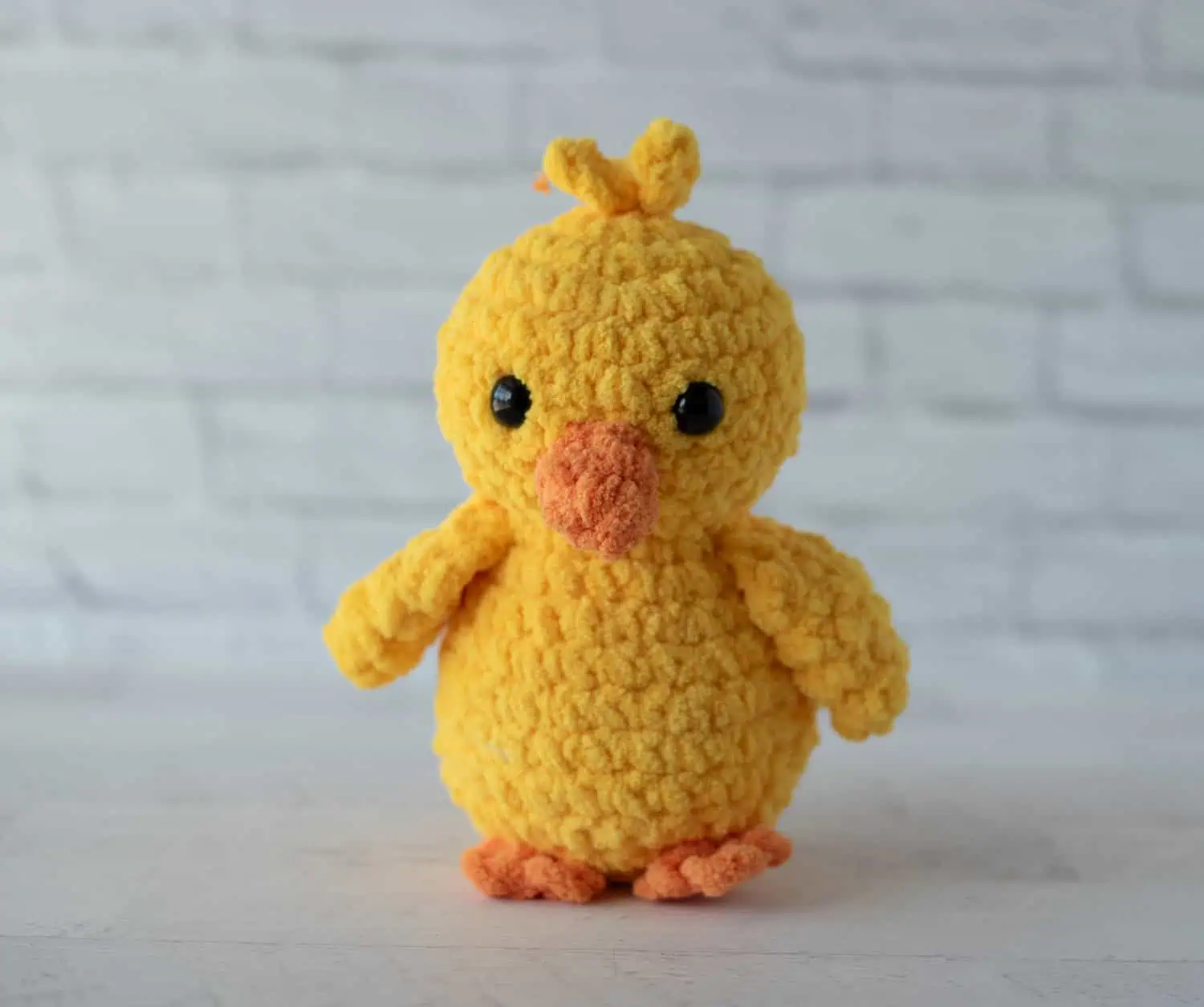
This chick crochet pattern is a beginner-friendly amigurumi project that works up quickly in super bulky chenille yarn. You will crochet the head and body as one piece, then add a beak, wings, feet, and feather details. The finished chick measures about 8 inches tall and makes a perfect Easter basket stuffer or handmade spring gift.
\nTip: Use stitch markers to keep track of your rounds — this pattern is worked in continuous rounds, so losing your place is the most common mistake beginners make.
At a Glance
- Skill level: beginner
- Time needed: 2-3 hours
- Best yarn: Premier Basix Chenille Brights (size 6 super bulky)
- Hook size: US K10.5 (6.5mm)
Common Mistakes → Quick Fixes
- Losing track of rounds: place a stitch marker in the last stitch of every round and move it up as you go
- Uneven stuffing: stuff firmly but not too tight — aim for a squishy, rounded shape that holds its form
- Crooked eyes or beak: pin all facial features in place before sewing, then adjust until the expression looks right
Mini Glossary
sc (single crochet), sc2tog (single crochet 2 together/decrease), sl st (slip stitch), ch (chain), magic ring (adjustable starting loop for amigurumi), st (stitch)
 KnotToYarn
Subscribe to KnotToYarn!
Get the best free crochet patterns, tutorials & tips delivered straight to your inbox. Join our growing community!
This chick crochet pattern is one of the cutest beginner amigurumi projects you will ever make. If you have been looking for a quick, satisfying Easter crochet project that uses simple stitches and works up in a single afternoon, this pattern is exactly what you need. The finished piece is soft, squishy, and full of personality — perfect for spring baskets, nursery shelves, or handmade gifts.
What makes this chick crochet pattern extra special is the construction. The head and body are crocheted as one seamless piece, which means less sewing and a cleaner finish. You only need to attach the beak, wings, feet, and feather details at the end. The entire project uses basic stitches like single crochet, increases, and decreases — nothing complicated at all.
Before we start, make sure you are comfortable with a single crochet stitch and know how to work in the round. If you need a refresher on starting amigurumi, check out our guide on the magic ring technique — it is the starting point for this and most amigurumi patterns.
Why You Will Love This Chick Crochet Pattern
There are plenty of amigurumi chick patterns floating around online, but here is what sets this one apart from the crowd.
Quick to finish. Because this chick crochet pattern uses super bulky weight yarn and a 6.5mm hook, the stitches are large and the project moves fast. Most crocheters can complete the entire piece in about two to three hours, making it ideal for last-minute Easter gifts or craft fair inventory.
Minimal assembly required. The head and body are worked as a single continuous piece from top to bottom. That means no fiddly neck joins or seaming two halves together. Only the small details — beak, wings, feet, and feathers — need to be sewn on at the end, and even that takes just a few minutes.
Super plush texture. Chenille yarn gives this chick crochet pattern an incredibly soft, velvety finish that makes the finished amigurumi extra huggable. It is the kind of texture that makes people want to pick it up and squeeze it, which is exactly what you want from a toy or gift.
Beginner-friendly construction. If you know how to single crochet, increase, and decrease, you can make this chick. There are no complex color changes, no tricky stitch patterns, and no advanced shaping techniques. It is a perfect confidence-builder for anyone new to amigurumi.
Materials You Will Need
Before you begin this chick crochet pattern, gather your supplies. Having everything ready before you start will make the process smoother and more enjoyable.
- Yarn: Premier Basix Chenille Brights, size 6 super bulky weight, 100% polyester — approximately 55 yards of lemon yellow and 6 yards of tangerine orange
- Crochet hook: US K10.5 (6.5mm)
- Safety eyes: 14mm black safety eyes (2)
- Stitch marker: 1 stitch marker for tracking rounds
- Fiberfill: polyester stuffing for the body and head
- Tapestry needle: for weaving in ends and sewing on parts
- Scissors
If you are new to crochet and need help choosing the right hook size, our crochet hook size guide breaks down all the standard sizes and when to use each one.
Yarn substitution tip: You can use any size 6 super bulky yarn for this chick crochet pattern, but keep in mind that different brands have slightly different thicknesses. Premier Parfait, for example, tends to be loftier than Premier Basix, so you may want to go down to a 5mm hook if you switch brands. The finished chick will still look proportional either way.
Gauge and Finished Size
The gauge for this chick crochet pattern is approximately 5 single crochet stitches to 2 inches. However, exact gauge is not critical for amigurumi — the finished chick will stay in proportion even if your tension is slightly looser or tighter than the pattern suggests.
When completed with the recommended yarn and hook, the finished chick measures approximately 8 inches tall and 6.5 inches wide. That is a perfect size for small hands to hold, for sitting on a shelf, or for tucking into an Easter basket. If you use thinner yarn, your chick will be smaller; if you use bulkier yarn, expect a larger result.
How to Crochet the Chick — Complete Instructions
This chick crochet pattern is worked in continuous rounds using a stitch marker to track your progress. The head and body are crocheted as one piece, starting at the top of the head and working downward. Let’s walk through each part step by step.
Head and Body (One Piece)
Using yellow yarn, make a magic ring and work the following rounds:
R1: 6 sc into ring. Place stitch marker and work in continuous rounds. (6 st)
R2: 2 sc in each st. (12 st)
R3: *Sc in next st, 2 sc in next. Repeat from * around. (18 st)
R4: *Sc in next 2 st, 2 sc in next. Repeat from * around. (24 st)
R5-R8: Sc around. (24 st)
R9: *Sc in next 2 st, sc2tog. Repeat from * around. (18 st)
R10: *Sc in next st, sc2tog. Repeat from * around. (12 st)
Insert safety eyes between rows 6 and 7, leaving 4 stitches between them. Stuff the head firmly and continue to stuff the body as you work.
R11: *Sc in next st, 2 sc in next. Repeat from * around. (18 st)
R12: *Sc in next 2 st, 2 sc in next. Repeat from * around. (24 st)
R13: Sc around. (24 st)
R14: *Sc in next 5 st, 2 sc in next. Repeat from * around. (28 st)
R15-R18: Sc around. (28 st)
R19: *Sc in next 5 st, sc2tog. Repeat from * around. (24 st)
R20: *Sc in next st, sc2tog. Repeat from * around. (16 st)
Firmly stuff the rest of the body.
R21: *Sc2tog. Repeat from * around. (8 st). Fasten off, weave end through last stitches and pull tight to close.
Beak
With orange yarn, make a magic ring.
R1: 4 sc into ring. Work in rounds. (4 st)
R2: (Sc in next st, 2 sc in next st) twice. (6 st). Fasten off using an invisible join if preferred.
Sew the beak between and below the eyes. The beak should cover all of row 8 and parts of rows 7 and 9, or adjust placement to your liking.
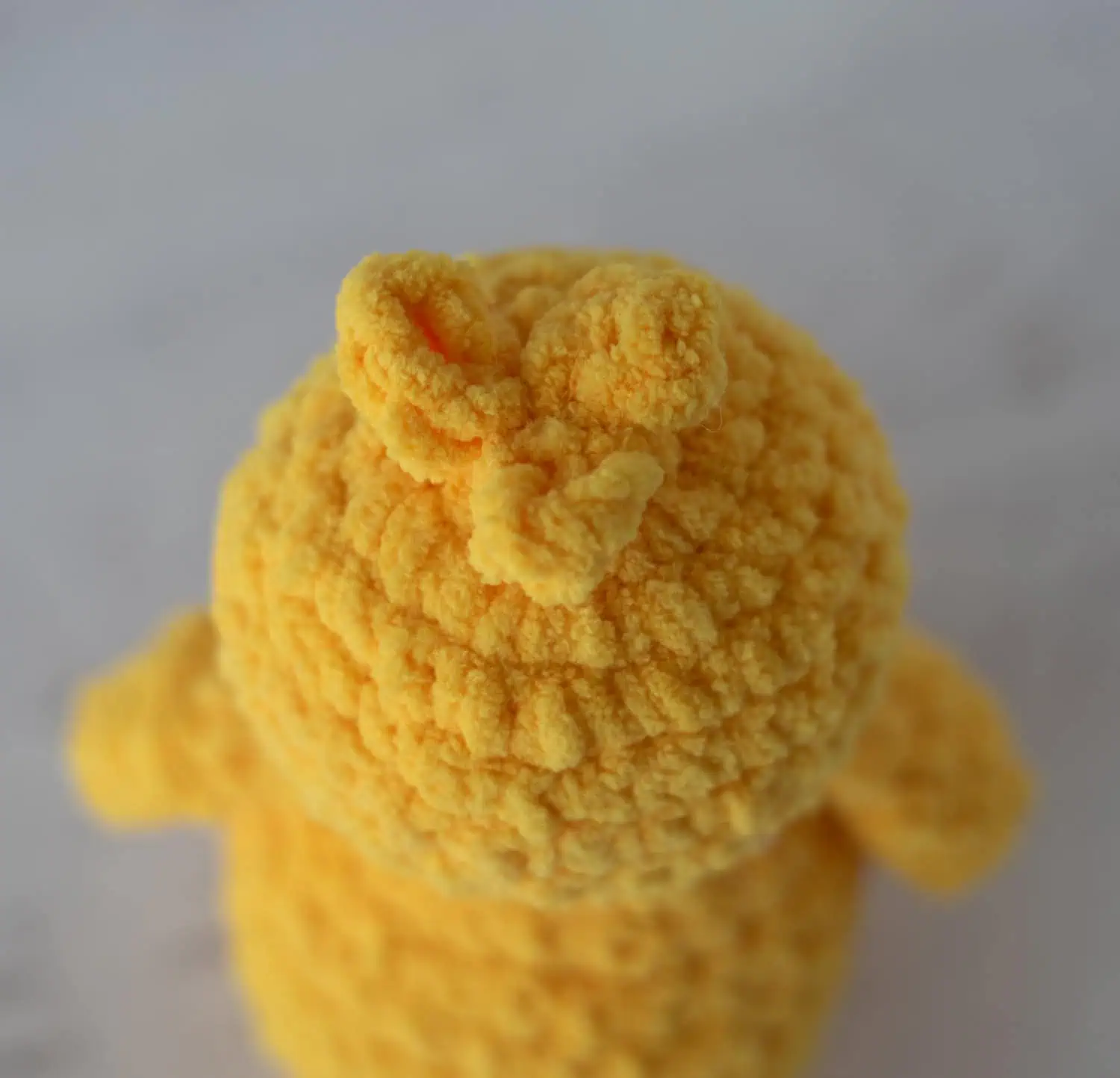
Top Feathers (Hair)
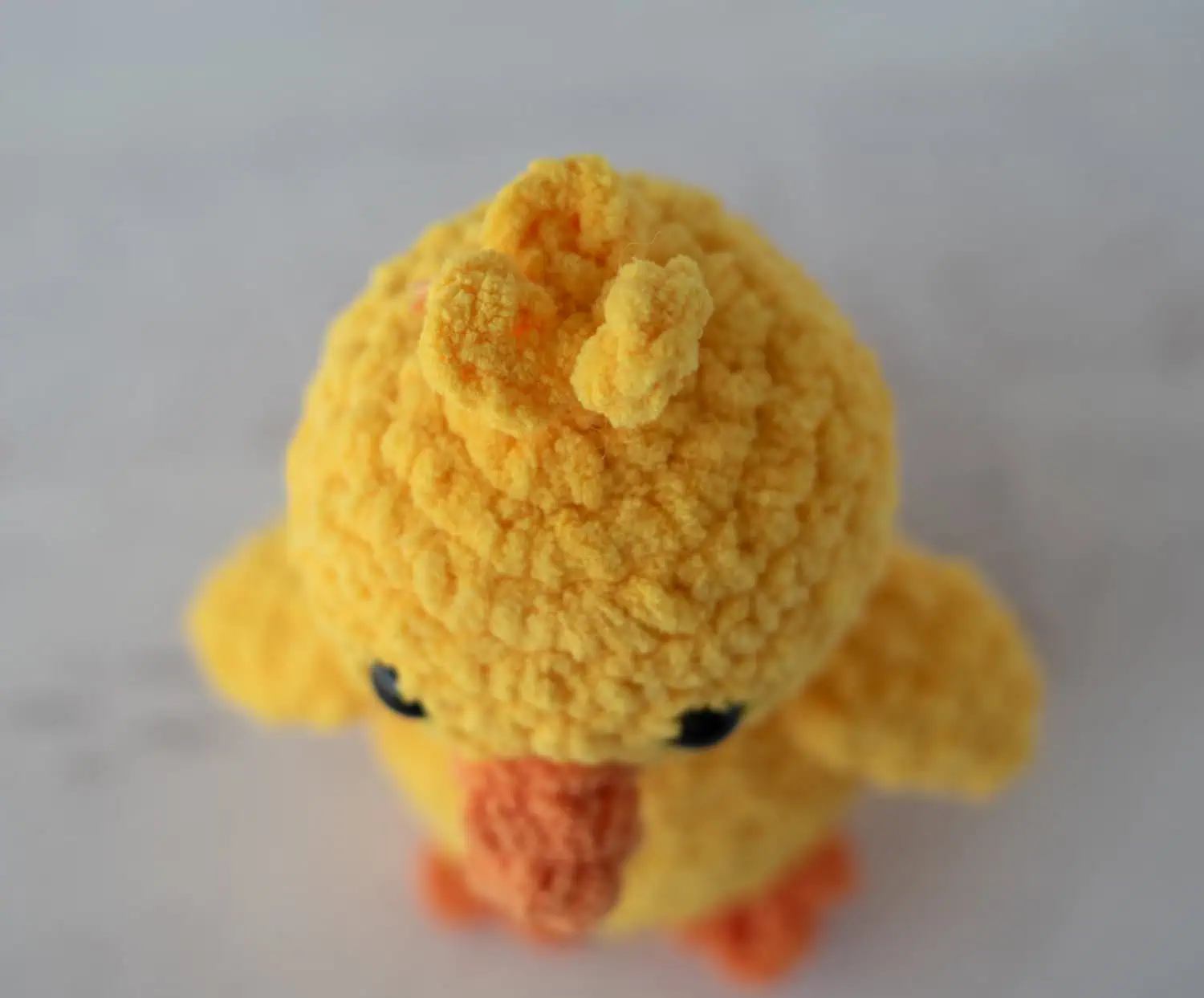
With yellow yarn, chain 5, slip stitch in the 5th chain from hook to form a loop. Repeat two more times for a total of 3 loops. Fasten off and sew to the top of the chick’s head.
Wings (Make 2)
With yellow yarn, make a magic ring.
R1: 4 sc into ring. Work in rounds. (4 st)
R2: (Sc in next st, 2 sc in next st) twice. (6 st)
R3: (Sc in next 2 st, 2 sc in next st) twice. (8 st)
R4: Sc around. (8 st)
R5: Fold piece in half, then sc across the double thickness. (4 st)
R6: Ch 1, (sc2tog) twice. (2 st). Fasten off leaving a long strand for joining.
Sew one wing on each side of the body near the neck.
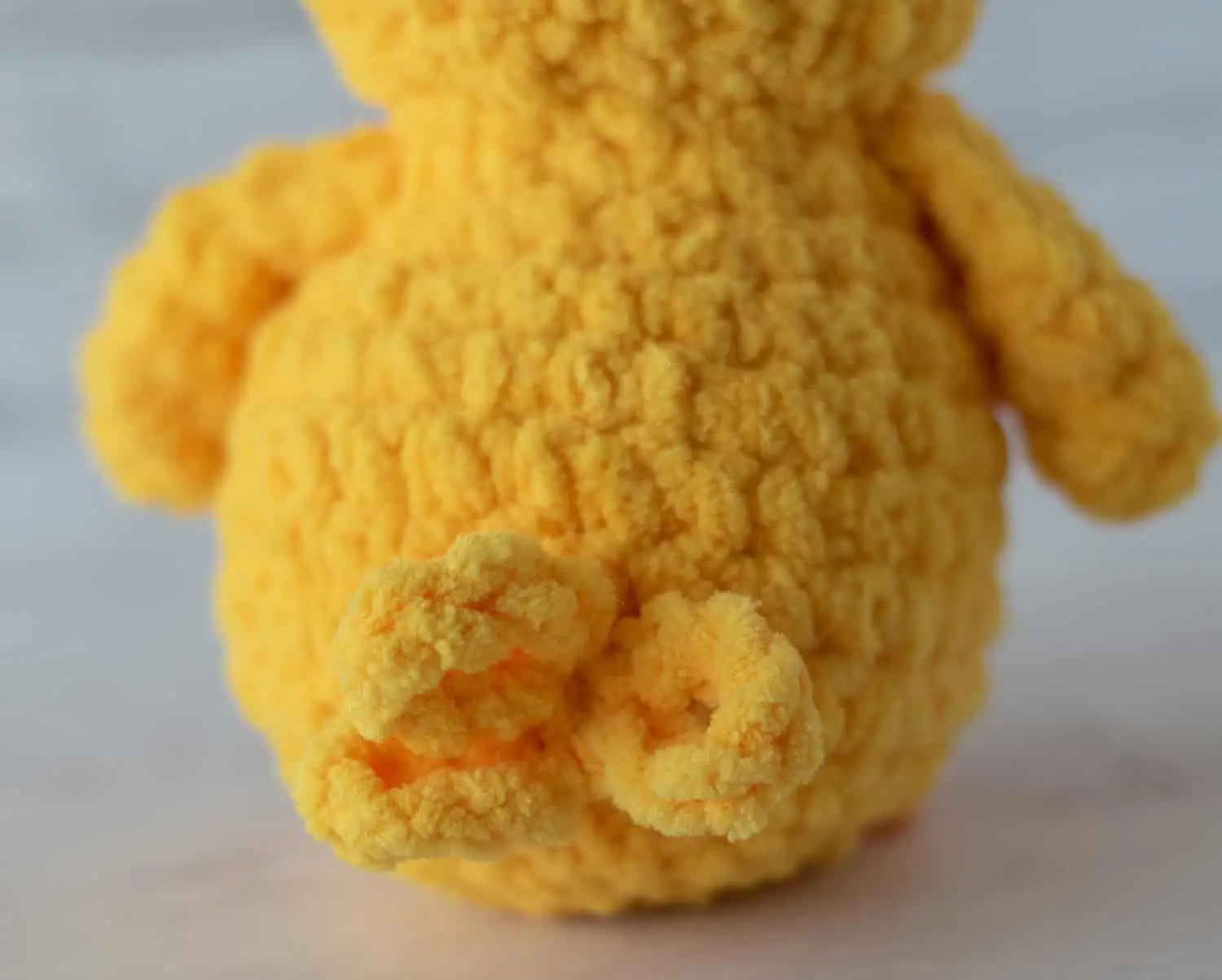
Tail Feathers
With yellow yarn, chain 7, slip stitch in the 7th chain from hook to form a loop. Repeat two more times for 3 loops. Fasten off and sew to the lower back of the chick.
KnotToYarn
Subscribe to KnotToYarn!
Get the best free crochet patterns, tutorials & tips delivered straight to your inbox. Join our growing community!
Feet (Make 2)
With orange yarn, chain 3. Slip stitch in the 2nd chain from hook to make the first toe. Chain 2, slip stitch in the 2nd chain from hook for the second toe. Repeat once more for the third toe. Slip stitch to the very first chain in the round to connect the toes. Fasten off leaving a long strand for joining.
Sew the feet between rows 19 and 20 of the body, or adjust placement as desired. Weave in any remaining loose ends.
Tips for the Best Results
Here are a few extra tips to help your chick crochet pattern turn out as cute as possible on the very first try.
Stuffing matters. The key to a great-looking amigurumi is even, firm stuffing. Use small handfuls of fiberfill and push them into all the curves and crevices before adding more. Avoid overstuffing, which can make the stitches look strained, or understuffing, which creates a flat, deflated appearance.
Pinning before sewing. Before you attach the beak, wings, and feet, use straight pins to hold each piece in place. Step back and look at the chick from different angles. This simple step lets you adjust the placement until the expression and proportions look just right before you commit to sewing.
Invisible join for clean finishes. When you finish the beak and wings, try using an invisible join instead of a regular fasten off. This technique creates a seamless look where the end of the round meets the beginning, making your work look more polished and professional.
If you find that your tension is a bit inconsistent, our article on how to fix crochet tension offers practical exercises to help you develop more even stitches across your projects.
Ways to Customize Your Chick
One of the best things about this chick crochet pattern is how easy it is to personalize. Try making a whole flock with these fun variations.
Pastel spring palette. Swap the bright lemon yellow for soft pastel shades — pale pink, mint green, lavender, or baby blue. A pastel chick looks wonderful in a nursery setting or as part of a coordinated spring display.
Rainbow chicks. Make each chick a different bright color for a playful, whimsical look that kids will love. Red, blue, green, purple — the bolder the better.
Mini keychain version. Use DK or worsted weight yarn with a 3.5mm hook to create tiny chicks that can be attached to keychains, backpacks, or used as ornaments. These smaller versions also make adorable gift toppers.
Add accessories. Sew a tiny ribbon bow, a crocheted flower, or a small felt hat onto your chick to give it extra character. You can also embroider rosy cheeks with a strand of pink yarn for an even sweeter look.
For more cute spring projects, browse our collection of easy crochet flower patterns that pair beautifully with this chick for a complete Easter crafting session.
Perfect Pairings for This Chick Crochet Pattern
This chick crochet pattern is part of a wider family of Easter and spring amigurumi projects. If you enjoy making this little chick, here are some related patterns from KnotToYarn that you might also enjoy.
The easy crochet flower pattern is a fantastic companion project that uses similar basic stitches. Crochet a few flowers and arrange them around your chick for a pretty spring display. You can also explore our easy crochet blanket pattern for beginners to create a soft, cozy background for your amigurumi photos.
For those who want to build their amigurumi skills further, the how to crochet for beginners guide covers all the foundational techniques you need to tackle more complex stuffed toys and patterns in the future.
This chick crochet pattern was inspired by amigurumi design principles shared across the crafting community. For more crochet resources and tutorials, the Craft Yarn Council is an excellent reference for standards, yarn weights, and stitch abbreviations. You can also find beautiful pattern inspiration on LoveCrafts.
Frequently Asked Questions
How long does it take to complete this chick crochet pattern?
Most crocheters finish this chick in about 2 to 3 hours. Because it uses super bulky chenille yarn and a large 6.5mm hook, the stitches are big and the project moves quickly. Even beginners who work at a slower pace should be able to complete it in a single afternoon.
Can I use a different yarn weight for this chick crochet pattern?
Yes, you can substitute any yarn weight you like. Keep in mind that thinner yarn like DK or worsted will produce a smaller chick, while jumbo weight yarn will make a much larger one. Adjust your hook size to match your yarn — typically one to two sizes smaller than the yarn label recommends for amigurumi, so the stuffing does not show through the stitches.
Is this chick crochet pattern suitable for absolute beginners?
Absolutely. This pattern only uses single crochet, increases, and decreases — all of which are basic techniques covered in our beginner crochet guide. The head and body are worked as one piece, so there is minimal sewing involved. If you have completed a few simple projects before, you will have no trouble with this pattern.
What safety eyes should I use for this chick crochet pattern?
This pattern calls for 14mm safety eyes, which are the perfect size for the finished dimensions of the chick. If you are making the chick for a baby or toddler, consider embroidering the eyes instead using black yarn, as safety eyes can pose a choking hazard for children under three years old.
How do I keep my rounds straight when working in continuous rounds?
Place a stitch marker in the last stitch of every round and move it up as you complete each subsequent round. This simple habit prevents the spiral from drifting and keeps your stitch count accurate. If you lose your place, count the total stitches in the current round and compare it to the pattern to figure out where you are.