7 Easy Crochet Mushroom Patterns: Cute Amigurumi Ideas

Easy crochet mushroom pattern displayed on a bright background with finished amigurumi mushroom

Crochet Mushroom Pattern at a Glance

  • Topic: crochet mushroom pattern
  • Skill level: beginner
  • Main goal: help the reader crochet adorable mushroom amigurumi from simple step-by-step patterns
  • Related topics: amigurumi patterns, crochet home decor, easy crochet toys, beginner crochet projects, cute crochet gifts

Quick Answer

A crochet mushroom pattern is one of the best beginner-friendly amigurumi projects you can try. These little fungi are made with basic stitches like single crochet and work up quickly using small amounts of yarn. You will have a finished piece in under two hours, even on your first attempt.

Tip: Always stuff your mushroom cap firmly before closing — this gives the classic round dome shape that makes amigurumi mushrooms so charming.

KnotToYarn KnotToYarn

Subscribe to KnotToYarn!

Get the best free crochet patterns, tutorials & tips delivered straight to your inbox. Join our growing community!

Free newsletter. No spam, ever.

At a Glance

  • Skill level: beginner
  • Time needed: 1–2 hours per mushroom
  • Best yarn: worsted weight cotton or acrylic (Red Heart Super Saver, Bernat Premium)
  • Hook size: 4.0 mm (G/6) or 3.5 mm (E/4)

Common Mistakes → Quick Fixes

  • Closing the cap too loosely: leave a long tail and use a yarn needle to cinch the opening tightly shut.
  • Uneven color change on the cap: switch yarn on the last yarn-over of the stitch before the new color begins.
  • Wobbly stem: insert a craft pipe cleaner inside the stem before stuffing for extra stability.

Mini Glossary

sc – single crochet, inc – increase (2 sc in one stitch), dec – decrease, BLO – back loop only, mr – magic ring, FO – fasten off, sl st – slip stitch, HDC – half double crochet

Why Every Beginner Needs a Crochet Mushroom Pattern

There is something irresistible about tiny crochet mushrooms. They are whimsical, colorful, and surprisingly simple to make. Whether you want to decorate a plant pot, build a fairy garden, or just try a fun weekend project, a crochet mushroom pattern is the perfect starting point.

Amigurumi mushrooms use a small handful of techniques. If you already know how to crochet for beginners, you have everything you need. The shapes are simple — a rounded cap and a cylindrical stem — and most patterns finish in a single afternoon. Plus, mushrooms are one of the most photographed projects on social media right now, so your finished piece will look just as good in photos as it does on your shelf.

In this post, you will find seven distinct crochet mushroom designs. Each one includes a materials list, stitch counts, and clear row-by-row instructions so you can follow along with confidence.

What You Need Before You Start

Before diving into any crochet mushroom pattern, gather a few basic supplies. Having everything ready before your first stitch will save time and keep your momentum going.

Yarn and Hooks

Worsted weight yarn is the best choice for most mushroom projects. Cotton blends like Bernat Handicrafter Cotton hold their shape beautifully, while affordable acrylics like Red Heart Super Saver come in every color you could want. You will need at least two colors — typically red or tan for the cap and white or cream for the stem.

A 4.0 mm hook (size G/6) pairs well with worsted yarn. If your tension runs tight, move up to a 4.5 mm hook. If your stitches feel loose and you can see the stuffing through the gaps, drop to a 3.5 mm hook.

Other Supplies

  • Polyester fiberfill stuffing
  • Yarn needle (tapestry needle) for sewing pieces together
  • Stitch markers (at least 3)
  • Scissors
  • Optional: safety eyes (6 mm) for face details, pipe cleaners for stem support

If you are brand new to the craft, our crochet abbreviations guide will help you decode any shorthand you encounter in the patterns below.

Pattern 1: Classic Red-and-White Toadstool

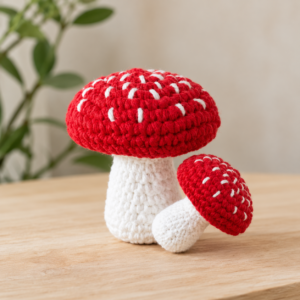
Classic red and white crochet mushroom pattern showing dotted cap details

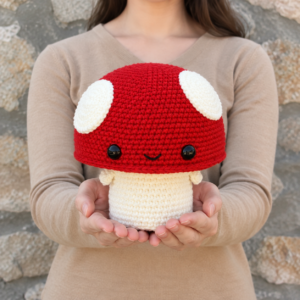
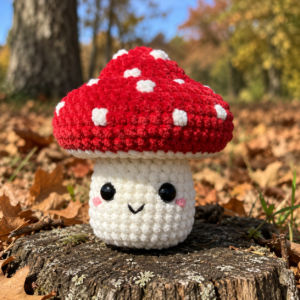
This is the iconic mushroom shape everyone pictures — a bright red dome with white spots and a chunky cream stem. It is the most popular crochet mushroom pattern style for a reason.

Cap (make 1)

Using red yarn and your 4.0 mm hook:

Round 1: 6 sc in magic ring (6)
Round 2: 2 sc in each st around (12)
Round 3: (sc, inc) × 6 (18)
Round 4: (2 sc, inc) × 6 (24)
Round 5: (3 sc, inc) × 6 (30)
Round 6: (4 sc, inc) × 6 (36)
Round 7: sc in each st around (36)
Round 8: sc in each st around (36)

Fasten off, leaving a long tail for sewing. Do not stuff yet.

White Dots

Cut 5–7 small lengths of white yarn. Thread your yarn needle and stitch clusters of 3–4 French knots randomly across the surface of the cap. Space them naturally — imperfect placement actually looks more realistic.

Stem (make 1)

Using cream or white yarn:

Round 1: 6 sc in magic ring (6)
Round 2: 2 sc in each st around (12)
Rounds 3–8: sc in each st around (12)

Stuff firmly. Fasten off with a long tail.

Assembly

Whipstitch the cap to the stem using the long tails. Weave in all ends. If you need a refresher on starting amigurumi, check our magic circle crochet guide.

Pattern 2: Pastel Pocket Mushroom

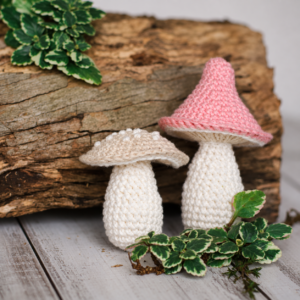
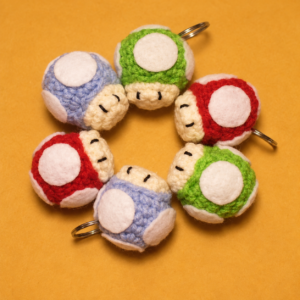
This tiny version is designed to be a keychain or bag charm. Use soft pastel tones — think blush pink caps and lavender stems — for a modern, aesthetic vibe. This crochet mushroom pattern is the smallest in the list and works up in about 30 minutes.

Mini Cap

Using a 3.5 mm hook and pastel yarn:

Round 1: 5 sc in magic ring (5)
Round 2: 2 sc in each st (10)
Round 3: (sc, inc) × 5 (15)
Round 4: sc in each st (15)

Fasten off and stuff lightly.

Mini Stem

Round 1: 4 sc in magic ring (4)
Round 2: 2 sc in each st (8)
Rounds 3–5: sc in each st (8)

Sew the cap to the stem and attach a small keychain ring through the top of the cap. These make wonderful handmade gifts and are a fantastic use of scrap yarn.

Pattern 3: Chunky Amanita with Gills

The Amanita muscaria is the most recognizable mushroom in the world, and this chunky crochet mushroom pattern captures its distinctive silhouette. The secret detail? Tiny crochet gills stitched underneath the cap.

Gills (optional detail)

Before sewing the cap to the stem, attach several short lengths of cream yarn in parallel lines across the underside of the cap opening. This adds a realistic touch that elevates the whole project.

The cap and stem follow the same basic construction as Pattern 1, but use a 5.0 mm hook and chunky weight yarn for a larger, squishier result. The finished mushroom stands approximately 5 inches tall.

Pattern 4: Simple Flat Mushroom Appliqué

Not every crochet mushroom pattern needs to be three-dimensional. This flat appliqué is designed to be sewn onto hats, scarves, tote bags, or blanket squares. It uses only one color per piece and no stuffing at all.

Flat Cap

Round 1: 6 sc in magic ring (6)
Round 2: 2 sc in each st (12)
Round 3: (sc, inc) × 6 (18)
Round 4: BLO sc in each st (18)

Working in the back loop only on the last round creates a subtle ridge that looks like the underside of the mushroom cap.

Flat Stem

Row 1: Ch 6, sc in 2nd ch from hook and across (5)
Rows 2–4: ch 1, turn, sc across (5)

Sew the stem behind the center of the cap. This is a great pattern to pair with other motifs — try combining it with our easy crochet flower pattern for a woodland-themed project bag.

KnotToYarn KnotToYarn

Subscribe to KnotToYarn!

Get the best free crochet patterns, tutorials & tips delivered straight to your inbox. Join our growing community!

Free newsletter. No spam, ever.

Pattern 5: Mushroom with a Face

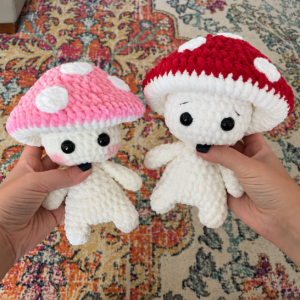
Add personality to your crochet by giving your mushroom eyes and a smile. This crochet mushroom pattern uses 6 mm safety eyes positioned between rounds 4 and 5 of the cap and a simple embroidered mouth using black embroidery floss.

Safety eyes snap into place before you stuff and close the piece. If you are making this for a young child, embroider the eyes instead for safety. This pattern is a fantastic gateway into full amigurumi toy patterns because it teaches you face placement, shaping, and finishing all in one small project.

Pattern 6: Tiny Mushroom Pencil Topper

School supplies are more fun when they are handmade. This micro crochet mushroom pattern fits right over the top of a standard pencil. Use a 2.5 mm hook and fingering weight yarn for the smallest version.

The cap is only 3 rounds, and the stem is a simple tube of 6 single crochet stitches for about 8 rounds. Slide the stem onto the pencil eraser and glue in place with a drop of fabric glue. Kids love these, and they make excellent classroom gifts or party favors.

Pattern 7: Two-Tone Ombre Mushroom

This intermediate variation uses a yarn that gradually shifts color to create an ombre effect on the cap. Look for self-striping or gradient yarns in earthy tones — think brown fading into cream or burgundy melting into coral.

Follow the same cap instructions as Pattern 1. The yarn does all the visual work for you. Pair it with a solid stem in a complementary neutral, and you have a crochet mushroom pattern result that looks like it came from a boutique. This is the most “Instagram-worthy” version in the collection and a beautiful addition to any crochet home decor display.

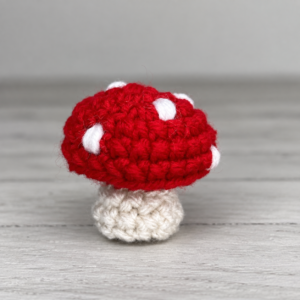
Finished collection of crochet mushroom patterns in various sizes and colors

Tips for Getting the Best Results

Stuffing Matters More Than You Think

The difference between a floppy mushroom and a perfect one comes down to stuffing. Add fiberfill in small pinches rather than one big clump. Pack the cap firmly so it holds its dome shape, and stuff the stem tightly enough to stand on its own. Understuffed stems lean and wobble, which looks messy in photos.

Use Stitch Markers Religiously

Amigurumi is worked in continuous spirals, which means there is no obvious end-of-row signal. Place a stitch marker in the first stitch of every round and move it up as you go. Without markers, it is nearly impossible to keep accurate stitch counts. If you struggle with this, our guide on how to read a crochet pattern has a dedicated section on tracking rounds.

Block Your Finished Mushrooms

Blocking is not just for garments. Lightly steam your finished mushrooms with an iron held about an inch above the surface. This relaxes the stitches, evens out your tension, and gives the piece a polished, professional finish. Never press the iron directly onto acrylic or polyester yarn — it will melt.

What to Make With Your Crochet Mushrooms

Once you have a few finished mushrooms, the project possibilities multiply:

  • Fairy garden accessories: Arrange several mushrooms among pebbles and moss in a shallow dish.
  • Plant pot picks: Attach a wooden skewer to the stem base and insert into potted plants.
  • Garland: String 8–10 mini mushrooms onto cotton twine for a woodland bunting.
  • Gift toppers: Tie a small mushroom to a gift package instead of a bow.
  • Desk decor: Group three different sizes together on a small tray for an adorable vignette.

For more creative project ideas, browse our collection of beginner-friendly crochet patterns that pair beautifully with handmade mushrooms.

Frequently Asked Questions

How long does a crochet mushroom pattern take to complete?

Most small crochet mushrooms take between 45 minutes and 2 hours depending on the pattern complexity, your skill level, and the yarn weight you choose. The pocket mushroom (Pattern 2) is the fastest at around 30 minutes, while the chunky Amanita (Pattern 3) may take up to 2.5 hours because of its larger size and gill detail.

What is the best yarn for a crochet mushroom pattern?

Worsted weight cotton or a cotton-acrylic blend is ideal because cotton holds its shape and creates crisp stitch definition. Acrylic is a perfectly fine budget option. Avoid very fuzzy or novelty yarns for your first mushroom — the texture can hide your stitches and make it hard to see where to place your hook. For project inspiration, the Craft Yarn Council has helpful yarn weight charts and hook size recommendations.

Similar Posts

Leave a Reply

Your email address will not be published. Required fields are marked *