How to Crochet a Rose Bouquet: The Gift That Never Wilts
Crochet Rose Bouquet at a Glance


- Topic: crochet rose bouquet
- Skill level: beginner to intermediate
- Main goal: help readers create beautiful crochet rose bouquets for gifts and home decor
- Related topics: crochet flowers, crochet heart patterns, crochet gifts, crochet garlands
Quick Answer
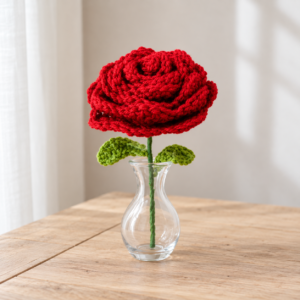
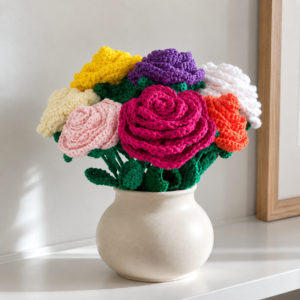
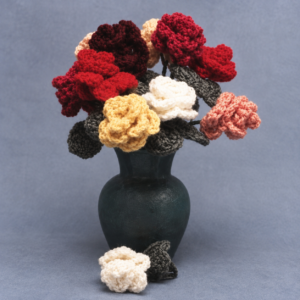
A crochet rose bouquet is a stunning handmade arrangement of crocheted roses that never wilts. It makes a perfect gift for Mother’s Day, birthdays, weddings, or home decor, and can be customized with any color palette.
Tip: Use a mix of yarn textures — matte cotton for realistic roses and fluffy yarn for a dreamy, romantic look.
At a Glance
- Skill level: beginner to intermediate
- Time needed: 4-12 hours for a full bouquet
- Best yarn: cotton DK or worsted weight for structure
- Hook size: 3.0mm-4.0mm for detailed roses
Common Mistakes to Quick Fixes
- Roses look flat: Add wire stems and shape petals with steam blocking for a realistic 3D look
- Wrong yarn weight: Use DK or worsted — bulky yarn makes roses too chunky
- Bouquet looks sparse: Make at least 12-15 roses of varying sizes and add leaf accents
Mini Glossary
CH (chain), SC (single crochet), DC (double crochet), TC (treble crochet), MR (magic ring), FO (fasten off), BLO (back loop only), FL (front loop)
KnotToYarn
Subscribe to KnotToYarn!
Get the best free crochet patterns, tutorials & tips delivered straight to your inbox. Join our growing community!
There is something deeply personal about a handmade gift — and a crochet rose bouquet delivers that warmth like nothing else. With Mother’s Day landing on May 10, 2026, now is the perfect time to start crafting an arrangement that Mom will cherish for years. Unlike fresh flowers that fade within a week, a crochet rose bouquet stays vibrant forever, serving as a lasting reminder of your love and creativity.
Whether you are a complete beginner or an experienced crocheter looking for a new project, this guide walks you through everything you need to create a gorgeous crochet rose bouquet. We will cover the essential materials, share seven stunning pattern ideas ranging from simple to intermediate, and walk you through assembly and finishing techniques. If you are brand new to the craft, our how to crochet for beginners guide is a great starting point.
Before we dive in, let me mention that the Craft Yarn Council is an excellent resource for standardized crochet terminology and hook sizing — you can explore their full reference at Craft Yarn Council. For discovering thousands of rose-inspired patterns from designers worldwide, Ravelry is your go-to community hub.

Why a Crochet Rose Bouquet Is the Perfect Mother’s Day Gift
Flowers are a classic Mother’s Day choice, but a crochet rose bouquet elevates the tradition in ways that store-bought arrangements simply cannot. Here is why handmade floral arrangements have become one of the most beloved Mother’s Day crochet gifts:
- They last forever. Unlike fresh roses that wilt within days, crocheted roses maintain their beauty indefinitely. Mom can display her bouquet year after year.
- They are deeply personal. Every stitch represents time, thought, and effort — qualities that make a gift truly meaningful.
- They are fully customizable. Choose Mom’s favorite colors, add personal touches like a monogrammed ribbon, or coordinate the bouquet with her home decor.
- They are allergy-friendly. No pollen means everyone can enjoy them without sneezing or watery eyes.
- They are budget-friendly. A full crochet rose bouquet typically costs under $20 in materials, compared to $50-$100+ for a florist arrangement.
For more heartfelt handmade gift ideas, check out our collection of crochet heart patterns — they pair beautifully with roses in a mixed bouquet.
Essential Materials for Your Crochet Rose Bouquet
Before you begin stitching, gathering the right supplies will make your project smoother and more enjoyable. Here is what you need:
Yarn Selection
The yarn you choose has the biggest impact on your finished crochet rose bouquet. For roses that hold their shape and look realistic, cotton DK or worsted weight yarn is ideal. Cotton provides the right amount of stiffness and gives petals a clean, defined edge. If you want a softer, more romantic feel, a cotton-acrylic blend works wonderfully too. For detailed guidance on choosing the right fiber, see our guide on the best yarn for beginner crochet.
Plan for 3-5 colors of yarn: red, pink, cream, and soft yellow are classic rose tones. You will also need green yarn for leaves and stems.
Hooks and Tools
- Crochet hooks: 3.0mm-4.0mm (size C through G) for detailed rose petals. A set with ergonomic handles helps during longer sessions.
- Floral wire: 18-20 gauge for stems — this gives your roses structure and allows you to bend them into natural positions.
- Floral tape: Green tape to wrap wire stems and create a polished, professional look.
- Scissors, yarn needle, and stitch markers for finishing and assembly.
If you are just getting comfortable with your hooks, brush up on the single crochet stitch and the magic circle technique — both are used extensively in rose patterns.

7 Stunning Crochet Rose Bouquet Pattern Ideas
Now comes the fun part — choosing your rose patterns. Here are seven gorgeous options, from beginner-friendly to intermediate, so you can mix and match for a diverse, eye-catching crochet rose bouquet.
1. Classic Spiral Rose
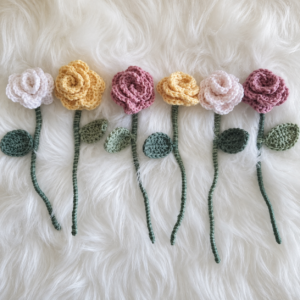
The spiral rose is the foundation of most crochet rose bouquet projects. You begin with a magic ring, work a series of chain loops along one edge of a flat strip, then roll the strip into a spiral, stitching as you go. This pattern uses only chains and single crochet, making it perfect for beginners. The result is a tight, realistic-looking rose bud that works beautifully as the focal flower in any bouquet.
2. Open Layered Rose
For a rose that looks like it is mid-bloom, the open layered rose creates separate petal rounds that stack on top of each other. Each layer uses double crochet shells to form wide, ruffled petals. You typically make 3-4 layers in graduating sizes, then stack and sew them together at the center. This pattern adds gorgeous volume and variety to your crochet rose bouquet.
3. Bud Rose with Sepals
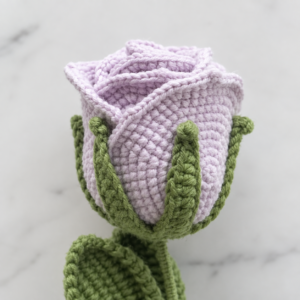
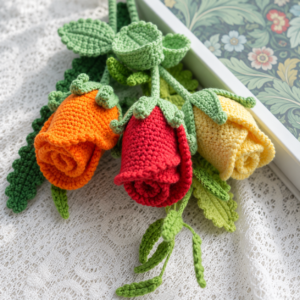
Bud roses are those tight, not-yet-opened rose buds that add a natural, garden-fresh feel to any arrangement. This pattern creates a small spiral rose bud with pointed green sepals at the base. Bud roses are quick to make — often under 15 minutes each — and they fill in gaps in your bouquet beautifully. Make 4-5 buds to complement your fully open roses.
4. Camellia-Style Wide Petal Rose
If you want a rose with bold, dramatic petals, the camellia-style pattern is a showstopper. It uses treble crochet clusters to create wide, overlapping petals with beautiful texture. This is an intermediate-level pattern that adds a luxurious, high-end feel to your crochet rose bouquet. Use a deep red or burgundy yarn for maximum impact.
5. Cottage Rose with Ruffled Edges
The cottage rose features petals with delicate picot or shell edging that creates a lacy, heirloom-quality bloom. This pattern works best in soft pastels — blush pink, cream, or lavender — and adds a romantic, vintage charm. It pairs wonderfully with other easy crochet flower patterns in a mixed arrangement.
6. Two-Tone Ombre Rose
For a modern, trendy twist, the two-tone ombre rose uses two shades of the same color family — for example, light pink outer petals and deep magenta inner petals. The technique involves changing yarn color mid-round to create a natural gradient effect. This pattern is surprisingly simple to execute and adds incredible depth to your crochet rose bouquet.
7. Miniature Streamer Roses
These tiny roses are made from a simple chain-and-single-crochet strip, rolled into a tight bud. They take just 5-10 minutes each and are perfect for filling out your bouquet, creating accent pieces for gift wrapping, or adding to hair clips and brooches. Make a dozen in various colors for maximum versatility. They are also fantastic for adding detail alongside crochet border patterns on blankets or accessories.

How to Assemble Your Crochet Rose Bouquet
Once you have crocheted all your roses, leaves, and buds, it is time to bring everything together into a stunning arrangement. Follow these steps for professional-looking results:
Step 1: Prepare the Stems
Cut floral wire to your desired stem lengths — vary them between 8 and 14 inches for a natural, organic look. Insert one end of the wire through the center of each rose and fold a small loop at the top so it does not pull through. Wrap the wire with green floral tape, starting from the base of the rose and working downward.
Step 2: Make the Leaves
Crochet simple pointed leaves using green yarn and a chain-and-single-crochet leaf pattern. A standard leaf takes about 5 minutes and uses roughly 2 yards of yarn. Make 8-12 leaves per bouquet. Thread each leaf onto its own short piece of floral wire and tape it to a stem.
Step 3: Arrange and Secure
Start with your largest, most dramatic roses at the center. Surround them with medium roses, then place buds and mini roses around the outer edge. Tuck leaves in at various angles throughout the bouquet. Once you are happy with the arrangement, gather all stems together and wrap them tightly with floral tape. For a polished finish, tie a ribbon around the stem bundle.
For the best final presentation, block your crochet pieces before assembly. Steam blocking helps petals hold their shape and gives your roses a crisp, professional appearance.
Professional Tips for a Show-Stopping Bouquet
These insider tips will elevate your crochet rose bouquet from handmade to heirloom quality:
KnotToYarn
Subscribe to KnotToYarn!
Get the best free crochet patterns, tutorials & tips delivered straight to your inbox. Join our growing community!
- Vary your petal counts. Not every rose needs the same number of petals. Mix 5-petal, 6-petal, and 8-petal roses for a natural, organic feel that mirrors real gardens.
- Use gradients within one bouquet. Transition from deep red at the center to soft pink at the edges for an ombre effect that looks professionally designed.
- Add fillers. Crocheted baby’s breath, small daisies, or eucalyptus sprigs between the roses fill empty spaces and add realism.
- Shape while wet. After steam blocking, pinch and curl individual petals while they are still damp. This creates the natural curl and dimension of real rose petals.
- Choose the right vessel. Present your finished crochet rose bouquet in a rustic mason jar, a ceramic vase, or wrap it in kraft paper with a satin ribbon for a gift-ready look.
- Make it personal. Attach a small handwritten tag to the ribbon, or tuck a crocheted heart from our crochet heart patterns guide into the arrangement for an extra-special touch.
Frequently Asked Questions
How long does it take to make a crochet rose bouquet?
A full crochet rose bouquet typically takes between 4 and 12 hours, depending on the complexity of your chosen patterns and the number of roses you include. A simple bouquet with 12 spiral roses and leaves can be completed in about 4-6 hours. More elaborate arrangements with layered roses, buds, and filler flowers may take 8-12 hours spread over several days.
What is the best yarn for a crochet rose bouquet?
Cotton DK or worsted weight yarn is the best choice for a crochet rose bouquet. Cotton provides excellent stitch definition, holds its shape well, and gives petals a clean, structured look. Mercerized cotton has a subtle sheen that adds elegance. Avoid very fuzzy or bulky yarns, as they obscure stitch detail and make roses look oversized.
How many roses do I need for a full bouquet?
Plan for 12 to 15 roses of varying sizes for a lush, full crochet rose bouquet. Include 3-5 large open roses as focal points, 4-6 medium roses, and 4-5 small buds. Add 8-12 crocheted leaves and a few filler flowers for a professional finish. Having variety in size creates depth and makes the arrangement look natural.
Can I wash my crochet rose bouquet?
Yes, you can wash a crochet rose bouquet, but gentle care is essential. Hand wash in cool water with mild detergent, gently squeeze out excess water — never wring — and reshape the petals while damp. Lay flat to dry on a towel. If you used wire stems, avoid submerging them fully. A light spot cleaning with a damp cloth is often sufficient for regular maintenance.
Is a crochet rose bouquet suitable for beginners?
Absolutely. The spiral rose pattern uses only chains and single crochet, making it accessible to confident beginners. If you are brand new to crochet, start with our beginner crochet guide, then practic

<

p>e with the easy crochet flower pattern before moving to roses. Even a simple bouquet made entirely of spiral roses and basic leaves looks stunning when assembled well.