Crochet Foundation Chain: 7 Easy Steps for Beginners
Looking for a pattern that actually works? You are in the right place. This guide breaks everything down step by step so you can finish your project with confidence.
\nCrochet Foundation Chain at a Glance
- Topic: crochet foundation chain
- Skill level: beginner
- Main goal: help the reader learn how to create a proper starting chain for crochet projects
- Related topics: chain stitch, slip knot, crochet tension, single crochet
Quick Answer
A crochet foundation chain is the row of interlinked chain stitches that forms the starting edge of nearly every crochet project. You create it by making a slip knot on your hook, then repeatedly yarning over and pulling through to build a strand of connected loops. Every beginner must master this technique before moving on to more advanced crochet stitches and patterns.
\nTip: Always keep your chain stitches slightly loose — tight foundation chains make it difficult to insert your hook for the next row and lead to uneven edges.
At a Glance
- Skill level: beginner
- Time needed: 10–15 minutes to learn
- Best yarn: worsted weight (size 4) acrylic or cotton
- Hook size: 5.0 mm (H/8)
Common Mistakes → Quick Fixes
- Tight chains: use a hook one size larger for the chain row, then switch back
- Loose chains: try a smaller hook for the chain, or consciously tighten each stitch
- Miscounting stitches: do not count the slip knot or the loop on your hook
Mini Glossary
CH (chain stitch), YO (yarn over), SL ST (slip stitch), SC (single crochet), DC (double crochet), HDC (half double crochet), FSC (foundation single crochet)
 KnotToYarn
Subscribe to KnotToYarn!
Get the best free crochet patterns, tutorials & tips delivered straight to your inbox. Join our growing community!
What Is a Crochet Foundation Chain?
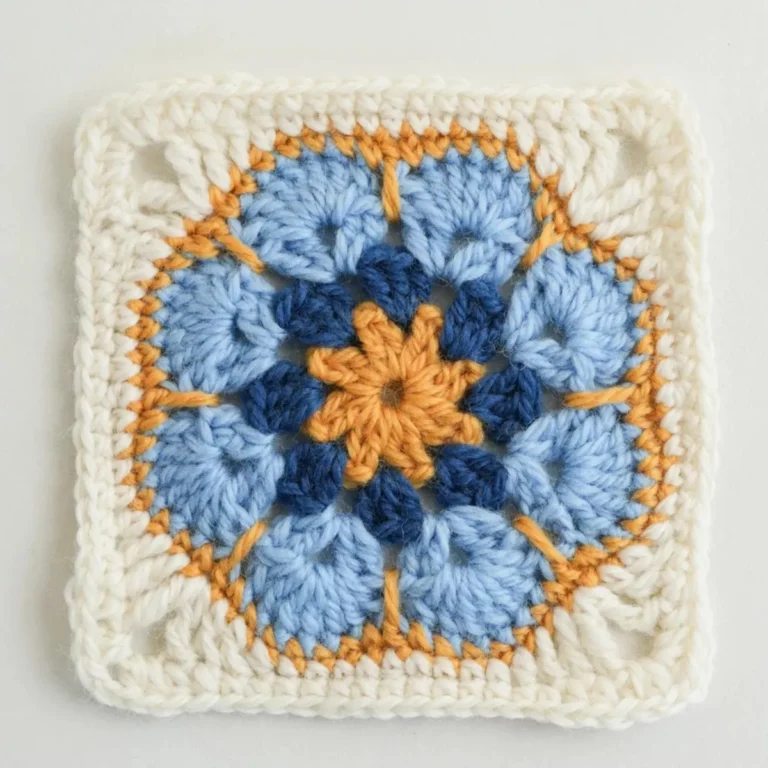
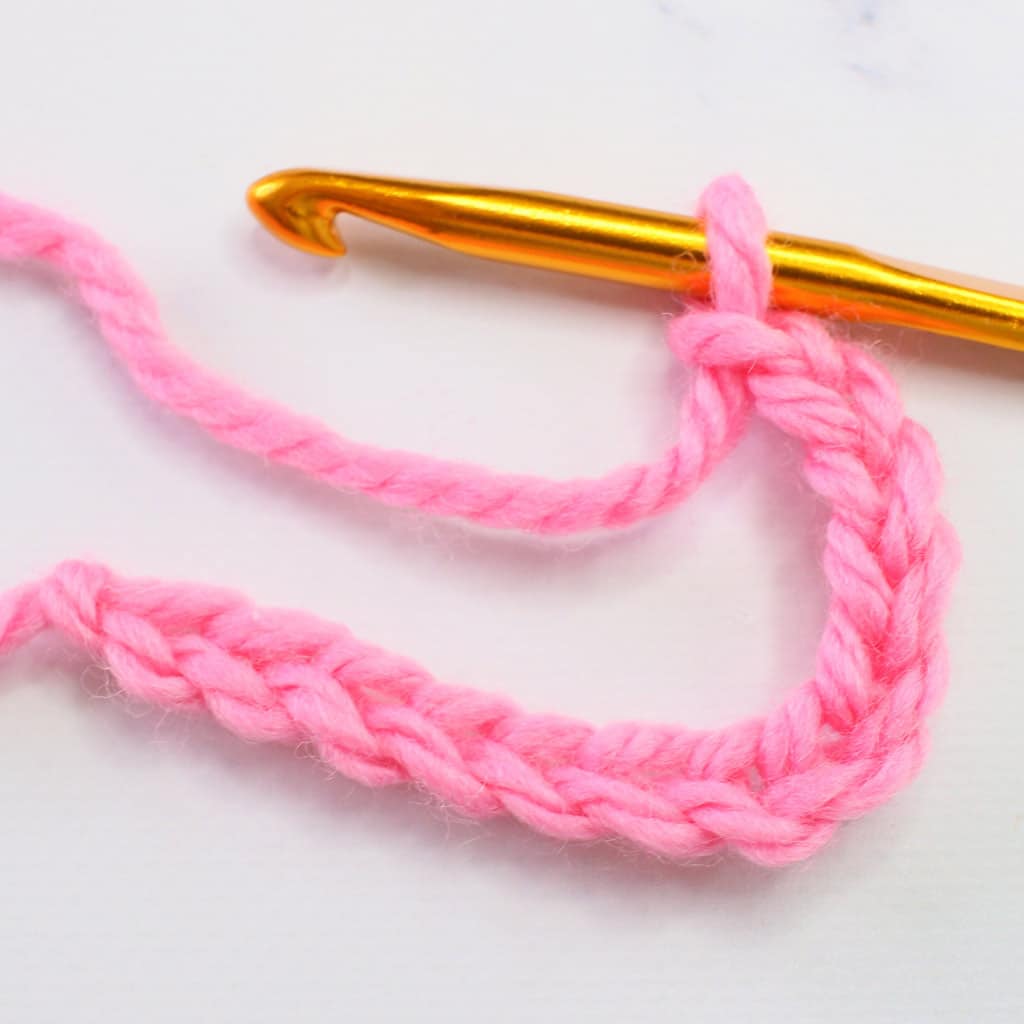
A crochet foundation chain is a row of interlinked loops that looks a bit like an actual metal chain. Each individual loop counts as one chain stitch. You can arrange the chain in a long straight row for projects worked back and forth, or form it into a ring for projects worked in the round, such as granny square patterns and amigurumi figures.
The foundation chain is one of the very first skills every beginner learns because it serves as the starting edge for blankets, scarves, hats, garments, and countless other free crochet patterns. If you are brand new to crochet, check out our comprehensive how to crochet for beginners guide to get oriented with the basics before diving into chains.
Unlike knitting, where you cast on stitches, crochet starts with this simple chain structure. It may feel a little awkward the first few times you try it, but the repetition builds muscle memory fast. Within a single practice session, most beginners can create smooth, even chains that are ready for the next row of stitches.
What You Need to Get Started
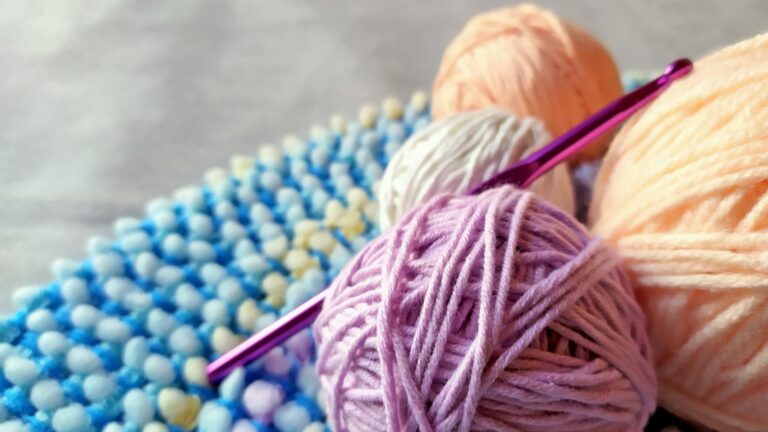
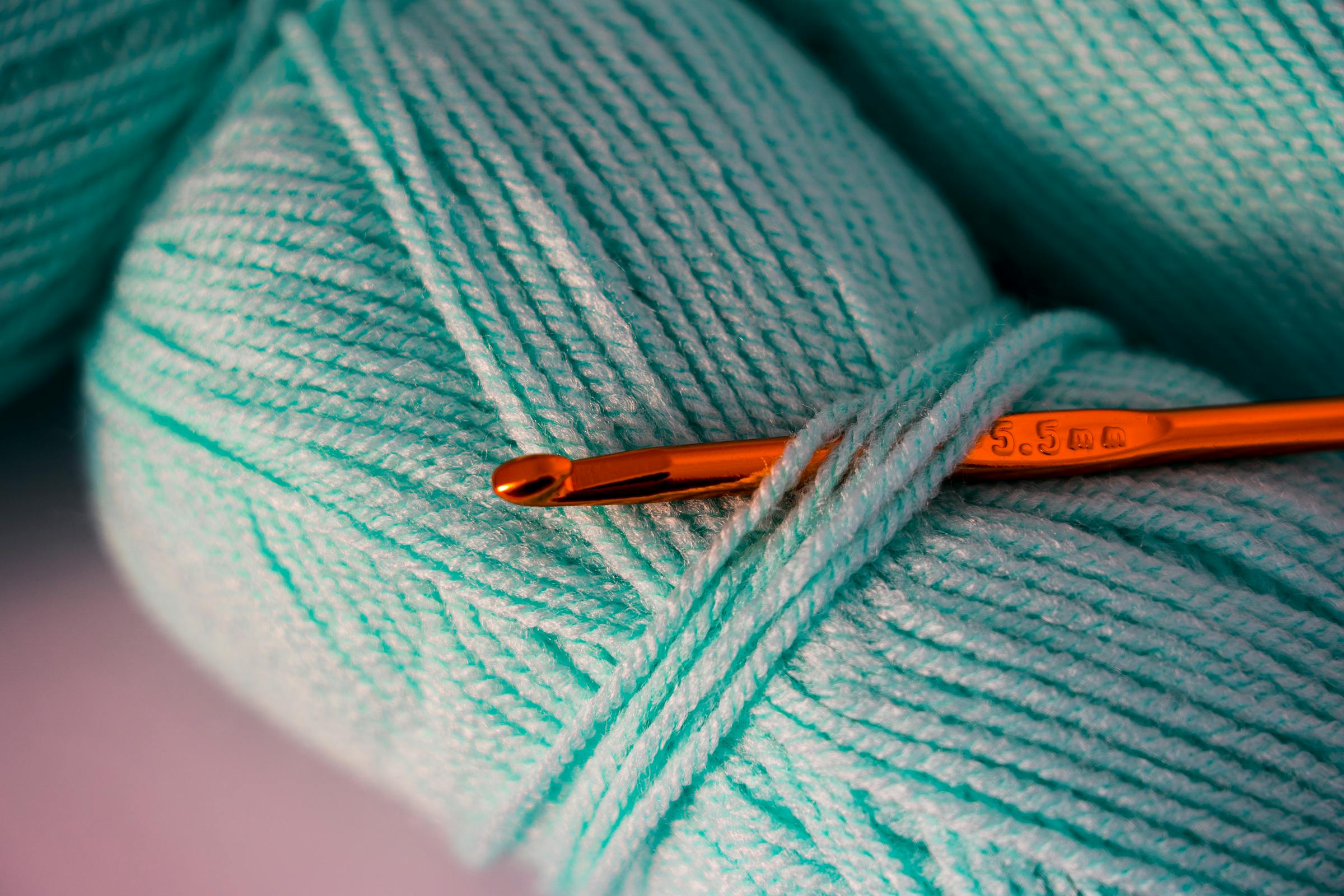
Before you begin your crochet foundation chain, gather a few basic supplies. You will need a ball of worsted weight (size 4) yarn in a light color so you can see your stitches clearly, and a crochet hook that matches the yarn weight. For most worsted weight yarn, a 5.0 mm (H/8) hook works well. Check the crochet hook size chart if you are unsure which size to use.
If you are just starting out, our guide to the best crochet hooks for beginners covers comfortable ergonomic options that reduce hand fatigue during practice. You may also want to read about choosing the best yarn for beginner crochet to avoid frustrating tangles and splitting while you learn.
Step 1 — Make a Slip Knot
Every crochet foundation chain begins with a slip knot. The part of the yarn closest to the ball is called the working yarn, and the short loose end is the tail end. To create the slip knot, wrap the yarn around your hook once, yarn over from back to front, pull the yarn through the loop, and tighten gently. The knot should be able to slide looser and tighter as needed, but not so loose that it slips off the hook.
Practice making slip knots a few times until the motion feels natural. Many beginners struggle with this step at first, but it quickly becomes second nature. If your slip knot keeps falling apart, try holding the tail end more firmly between your thumb and finger while you adjust the loop with your hook hand.
Step 2 — Create the First Chain Stitch
Now wrap the working yarn around the hook from back to front, so the yarn sits to the left of the slip knot (if you are right-handed). Hold the tail end between the thumb and finger of your non-dominant hand to keep things steady. Pull that loop of yarn through the slip knot, and tighten gently by giving the working yarn a slight tug.
Congratulations — you have just made your first chain stitch. Notice how the loop on your hook looks like a small oval. Do not make each stitch too tight, because you will need to insert your hook into these crochet foundation chain stitches when you begin the next row. Keeping them slightly loose makes the entire project go more smoothly.
Step 3 — Repeat for More Chain Stitches
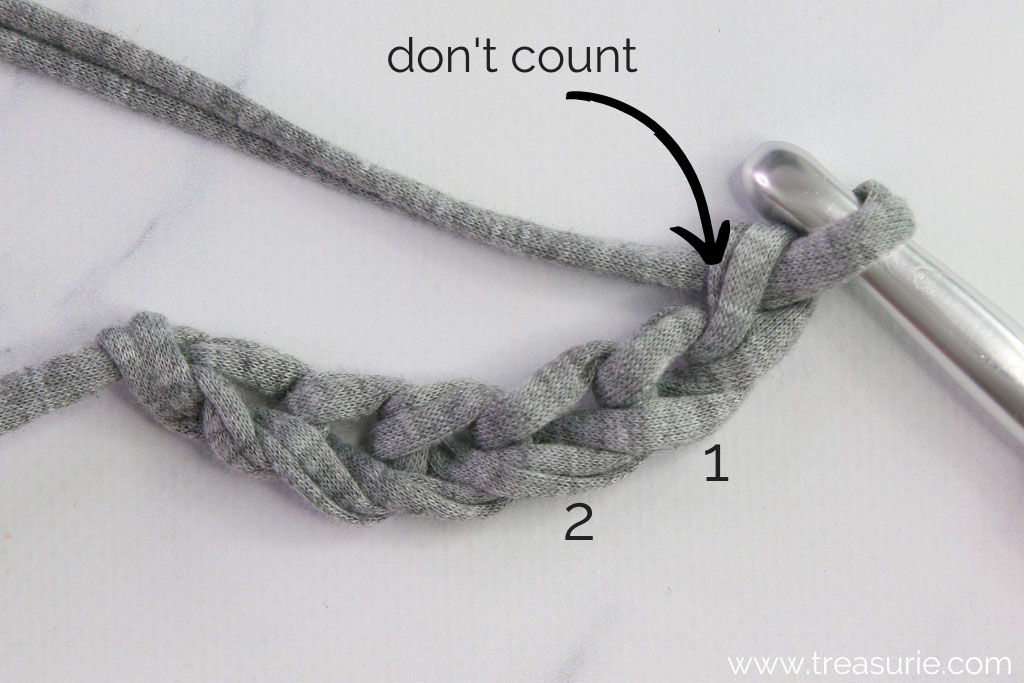
Continue the same motion: yarn over from back to front, pull the loop through. Each repetition creates one new chain stitch. Keep going until you have the number of chains your pattern calls for. If a pattern says “chain 30,” you should count exactly 30 loops in your strand, not including the slip knot or the loop on your hook.
As you work, use your non-dominant hand to gently hold the growing chain close to the hook. This helps regulate tension and prevents the chain from becoming too tight or too loose. Consistent tension is one of the most important skills in crochet, so take your time with this step. For more help, read our detailed guide on how to fix crochet tension.
Step 4 — Work Into the Foundation Chain
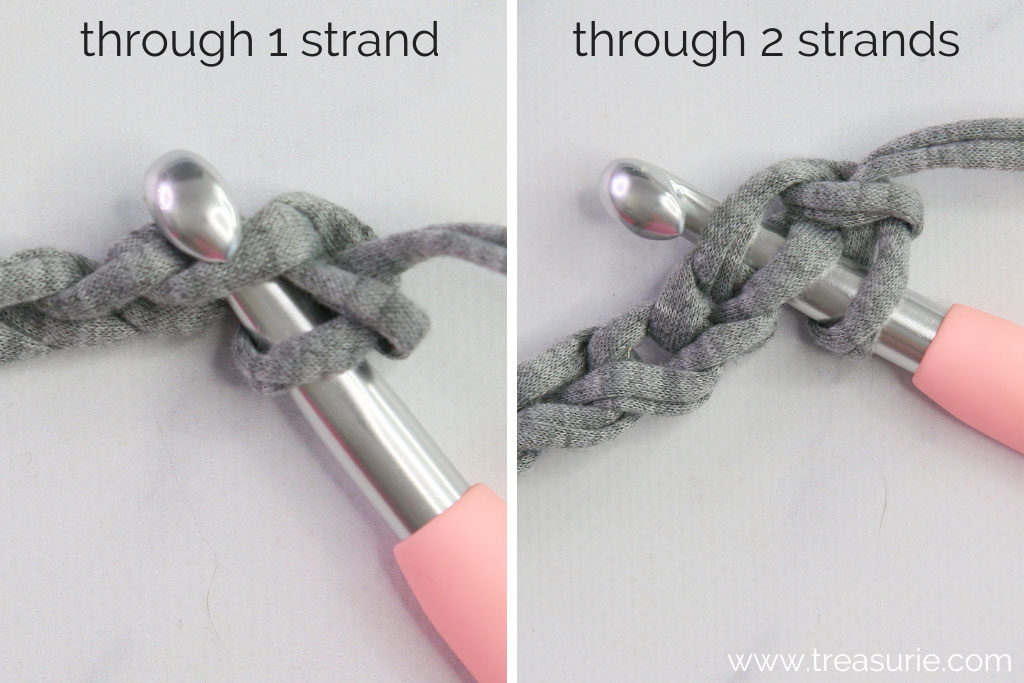
Once your crochet foundation chain is complete, turn your work and begin the first row of actual stitches. Your pattern will tell you which stitch to use — commonly single crochet (SC), double crochet (DC), or half double crochet (HDC). You can choose to insert your hook under one strand or both strands of each chain loop. Either method produces an even bottom edge, but working under two strands tends to be more secure.
Some crocheters prefer working into the back bump of the chain (the raised strand at the back of each loop) because it creates a very neat and tidy bottom edge. This technique is especially useful for projects where the bottom edge will be visible, such as scarves and blankets. Try both methods with a small swatch to see which you prefer.
Step 5 — Count Your Chain Stitches
Counting your chain stitches accurately is essential for every pattern. The most common mistake beginners make is counting the slip knot or the loop on the hook, which throws off the entire stitch count. To count correctly, start with the first chain stitch you made after the slip knot and end with the last chain stitch before the hook. Place a stitch marker every 10 or 20 chains if you are working a long chain — this makes it easy to recount without starting from scratch.
If you lose count, do not panic. Simply lay the chain flat and count the V-shaped loops one by one. With practice, you will be able to chain dozens of stitches while maintaining an even rhythm and perfect count. This skill becomes especially important when you start making larger projects like crochet blankets or scarves.
Step 6 — Fix Tight Foundation Chains
One of the most common problems beginners face is a crochet foundation chain that turns out too tight. This happens because many crocheters naturally grip the hook more firmly during the chain row, creating tension that is tighter than their normal stitching tension. A tight chain leads to a narrowed or curved bottom edge on your finished piece, which looks uneven and unprofessional.
The simplest fix is to use a crochet hook one size larger for the foundation chain, then switch back to your regular hook size for the rest of the project. This creates a slightly looser chain that is much easier to work into. Another approach is to consciously relax your grip while chaining and check the chain periodically by stretching it gently between your hands.
Step 7 — Try Foundation Single Crochet
Once you are comfortable with the basic chain method, try foundation single crochet (FSC). This advanced technique combines the starting chain and the first row of single crochet into one seamless step. The result is a stretchier, more flexible edge that is ideal for garments, blankets, and any project that benefits from a bit of give along the starting edge. Many experienced crocheters prefer FSC for these reasons.
KnotToYarn
Subscribe to KnotToYarn!
Get the best free crochet patterns, tutorials & tips delivered straight to your inbox. Join our growing community!
Learning the FSC method takes a bit of practice, but it is well worth the effort for intermediate and advanced projects. If your crochet foundation chain tends to be tighter than the rest of your work, switching to FSC can eliminate that problem entirely. Pair this technique with good tension habits and you will see a noticeable improvement in the overall quality of your finished pieces.
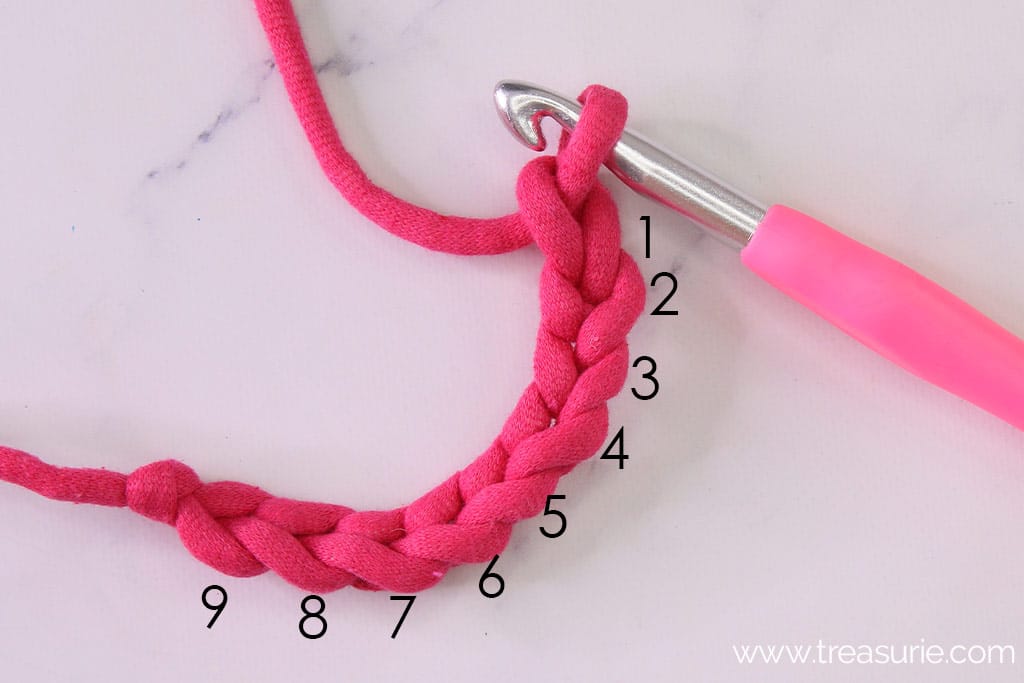
Tips for Perfect Crochet Foundation Chains
Keep your chain stitches slightly loose. A gentle, even tension is far more important than making each stitch perfectly identical. If you find your chains are consistently too tight, try holding the hook differently — some crocheters use a pencil grip while others prefer a knife grip. Experiment until you find what feels natural and comfortable for your hands.
Another helpful habit is to make a small tension swatch before starting any new project. Chain 20 stitches, work a few rows, and measure. If the chain edge is narrower than the rest of the swatch, you know to use a larger hook for the chain row. This simple step can save you from having to frog (rip out) hours of work later. For more troubleshooting help, check our guides on uneven crochet edges and why crochet curls.
The crochet abbreviations for beginners guide is another essential reference that will help you read any pattern with confidence. Understanding common abbreviations like CH, SC, DC, and HDC makes it much easier to follow written instructions and create beautiful projects from day one.
For more inspiration and step-by-step guidance, the Craft Yarn Council provides industry-standard references for yarn weights, hook sizes, and stitch terminology. You can also explore more free crochet patterns for beginners right here on KnotToYarn to practice your new skills.
Frequently Asked Questions
What is a crochet foundation chain?
A crochet foundation chain is a row of chain stitches that forms the starting edge for nearly every crochet project. Future rows of stitches are worked into these chain loops, making it one of the most fundamental techniques in crochet.
Is the foundation chain easy for beginners?
Yes, the foundation chain is one of the first techniques beginners learn because it uses only the most basic motion: yarn over and pull through. Most beginners master it within their first practice session.
Why is my foundation chain too tight?
Tight foundation chains are usually caused by gripping the hook too firmly while chaining. Try using a crochet hook one size larger for the chain row, or consciously relax your grip while working the chains.
Does the slip knot count as a chain stitch?
No, the slip knot does not count as a chain stitch. When counting your chains, start with the first loop you made after the slip knot. Also do not count the loop currently on the hook.
What is the back bump of a foundation chain?
The back bump is the raised strand on the back side of each chain stitch. Working into the back bump creates a neater, more professional-looking bottom edge on your crochet fabric.