How to Crochet Left-Handed: A Practical Starting Guide
Left-handed crochet uses the exact same stitches as right-handed crochet. There’s no separate stitch vocabulary to learn. What changes is the direction of the motion and which hand does which job, which is why most of the difficulty is about reading and mirroring, not learning new technique.
What actually mirrors, and what doesn’t
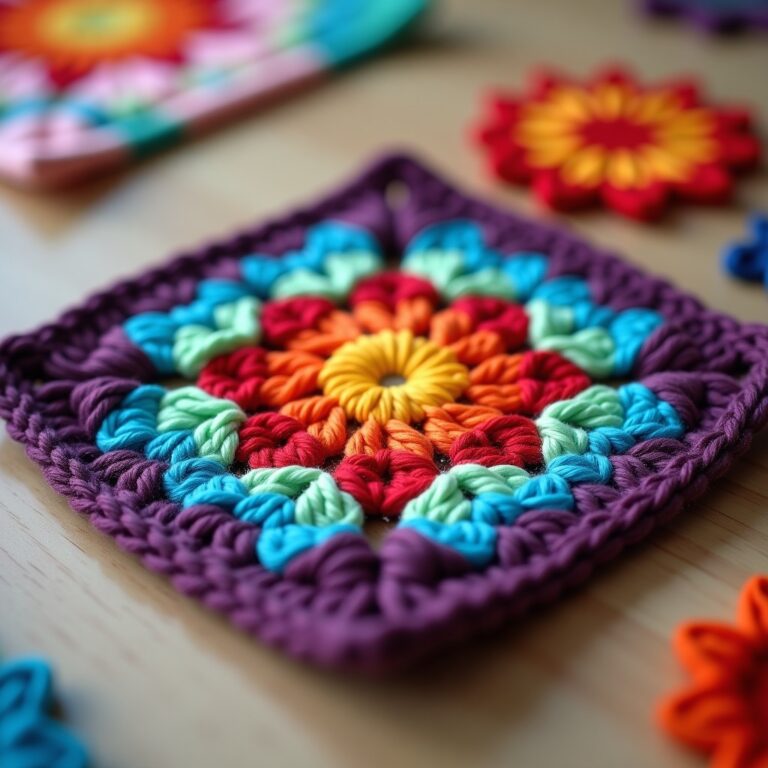
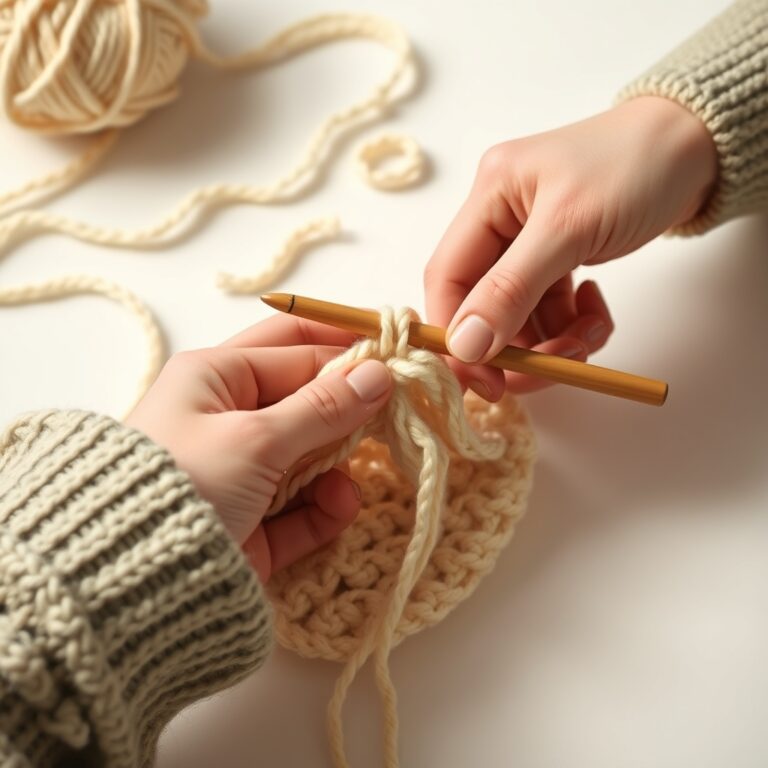
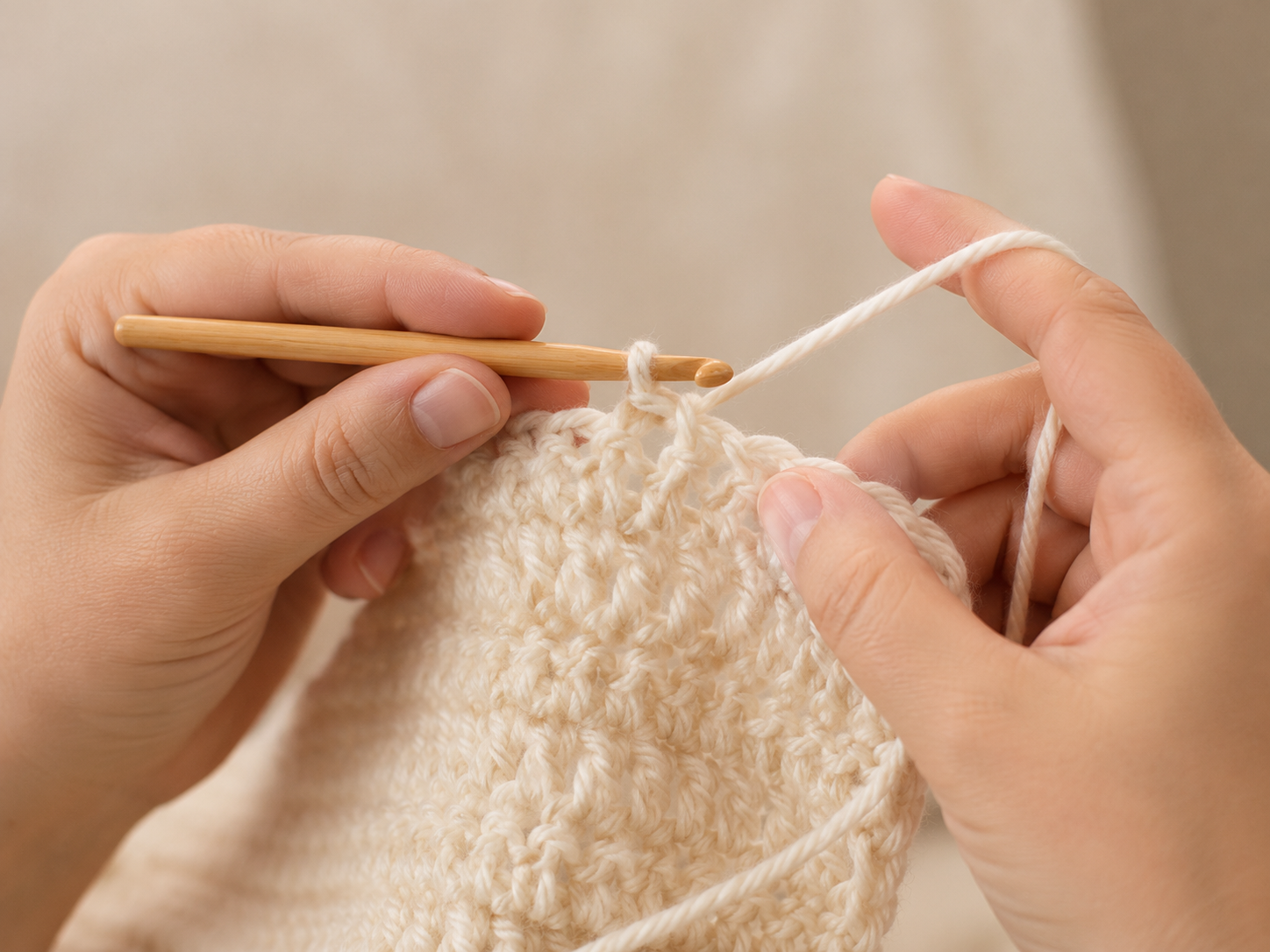
If you’re left-handed, you’ll hold the hook in your left hand and the yarn in your right, working from left to right instead of right to left. Rounds that a right-handed crocheter works counterclockwise, a left-handed crocheter works clockwise. The stitches themselves (chain, single crochet, double crochet, and so on) are identical in structure. Only the direction of travel and the hand roles are flipped.
Reading a right-handed pattern as a left-handed crocheter
Written patterns (the abbreviations and stitch counts) don’t need to be converted at all. “sc2tog” means the same thing regardless of which hand holds the hook. The part that needs translating is any diagram or chart, since those are drawn from a right-handed perspective. The simplest fix is holding a printed chart up to a mirror, or flipping it horizontally on a screen, which shows you the motion as it will actually look from your side.
Video tutorials: check the orientation before you start following along
A right-handed instructor’s video will have their hook in their right hand facing you, which is mirror-opposite to what your own hands will be doing if you try to copy the motion directly on screen. Look specifically for tutorials filmed by a left-handed instructor, or ones that offer a mirrored version, rather than trying to reverse a right-handed demonstration in your head in real time. That mental flip is where a lot of early frustration comes from.
Where left-handed beginners actually get stuck
The stitches themselves aren’t harder to learn left-handed than right-handed. The friction is almost always about source material. Most written patterns, photos, and video demonstrations default to a right-handed perspective, so a left-handed beginner has to do an extra translation step (mirroring a chart, or filtering for left-handed video content) that a right-handed beginner doesn’t. Once the direction and hand roles feel automatic, the actual stitch mechanics are no different.
A reasonable first project
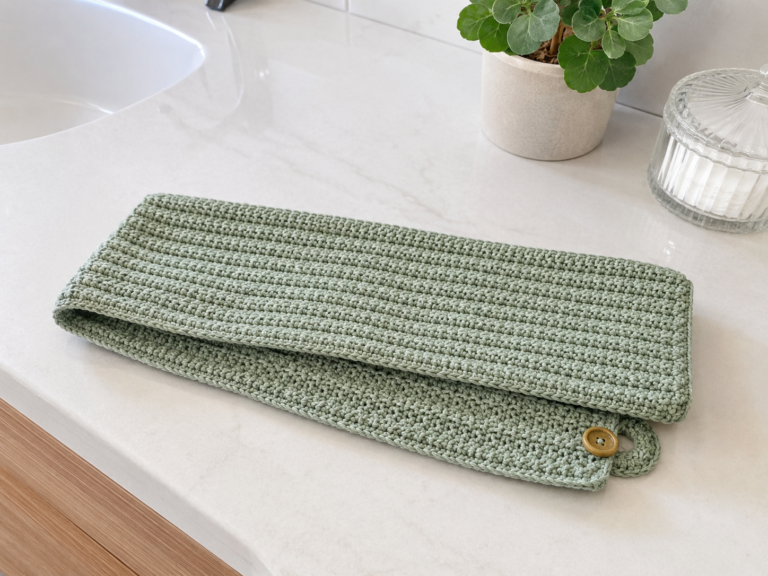
Start with something worked in straight rows rather than in the round for your very first project. A simple dishcloth or scarf swatch lets you build the chain-and-turn rhythm without also having to track a clockwise vs. counterclockwise round direction at the same time. Add rounds once the row-based motion feels automatic.