How to Count Crochet Rows: A Practical Guide
Miscounting rows is one of those crochet mistakes that doesn’t show up until it’s too late, usually somewhere around row 15 when you realize one side of your swatch is two rows taller than the other. It happens to almost everyone at some point, and the fix isn’t really about counting faster. It’s about knowing what to actually look for in the fabric itself, since the stitch you’re using changes what a “row” looks like.
Why Rows Are Hard to Track by Eye
A row is finished the moment you turn your work, but the ridge or line that marks that turn looks completely different depending on the stitch height. Single crochet packs its stitches close together, so ten rows of single crochet can look almost like a solid, texture-less block from a normal viewing distance. Double crochet, on the other hand, leaves tall, distinct posts that are much easier to separate visually. That’s the main reason counting feels harder in some projects than others: it’s not really a skill gap, it’s that the fabric is giving you less to work with.
Counting Rows in Single Crochet
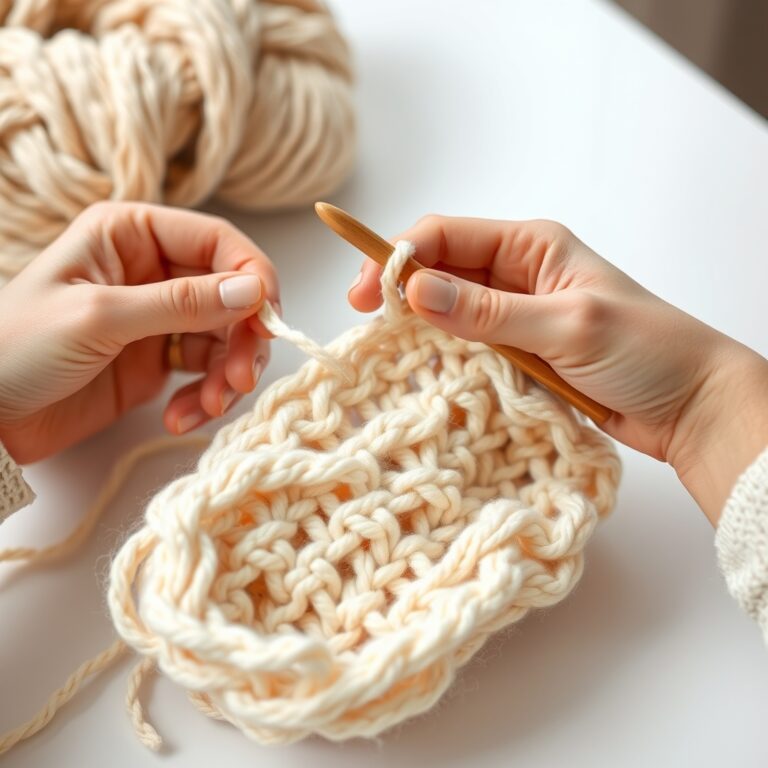
Don’t try to count from the front of the fabric. Turn your work sideways so you’re looking at the side edge, where the turning chain from each row sits. Each little loop along that edge represents one completed row, and because single crochet’s turning chain (usually just 1 chain) doesn’t disappear into the stitch the way taller ones do, it stays visible as a small bump you can count individually. Run your finger along the edge and count each bump; that number is your row count.
If the edge bumps are still hard to separate, try counting the horizontal ridges on the front of the work instead. Single crochet naturally creates a subtle ridged texture, and in most yarns, especially anything with decent stitch definition, you can count ridges instead of edge loops. Just pick one method and stick with it for the whole project, since mixing the two can throw your count off by a row here and there.
Counting Rows in Half Double and Double Crochet
Taller stitches are genuinely easier here. In double crochet, each stitch forms a clear vertical post with a visible top and bottom, so you can pick any column running up your fabric and count the posts stacked in it, that number is your row count. Half double crochet sits in between: the posts are shorter than double crochet but still distinct enough to count directly, especially once you have four or five rows built up and can see the pattern repeat.
The part that trips people up in taller stitches isn’t the counting, it’s the turning chain. Most patterns count the starting chain-3 (for double crochet) or chain-2 (for half double crochet) as the first stitch of the row. If your pattern says that and you also work a stitch into the very first spot, you’ve accidentally added an extra stitch, and depending on how the pattern is written, that can throw off your row count too if you’re counting stitches to confirm rows. Read the pattern’s abbreviations section once before you start so you know whether your turning chain counts as a stitch in that specific pattern, since not every designer does it the same way.
Rounds Are a Different Kind of Counting
If you’re working something like a granny square or an amigurumi piece, you’re not counting rows anymore, you’re counting rounds, and the logic changes. In a joined round, like most granny squares, each round ends with a slip stitch back to the starting point, which gives you a natural, physical marker to count from: just count how many times you’ve slip-stitched to close a round.
Continuous spiral rounds, the kind used in most amigurumi, don’t give you that marker at all, since there’s no join, the work just spirals upward. This is really the one case where counting by eye reliably fails, even experienced crocheters lose track in a spiral round, because there’s no visual seam to anchor your count to. A locking stitch marker placed at the start of each round and moved up as you go is the only method that actually works here.
Stitch Markers and Row Counters
For long projects, don’t rely on memory or eyeballing past row 20 or so, even if you’re confident in your counting method. Clip a locking stitch marker onto the fabric every 5 or 10 rows as a checkpoint. If you ever lose count, you only have to recount back to the nearest marker instead of from the beginning of the whole piece.
A mechanical or digital row counter, the kind you click once per row, removes the guesswork entirely and is worth the few dollars if you’re working on something with a lot of straight rows, like a blanket or a garment panel. The habit that matters most is clicking it at the same point every single row, right when you turn your work, so you’re not trying to remember later whether you already clicked for the row you’re on.
Common Mistakes That Throw Off a Count
- Counting the working loop as a finished row. The row isn’t done until you’ve turned your work and started the next one; the loop still on your hook doesn’t count yet.
- Mixing up right-side and wrong-side rows in a pattern that treats them differently. If your pattern gives separate instructions for RS and WS rows, miscounting which side you’re on will throw off the whole sequence, not just your row number.
- Losing your place after a break. This is the single biggest cause of miscounts. If you’re stepping away mid-row, mark exactly where you stopped, not just the row number, since it’s easy to forget whether you finished the last stitch or not.
- Assuming turning chains always count as a stitch. Some patterns explicitly say they don’t, particularly in single crochet. Check before you start counting stitches to confirm a row is complete.
Practice Before You Need It
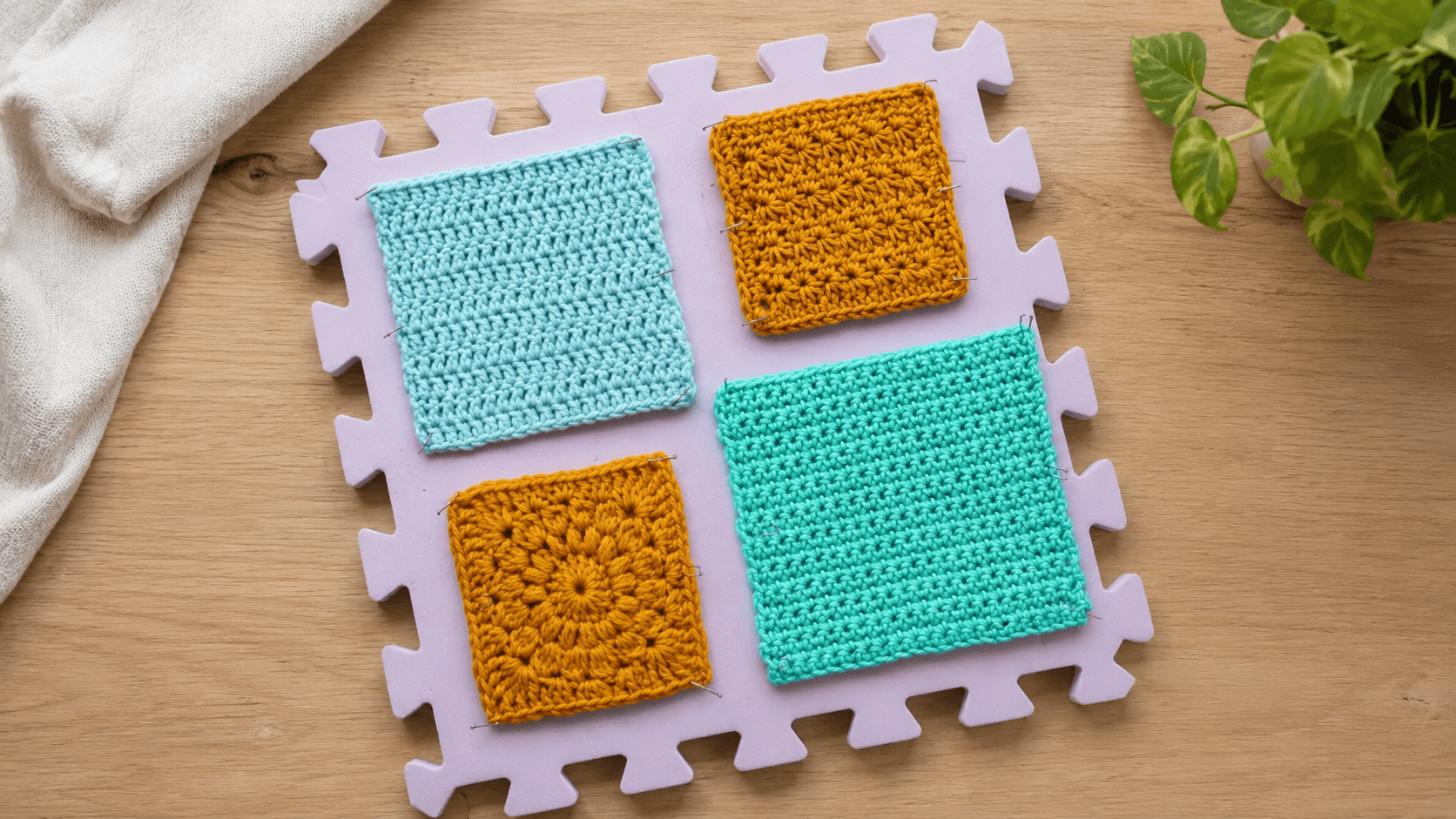
The fastest way to get comfortable with any of these methods is to make a small swatch, maybe 15 or 20 rows, in whichever stitch you use most often, and practice counting it a few different ways: by edge loops, by front-side ridges, by column posts. Once you know what your own stitch tension actually looks like row by row, counting on a real project goes a lot faster, because you’re not learning the technique and tracking a pattern at the same time.