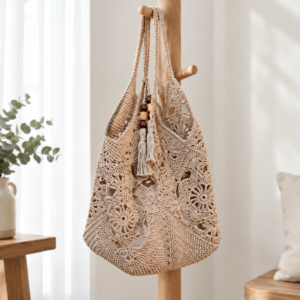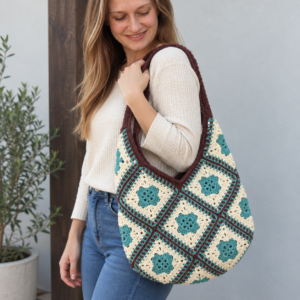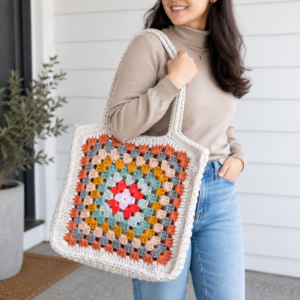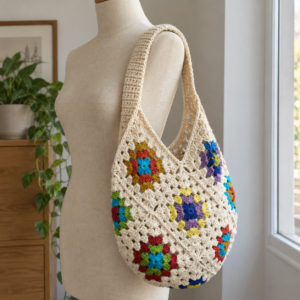
Granny Square Tote Bag: 7 Ideas + a Free Two-Square Pattern
Quick Answer
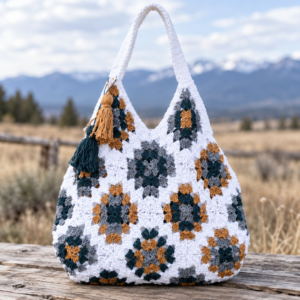
A granny square tote bag is a handmade crochet bag constructed from individual granny square motifs that are joined together and assembled with handles, a base, and typically a fabric lining for durability. The modular construction makes it easy to customize the size, color pattern, and style of your bag. Tip: always add a fabric lining and reinforced straps to your granny square tote bag, this transforms a decorative crochet piece into a genuinely functional, everyday accessory.
Tip: Use a smaller hook than recommended for your yarn weight to create a tighter, denser fabric that will hold its shape better under the weight of daily items.
At a Glance
- Skill level: intermediate
- Time needed: 8-15 hours per bag (varies by size and complexity)
- Best yarn: worsted weight cotton or hemp-cotton blend for durability
- Hook size: 4.5 mm to 5.0 mm (use smaller for tighter fabric)
Common Mistakes → Quick Fixes
- Bag stretches out of shape: use a tight gauge (smaller hook), add a fabric lining, and block the finished bag before adding the lining
- Straps stretching or breaking: reinforce straps by working a length of coordinating ribbon through the center or by crocheting straps over a cotton cord core
- Squares not aligning at the seams: block all squares to identical dimensions and use stitch markers to align seams before joining
Mini Glossary
Granny cluster (3 DC group), chain space (ch-sp), single crochet (SC), double crochet (DC), front post double crochet (FPDC), slip stitch join, standing stitch, fabric lining, strap reinforcement, gusset
Featured Free Pattern: Classic Two-Square Granny Tote
This is KnotToYarn’s own original pattern, free to use, and you’re welcome to sell what you make from it.
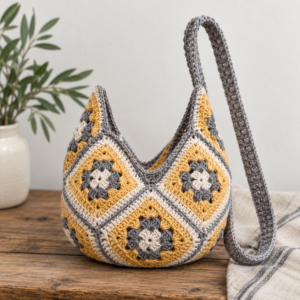
The fastest granny tote there is: two large granny squares, three seams, and two straps. Here is the complete pattern, the design ideas below are all variations on this same skeleton.
Materials
- Worsted weight cotton or cotton-blend yarn, about 200 g total in 3-4 colors (cotton holds shape better than acrylic for bags)
- 5.0 mm (US H) crochet hook
- Yarn needle, scissors
Finished size: About 33 cm (13 in) square finished bag, with 55 cm (22 in) shoulder straps
Skill level: Confident beginner
Abbreviations (US terms): ch (chain), sc (single crochet), dc (double crochet), sl st (slip stitch), sp (space)
Instructions

The Squares (make 2)
Round 1: Ch 4, sl st to form a ring. Ch 3 (counts as dc here and throughout), 2 dc in the ring, ch 2, *3 dc, ch 2; repeat from * twice more in the ring, sl st to the top of the ch-3: 4 clusters, 4 corner spaces.
Round 2: Sl st into the next corner sp. Ch 3, (2 dc, ch 2, 3 dc) in the same sp [corner]. *(3 dc, ch 2, 3 dc) in the next corner sp; repeat from * around, sl st to join.
Round 3: Sl st to the corner sp. Corner (3 dc, ch 2, 3 dc) in each corner sp, and 3 dc in each side sp between corners, around. Sl st to join.
Rounds 4-13: Continue in pattern, every round has (3 dc, ch 2, 3 dc) in the four corners and one more 3-dc group per side than the round before. Change color every 2-3 rounds. Stop when the square measures 33 cm (13 in), about 13 rounds with worsted cotton.
The Straps (make 2)
Row 1: Ch 9. Sc in the 2nd ch from the hook and each ch across: 8 sc. Ch 1, turn.
Rows 2-110: Sc in each st across: 8 sc. Ch 1, turn. Stop at 55 cm (22 in), or your preferred drop length. Single crochet makes a firm strap that barely stretches.
Finishing
Hold the two squares wrong sides together and join three sides with sc worked through both layers (the sc ridge on the right side is a design feature, or whip-stitch invisibly if you prefer). Sew the strap ends 5 cm in from each top corner, stitching a 3 cm overlap square for strength, straps carry all the weight, so anchor them well. Weave in all ends. Optional but recommended: line the bag with fabric so small items don’t poke through.
Made this? We’d love to show off your work, send a photo through our contact page and we’ll feature it here with credit to you.
Tip: Granny fabric stretches. If you plan to carry anything heavier than a scarf, work the squares one hook size down from the yarn label and add the fabric lining, your tote will keep its shape for years.
A granny square tote is one of the most practical, good-looking things you can make with a hook. It pairs the nostalgic charm of granny motifs with the everyday usefulness of a tote, great for the farmers market, the beach, the library, or just running around town. Unlike a lot of decorative crochet that ends up on a shelf, a well-made tote is something you’ll actually reach for again and again.
Because it’s built from separate squares, a tote is flexible and forgiving to make. You can tweak everything, the size, the color layout, the handle style, the finishing. Small market bag, big beach tote, or a structured everyday purse, the same approach adapts to whatever you have in mind.
The Craft Yarn Council provides essential resources on yarn weights, hook sizes, and stitch standards that are invaluable for bag-making projects. For handle hardware and bag-making supplies, check out Etsy for unique leather handles, D-rings, and magnetic snaps that will give your tote bag a professional finish.
Why Make a Granny Square Tote Bag?
Beyond the fun of carrying something you made, there are practical reasons to crochet your own tote. Done right, a handmade bag is far more durable than most store-bought ones, sturdy yarn, reinforced straps, and a proper lining give you something that handles heavy loads and daily use for years.
It’s also a great stash-buster. Each square takes only a little yarn, so it’s easy to use up leftover skeins from past projects, less waste, and a one-of-a-kind bag whose mix of colors and textures tells a bit of a story.
It’s a good skill-builder, too. You’ll practice consistent tension, joining motifs, sturdy seams, attaching handles, and installing a lining, foundational skills every well-rounded crocheter should have, and a bag is the perfect project to learn them on.
What Materials Do You Need for a Professional Tote Bag?
Choosing the Right Yarn
Yarn choice is critical for a tote bag that will hold up to real-world use. Cotton is the gold standard because it is strong, does not stretch excessively, and improves with washing. Quality cotton yarns like Lily Sugar’n Cream, Bernat Handicrafter, and Catania are excellent choices. For an even more durable option, try a hemp-cotton blend like Lion Brand Kitchen Cotton, which has exceptional strength and a beautiful natural sheen.
Avoid delicate or stretchy yarns like alpaca, silk, or loosely spun wool for tote bags. These fibers are beautiful for garments and accessories but lack the strength and structure needed for a functional bag. If you want a softer feel while maintaining durability, a cotton-acrylic blend is a good compromise.
Strap Reinforcement Materials
Even with tight crochet tension, yarn-only straps will stretch over time under the weight of a loaded bag. To prevent this, reinforce your straps with one of these methods: thread a cotton clothesline cord or nylon paracord through the center of your crocheted strap, sew a coordinating fabric strip behind the strap, or braid multiple strands of yarn together before covering them with crochet. The right tension technique combined with reinforcement will create straps that last for years.
Lining Fabric
A fabric lining is essential for any functional tote bag. The lining prevents items from catching on the crochet stitches, adds structural support, and makes the bag much easier to clean. Cotton quilting fabric or medium-weight canvas are the best choices. Choose a fabric that coordinates with your yarn colors, a solid neutral or a small-scale print works well. You will also need matching thread, a sewing needle, and either a zipper or magnetic snap for closure.
7 Free Granny Square Tote Bag Patterns
Pattern 1: Classic Market Tote
This straightforward pattern uses a 2×3 grid of traditional granny squares for the bag body, with a separate rectangular base panel and simple single crochet handles. It is the perfect first tote bag project and includes detailed instructions for joining, seaming, and lining. The classic market tote size holds groceries, library books, and everyday essentials with ease.
Pattern 2: Sunflower Festival Bag
This cheerful tote features sunflower granny squares alternating with solid squares for a bright, summery look. The pattern includes instructions for a crossbody strap option as well as traditional shoulder handles. The sunflower motifs make this bag particularly popular for farmers market trips, outdoor concerts, and summer outings.
Pattern 3: Geometric Mosaic Tote
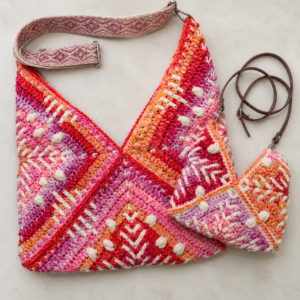
Using mosaic crochet squares with bold geometric patterns, this pattern creates a sophisticated, structured tote that looks professional enough for the office. The dense mosaic fabric provides natural stiffness, reducing the need for heavy interfacing in the lining. This intermediate pattern is ideal for crocheters who want a bag with a more refined, contemporary aesthetic.
Pattern 4: Mini Granny Square Pouch
This smaller version of the classic tote works well for carrying essentials like keys, phone, wallet, and sunglasses. Using 4 to 6 small granny squares (about 3 inches each), it works up quickly and makes an excellent gift or craft fair item. Add a zipper closure and wrist strap for a polished finishing touch.
Pattern 5: Beach-Ready Striped Tote
This oversized tote features elongated rectangular granny squares worked in bold nautical stripes. The generous size holds beach towels, sunscreen, and snacks with room to spare. Openwork granny clusters allow sand to shake out easily, and the cotton construction stands up to sun, salt air, and regular washing.
Pattern 6: Granny Square Bucket Bag
This innovative pattern arranges granny squares in a cylindrical shape to create a structured bucket bag. The base is a circular granny motif, and the sides are built from multiple squares joined vertically. A drawstring closure and reinforced handles complete the design. The bucket shape naturally holds its form and keeps items secure.
Pattern 7: Two-Tone Structured Tote
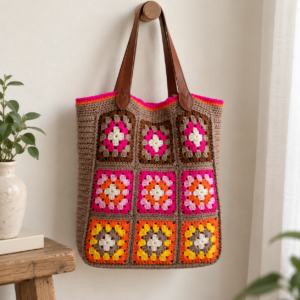
This elegant design uses solid granny squares in just two colors for a clean, minimalist look. The pattern includes instructions for creating boxed corners, which give the bag a professional, structured shape. Rigid leather handles (purchased separately and attached with rivets or D-rings) turn this motif from handmade craft into designer accessory.
Step-by-Step: Adding a Fabric Lining
A proper lining transforms your crochet bag from a decorative item into a functional accessory. Here is the basic process:
First, measure your completed crochet bag panels and cut your lining fabric 1 inch larger on each side for seam allowances. Sew the side seams and bottom seam of the lining with right sides together, leaving a 4-inch gap along the bottom for turning. Press the seams open.
Next, with the crochet bag inside out and the lining right side out, slip the lining into the crochet bag so the right sides of both face each other. Pin the top edges together, matching the side seams. Sew around the entire top edge with a 1/2-inch seam allowance. Turn the bag right side out through the gap in the lining bottom, then hand-stitch the gap closed.
Finally, topstitch around the top edge of the bag, about 1/4 inch from the top, through both the crochet and lining layers. This keeps the lining in place and gives the bag a crisp, finished look. If adding a zipper or magnetic snap, install it before sewing the lining to the bag.
Professional Finishing Techniques
The finishing details separate a professional-looking bag from one that appears homemade. Start by weaving in all ends securely, each tail should travel through at least 10 stitches in different directions. Block your finished bag by spritzing it with water, shaping it to the correct dimensions, and letting it air dry completely.
For handles, consider using purchased leather, faux leather, or bamboo handles for a polished look. These can be attached to the bag using D-rings, which are sewn onto the crochet bag body. If you prefer crocheted handles, work them over a cotton cord core for added strength and stability.
Care Instructions for Crochet Tote Bags
To keep your pattern looking its best, spot clean small stains promptly and hand wash the bag (without the lining) in cool water with mild soap when needed. Reshape and air dry flat. The fabric lining can be removed and machine washed separately on a gentle cycle. Store your bag stuffed with tissue paper to maintain its shape, and avoid hanging it by the straps for extended periods, as this can cause stretching.
What Are the Best Tips for Your Tote Bag Project?
Built sturdily, it easily handles groceries, books, and daily essentials.
For durability, reinforce the handles and add a proper fabric lining, those two things make all the difference.
It’s also a nice eco-friendly alternative to disposable shopping bags.
Since it’s modular, you can change the size just by adding or removing squares from the grid.
If you sell your work, totes are consistently among the best sellers at craft markets.
The crochet community shares countless granny square tote bag patterns online, ranging from simple to advanced designs. For even more inspiration, check out our collection of free crochet patterns for beginners.
For a beach-ready version, use cotton in bright nautical colors that hold up to sun and salt.
A child-sized tote makes a lovely handmade gift, kids love them for toys and treasures.
The openwork structure of a classic granny tote lets sand and crumbs shake right out.
Learning to make a granny square tote bag teaches essential skills including motif joining, handle attachment, and lining installation.
A well-lined granny square tote bag looks polished and professional, rivaling store-bought bags in both style and functionality.
The generous size of a typical granny square tote bag accommodates laptops, water bottles, and all your everyday carry items.
For a polished finish, every granny square tote bag should be blocked before the lining is sewn in.
A seasonal granny square tote bag with holiday colors makes a thoughtful, handmade gift for teachers, friends, and family.
The classic granny square tote bag never goes out of style and works with virtually any wardrobe or personal aesthetic.
Using a smaller hook than usual for your granny square tote bag creates a tighter, denser fabric that holds its shape better.
Frequently Asked Questions
How many granny squares do I need for a standard tote bag?
A standard tote (about 14 inches wide by 15 tall) usually takes 6 to 9 squares in a 2×3 or 3×3 grid. A smaller market bag might need just 4 (2×2), and a big beach tote 12 or more in a 3×4 layout. It really depends on your square size and the dimensions you’re after.
How do I keep my crochet tote bag from stretching?
Prevent stretching by using a tight gauge (smaller hook than usual), choosing a non-stretchy yarn like cotton, reinforcing your handles with a cord core, and always adding a fabric lining. Blocking the finished bag before installing the lining also helps set the shape and reduce future stretching.
Can I machine wash my granny square tote bag?
If your bag is made from 100% cotton yarn and does not have a sewn-in lining, you can machine wash it on a gentle cycle in cool water and lay it flat to dry. If your bag has a fabric lining, remove it before washing and wash each component separately. Avoid machine washing bags made from wool, acrylic blends, or yarns with delicate fiber content.
What is the best way to attach handles to a crochet bag?
The most secure method is to sew metal D-rings to the top edge of the bag body, then attach your handles to the D-rings. For crocheted handles, attach them directly by working through both the handle and bag edge stitches simultaneously. If using leather or purchased handles, rivets or heavy-duty sewing provide the strongest attachment.
Do I really need to line my crochet tote bag?
You can leave a bag unlined for light items, but a lining is strongly recommended for anything you’ll use daily. It keeps keys and coins from slipping through the stitches, adds structure and shape, spreads the weight more evenly, and makes the bag easier to clean, plus it just looks more finished.