Crochet Shell Stitch: 7 Stunning Patterns for Beginners

Quick Answer
The crochet shell stitch is a versatile stitch pattern created by working multiple double crochet stitches into a single stitch or space, producing a beautiful fan-like or scalloped texture. It is one of the most popular decorative stitches in the crochet world and works beautifully for blankets, scarves, garments, and home decor items. The stitch is surprisingly easy to learn once you understand how to hold your hook and yarn comfortably.
Tip: Always chain an even number of stitches for your foundation row when working the basic crochet shell stitch pattern, start with a crochet magic ring for a neat center, this ensures your shells align perfectly across the row.
At a Glance
- Skill level: beginner to intermediate
- Time needed: 30 minutes to learn the basic technique
- Best yarn: worsted weight (medium #4) cotton or acrylic blend
- Hook size: 5.0 mm (H-8) or 5.5 mm (I-9)
Common Mistakes → Quick Fixes
- Uneven shell edges: count your double crochet stitches carefully and use a stitch marker at the start of each row
- Shells leaning to one side: ensure you are working into the correct stitch or space and not accidentally skipping chain stitches
- Gaps between shells: maintain consistent tension throughout, check our guide on how to fix crochet tension for detailed tips
Mini Glossary
DC (double crochet), HDC (half double crochet), SC (single crochet), CH (chain), SP (space), ST (stitch), SK (skip), REP (repeat), RS (right side), WS (wrong side)
What Is a Crochet Shell Stitch?
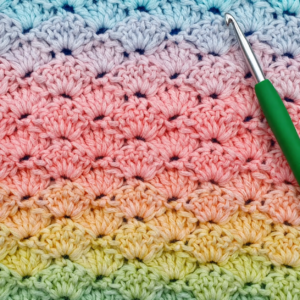
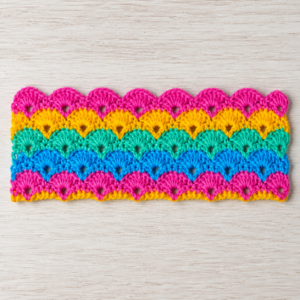
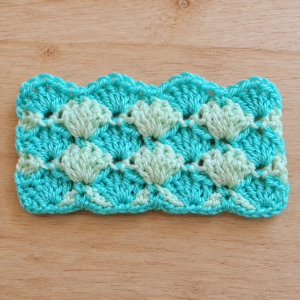
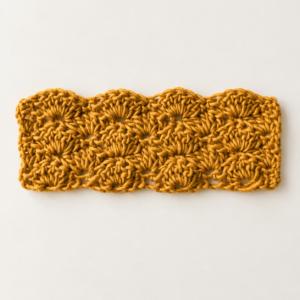
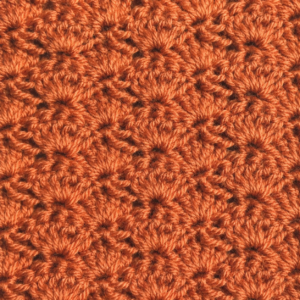
The shell stitch is made by grouping several completed stitches, usually double crochets, into the same stitch or space. That clustering creates a rounded, fan shape like the scalloped edge of a seashell. Depending on how many stitches you group and which you use, it can read anywhere from delicate and airy to thick and textured.
The nice thing about it is how simple it is. At heart, you work several double crochets into one point, then skip a few stitches before the next shell. Once that rhythm clicks, you can adapt it to almost any project. For the foundations, see our guides on the double crochet stitch and the single crochet stitch.
How to Crochet the Basic Shell Stitch?
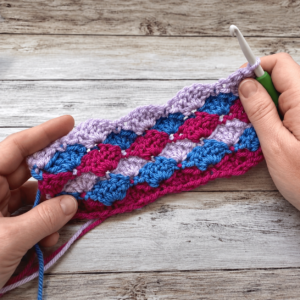
Before the patterns, here’s how to work a shell stitch step by step. The most common version uses five double crochets (a 5-DC shell), which gives a bold, visible scallop that’s easy for beginners to follow.
Foundation Row
Start by chaining a multiple of 6 plus 3 stitches (for example, chain 33 for five shells across). The extra 3 chains count as your first double crochet. Then, double crochet in the fourth chain from your hook. This establishes your first two stitches of the pattern.
Row 1: Creating Your First Shells
Skip two chains, then work five double crochets into the next chain stitch. This cluster of five double crochets forms your first crochet shell stitch. Skip the next two chains, then work a single crochet into the following chain. Repeat this sequence, skip two, 5-DC shell, skip two, SC, across the entire row. End with a single crochet in the last chain.
Row 2 and Beyond
Chain three (this counts as your first double crochet), then work four more double crochets into the single crochet from the previous row. This creates your first shell of the new row. Skip the five double crochets of the shell below, then single crochet into the next single crochet space. Continue this pattern across, and you will see the shells stacking beautifully on top of each other.
For those who prefer a tighter, denser fabric, you can substitute the half double crochet in place of double crochets to create a modified crochet shell stitch variation that works up faster while still maintaining the signature fan shape.
7 Stunning Crochet Shell Stitch Patterns for Beginners
Now that you’ve got the basic technique, here are seven shell-stitch patterns you can start right away. Each builds on the skills above and is beginner-friendly while still looking professional.
1. Classic Shell Stitch Blanket
The classic stitch blanket is the perfect first project for anyone learning this technique. Using worsted weight yarn and a 5.5 mm hook, this pattern creates a soft, drapey fabric with beautiful scalloped edges. The pattern repeats a simple two-row sequence: one row of shells and one row of single crochets worked in the chain spaces between shells. This rhythmic repetition makes it an excellent beginner crochet project that you can easily customize with any color combination.
2. Shell Stitch Scarf
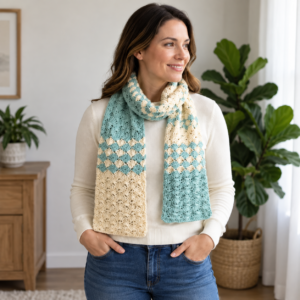
A shell stitch scarf is a quick and rewarding project that highlights the stitch’s natural drape and elegance. Chain 37 stitches, then work the basic shell pattern along the length of the scarf. Using a lightweight DK yarn gives the scarf a beautiful lace-like quality, while a worsted weight yarn creates a cozy, warm accessory. Choose a self-striping yarn to add visual interest without the hassle of color changes.
3. Shell Stitch Baby Blanket
Baby blankets are one of the most popular shell pattern projects, and for good reason. The scalloped texture is incredibly soft and inviting for little ones, and the stitch pattern works up quickly enough that you can finish a blanket in just a few evenings. Use a soft, washable cotton or acrylic yarn in pastel colors. A baby blanket typically requires about 800-1000 yards of yarn and measures approximately 36 inches by 36 inches when completed.
4. Shell Stitch Shawl
For a more elegant project, try a crochet shell stitch shawl. This pattern uses a triangular construction where you increase the number of shells on each row, creating a wide, flowing shawl that works well for layering. The stitch creates a natural scalloped edge along the bottom of the shawl, eliminating the need for a separate border. Use a fingering weight yarn with a subtle sheen for a more luxurious finished piece.
5. Shell Stitch Dishcloth
If you are looking for a small, practical project to practice your shell stitch skills, a dishcloth is the perfect choice. Made with 100% cotton yarn, this pattern produces a textured cloth that is both beautiful and functional. The shell pattern texture provides gentle scrubbing power, making these dishcloths excellent gifts for friends and family. Each dishcloth uses less than 100 yards of yarn and can be completed in under an hour.
6. Shell Stitch Cardigan
Take your crochet shell stitch skills to the next level with a simple cardigan pattern. By working rectangular panels of shell stitch fabric and seaming them together, you can create a beautiful, lightweight cardigan without complex shaping. The stitch naturally creates a slightly stretchy, comfortable fabric suited to wearable garments. Use a soft merino or acrylic blend for the best results.
7. Shell Stitch Table Runner
Add a touch of handmade elegance to your dining table with a shell stitch table runner. This home decor project uses a smaller hook and finer yarn to create a delicate, lace-like runner that looks stunning in neutral cream or white. The shell pattern creates beautiful scalloped edges along both long sides of the runner, giving it a professional, polished finish. This is also a wonderful project for using up leftover yarn from your stash.
Popular Crochet Shell Stitch Variations
One reason the shell stitch is so loved is how many variations it allows. Change the number of stitches per shell, the stitch type, or the spacing between shells, and you get dramatically different looks.
Double Shell Stitch
The double crochet shell stitch variation places two shells side by side with only one skipped stitch between them, creating a denser, more textured fabric. This is ideal for warmer blankets and winter accessories where you want less drape and more insulation.
V-Stitch Shell
The V-stitch variation combines the stitch with a V-stitch (two double crochets worked into the same space with a chain between them). This creates an open, airy fabric good for summer garments and lightweight shawls.
Arch Shell Stitch
The arch shell stitch uses chain stitches between the double crochets within each shell, creating an elongated, arch-like shape. This variation is particularly stunning when worked in multiple colors, as the chains create a subtle stripe effect that highlights the scalloped pattern.
What Are the Best Tips for Perfecting Your Crochet Shell Stitch?
Getting your shells to look polished takes a little practice, but our crochet tips will help you get beautiful results from the very first project.
Count your stitches at the end of every row. The most common issue beginners face with the shell pattern is accidentally increasing or decreasing stitches, which causes the fabric to warp or lean. Taking five seconds to count your shells before turning will save you hours of frogging later.
Use stitch markers. Place a stitch marker in the first and last stitch of each row to help you identify where to place your turning chains and end-of-row stitches. This is especially helpful for the crochet shell stitch because the scalloped edges can make it difficult to see where rows begin and end.
Block your finished projects. Blocking is the secret to making any stitch project look professionally finished. Gently wet your finished piece, pin it to a blocking mat in the desired shape, and let it dry completely. This opens up the shell pattern and gives your edges a clean, uniform appearance.
Experiment with hook size. If your shell stitch fabric feels too stiff or too loose, try going up or down one hook size. The shell pattern is quite forgiving, and a small adjustment in hook size can dramatically change the drape and feel of your finished piece. Refer to our crochet hook sizes guide for more details.
Best Yarn for Crochet Shell Stitch Projects
Yarn choice can make or break a shell-stitch project. It looks best in a yarn with good stitch definition, so skip highly textured or novelty yarns that hide the scallops.
For blankets and home decor items, a smooth worsted weight acrylic or cotton blend is ideal. Cotton yarns like those recommended by the Craft Yarn Council hold their shape beautifully and create crisp, defined shells. For garments and accessories, consider a soft merino wool or a bamboo blend that provides excellent drape while still keeping the stitch pattern clearly visible.
Budget-friendly acrylic yarns from brands like Red Heart, Caron, and Lion Brand are excellent choices for practicing your shell pattern technique. Once you feel confident, you can upgrade to premium yarns for special projects. Browse beautiful pattern inspiration on Ravelry to see how different yarns look in shell stitch patterns.
Frequently Asked Questions
How many chains do I need for a crochet shell stitch?
The number of chains depends on which shell variation you’re working. For a standard 5-dc shell with chain-one spacing, chain a multiple of 6 plus 3; for a 3-dc shell, a multiple of 4 plus 3. Always swatch first to confirm your gauge and stitch count before a big project.
Can I use the crochet shell stitch for clothing?
Absolutely, the shell stitch is great for garments because it makes a naturally stretchy, comfortable fabric with lovely drape. Lighter versions with fewer stitches per shell and thinner yarn work especially well for cardigans, tops, and shawls. Just pick a soft yarn and block the finished garment for the best fit.
What is the difference between a shell stitch and a fan stitch?
“Shell stitch” and “fan stitch” are often used interchangeably, but there’s a subtle difference. A shell usually uses all the same stitch (say, five double crochets) in one space for a uniform rounded shape, while a fan often mixes stitch heights, a double, a treble, a double, for a more pointed shape.
How do I keep my shell stitch edges straight?
Keeping straight edges is one of the most common shell-stitch challenges for beginners. The key is to work your turning chain at the right height and to place the last stitch of each row correctly. Stitch markers at the start and end of each row help, and blocking smooths out any minor edge wobble for a polished finish.
Is the crochet shell stitch good for beginners?
Yes, the shell stitch is a great choice once you’ve learned the basic stitches. If you can chain, single crochet, and double crochet, you’ve got what you need. The repeat is easy to memorize and the results are really rewarding. Start small with a dishcloth or scarf before moving to blankets or garments.