Amigurumi Snake Pattern: Wire-Frame Tutorial + 5 Tips (Free)
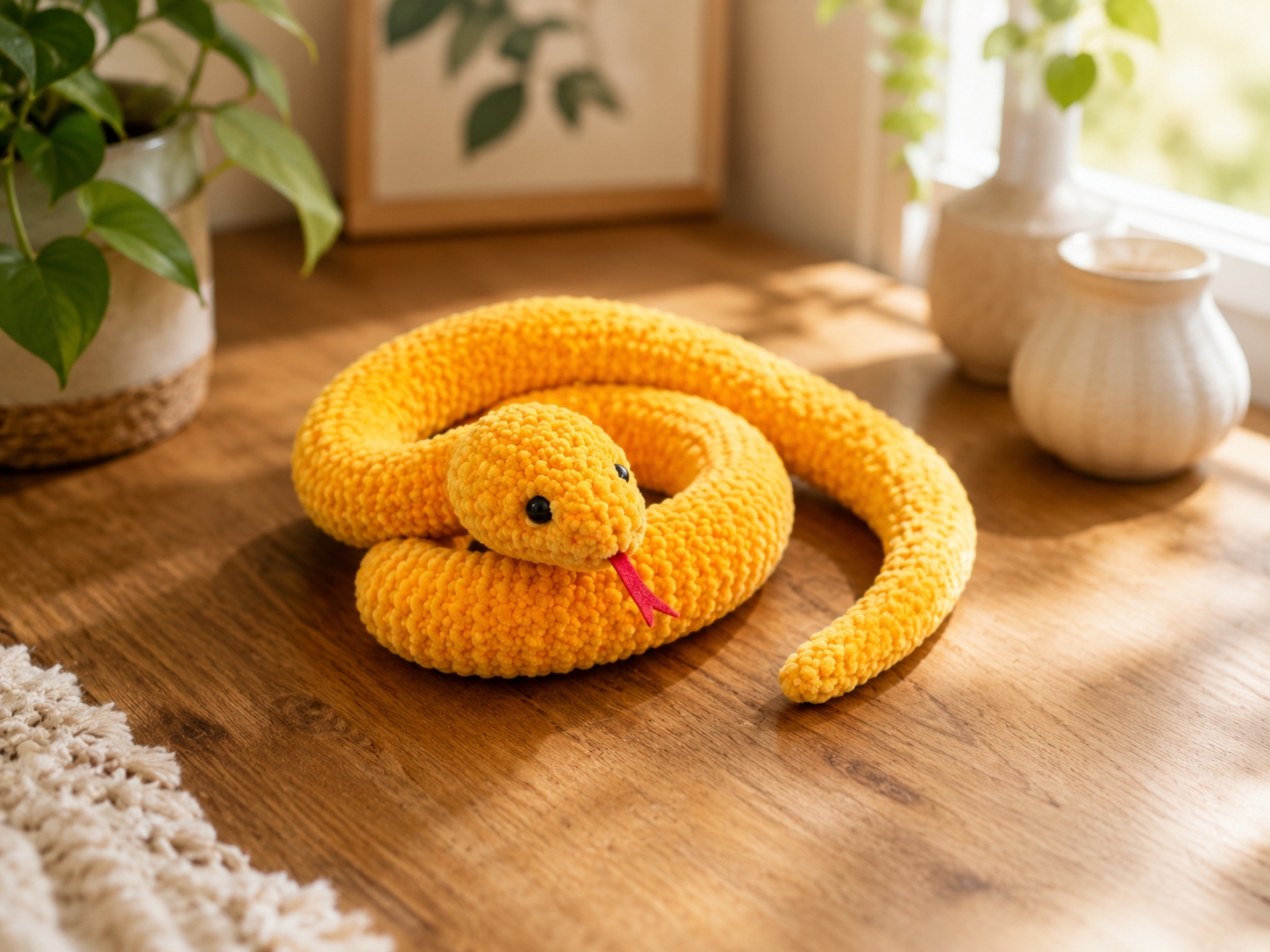
If you’ve ever wanted to try amigurumi but the usual round-bodied animals feel a little predictable, this amigurumi snake pattern is a genuinely fun next project. It’s worked in one continuous spiral of single crochet, so there’s no seaming to fuss over, and the shaping comes almost entirely from when you increase, hold steady, or decrease, not from anything technical.
As an Amazon Associate we earn from qualifying purchases: some supply links in this post are affiliate links, at no extra cost to you.
Why This Wire-Frame Amigurumi Snake Pattern Works
Single crochet amigurumi is dense and sturdy, which is exactly what you want here, since the fabric needs to grip the wire frame and keep its posed shape. The body is just a long single crochet tube that widens through a series of increase rounds, holds at its widest point, then narrows back down into a tapering tail. Safety eyes and a small felt tongue do the rest of the work for personality.
This technique isn’t limited to one design. Once you understand the wire-frame approach, it carries over to anything that benefits from a posable body, caterpillars, dragons, even some plant-leaf shapes.
Watch the Full Tutorial
The YouTube channel Medintseva Toys walks through a wire-frame snake start to finish, including how they prep the wire, where the increases land, and how they shape the final tightening around the eyes for a more realistic look. Her full video is below, well worth a watch if you want to see the wire insertion and shaping in motion rather than read about it.
5 Things to Know Before Starting This Amigurumi Snake Pattern
Before diving into the video, a few technique notes that make this amigurumi snake pattern easier to follow.
- Hook size matters more than usual. Drop one or two sizes below the yarn label’s recommendation. The tighter the stitch, the better the wire frame stays hidden inside the body.
- Stitch markers are your friend. Single crochet in the round can drift easily. Mark the first stitch of each round so you always know where one ends and the next begins.
- Prep the wire before inserting. Cut your wire to the finished body length plus a few centimeters, and bend the cut ends into small loops so they don’t poke through the fabric over time.
- Stuff as you go. It’s much harder to push fiberfill around the wire once the snake is fully closed. Add small amounts of stuffing every few centimeters as the tube grows.
- Take your time tapering the tail. The narrowing section at the end is worked over several rounds of decreases. Rush it and the tail looks blunt; work it slowly and it tapers smoothly to a fine point.
For matching your yarn weight and hook size to the right tension, the Craft Yarn Council yarn weight standards are a useful reference.
Colours and Stripes That Make It
A one-colour snake is fine, but stripes are where snakes get their personality, and colour changes in a spiral are the easiest possible place to practise them since every join is hidden on the underside.
- Classic garden snake: two greens alternating every 4 to 6 rounds.
- Coral snake look: repeating red, yellow, black, yellow bands. Bold and striking, and a conversation starter about why you should never pick up the real one.
- Scrap snake: change colour every time a scrap runs out. No two are ever alike, and it is the best stash-buster in amigurumi.
If colour changes are new to you, our guide to changing colours in crochet covers the clean-join method that keeps stripe edges crisp.
Making It Child-Safe
Two cautions if this snake is destined for a small child. First, skip the wire entirely: a wire frame is for display snakes on shelves, not for toys that get chewed and bent, where an end could eventually work through the fabric. An unwired snake is still a wonderful floppy toy. Second, embroider the eyes instead of using safety eyes for children under three; a few satin stitches in black yarn are completely secure and just as charming.
Amigurumi Snake Pattern: Frequently Asked Questions
What hook size do I need for this amigurumi snake pattern?
Go one to two sizes smaller than the yarn label recommends. Tight stitches are key, they keep the wire frame hidden and give the body its firm, posable shape.
What wire works best?
Aluminum floral wire. Soft enough to bend by hand, stiff enough to hold a curve. Wrap it in craft foam before inserting for a softer feel.
How long does it take to crochet?
A small snake (around 30 cm) takes about 2-3 hours. The body is one continuous single crochet spiral, so it moves quickly once you find your rhythm.