Granny Square Pullover: 7 Free Crochet Patterns

Granny Square Pullover at a Glance

  • Topic: granny square pullover
  • Skill level: intermediate
  • Main goal: help the reader crochet a granny square pullover using free patterns with proper sizing and joining techniques
  • Related topics: granny square patterns, crochet tension, crochet garment construction, sweater shaping

Quick Answer

A granny square pullover is a crocheted top made by joining multiple granny squares into a seamless, round-construction garment. Unlike cardigans, pullovers have no open front closure, which means your joining technique and stitch consistency matter even more. You can create one using 15–40 granny squares depending on your bust size and the square gauge.

Tip: Always block your granny squares before joining — this ensures uniform sizing and a professional-looking finished pullover.

At a Glance

  • Skill level: intermediate
  • Time needed: 30–60 hours
  • Best yarn: DK or worsted weight cotton or acrylic blend
  • Hook size: 5.0 mm (H-8) or 5.5 mm (I-9)

Common Mistakes → Quick Fixes

  • Uneven square sizes: block each square and count stitches carefully before joining
  • Pullover too tight: add a half-square border or work a chain-and-single-crochet panel at the sides
  • Neckline too small: skip 2–3 squares at the top center for a comfortable opening

Mini Glossary

GS (granny square), SC (single crochet), DC (double crochet), CH (chain), SL ST (slip stitch), FO (fasten off), SP (space), PM (place marker), BLO (back loop only), FSC (foundation single crochet)

A granny square pullover is one of the most rewarding crochet garments you can make — for more garment ideas, browse our crochet sweater pattern, combining the nostalgic charm of classic motifs with the cozy structure of a seamless top. Whether you are a seasoned crocheter looking for your next wearable project or an intermediate maker ready to level up, this guide to seven free granny square pullover patterns will give you everything you need to get started.

KnotToYarn KnotToYarn

Subscribe to KnotToYarn!

Get the best free crochet patterns, tutorials & tips delivered straight to your inbox. Join our growing community!

Free newsletter. No spam, ever.

Why Choose a Granny Square Pullover Over a Cardigan?

While granny square cardigan patterns have dominated the crochet wearable scene, the granny square pullover offers a completely different construction approach. A pullover is worked as a continuous tube-like structure with no front opening, which eliminates the need for buttonholes or zippers and creates a cleaner, more streamlined silhouette.

The key difference lies in the joining method. Cardigans are typically constructed as two flat panels joined at the shoulders and sides, whereas a granny square pullover is built by arranging squares in a circular or rectangular grid and seaming them into a closed shape. This round-construction method means you need to plan your neckline and armhole placement more carefully, but the result is a polished, modern garment that feels like a store-bought sweater.

granny square pullover crochet texture closeup

crochet sweater yarn showing granny square garment texture

Essential Skills for Crocheting a Granny Square Pullover

Before diving into any of the seven free patterns below, make sure you are comfortable with a few core techniques. First, you should have a solid grasp of the single crochet stitch, which is the backbone of most joining methods and edging. Second, knowing how to read a crochet pattern is essential since each designer uses slightly different terminology and abbreviations.

Most importantly, consistent tension is non-negotiable when making a wearable granny square garment. If your crochet tension varies between squares, your pullover will twist, pucker, or hang unevenly. Take the time to swatch, measure, and adjust your hook size before committing to your full project.

Gauge and Blocking Basics

Every granny square pullover pattern will specify a target gauge — usually measured as the number of rounds and inches per completed square. Block your gauge swatch by pinning it to a flat surface, misting it with water, and letting it dry completely. This step relaxes the stitches and gives you an accurate measurement. Refer to the Craft Yarn Council for standard sizing charts so you can calculate exactly how many squares you need for your measurements.

7 Free Granny Square Pullover Patterns

1. The Classic Granny Square Pullover

This beginner-friendly granny square pullover uses traditional three-round granny squares joined with a simple slip stitch seam. The pattern calls for worsted weight yarn and a 5.5 mm hook, producing a relaxed-fit top that is perfect for spring layering. You will need approximately 24 four-inch squares for a medium bust, arranged in a 4 × 6 grid with two squares left open for the neckline and six squares forming each armhole.

2. Solid Square Spring Pullover

If you prefer a more modern, less textured look, this pattern uses solid granny squares where each round is filled with continuous double crochet stitches rather than chain-space clusters. The result is a dense, warm fabric that works beautifully in autumn colors. The pullover is constructed by joining the front and back panels at the shoulders and sides, then adding ribbed edging around the neckline and cuffs.

3. Motif yoke pullover

This stunning intermediate pattern places a ring of granny squares around the yoke and shoulders, then works the body in continuous rows of half double crochet below. The yoke construction creates a flattering fitted shape through the chest and shoulders while allowing a gentle A-line drape through the torso. You will need 12 squares for the yoke and approximately 400 yards of DK weight yarn for the body section.

4. Crop Top Granny Square Pullover

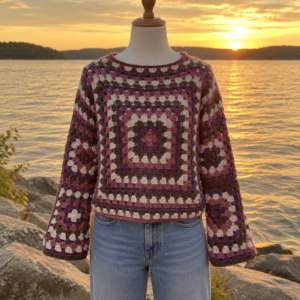
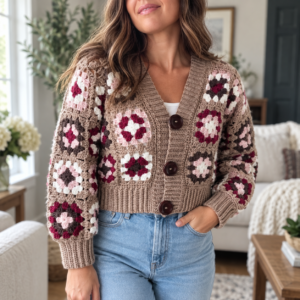
Perfect for warmer months, this cropped granny square pullover uses only 9–12 large six-inch squares joined into a boxy silhouette that hits just above the waist. The pattern includes detailed instructions for customizing the crop length and adding optional fringe along the bottom edge. Use a lightweight cotton yarn for a breathable summer garment that pairs perfectly with high-waisted jeans.

5. Color Block Pullover

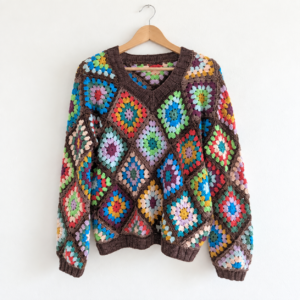
This eye-catching pattern uses a different yarn color for each round of every granny square, creating a vibrant color-blocked effect across the entire pullover. The designer provides a detailed color-planning worksheet so you can map out your palette before starting. The construction uses a join-as-you-go method, which eliminates the tedious seaming step and keeps your ends minimal.

6. Hooded Granny Square Pullover

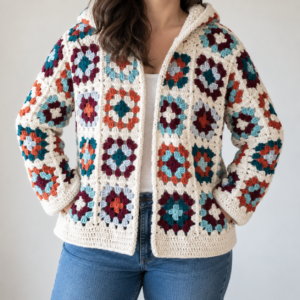
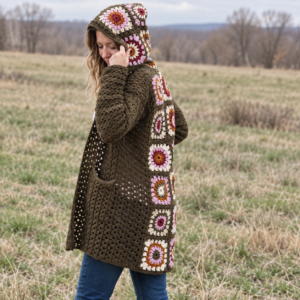
Take your granny square pullover to the next level with this hooded variation. The body follows a standard rectangular construction with 20 squares, and the hood is shaped using decreasing granny clusters over 8 additional squares. The pattern includes a tutorial for a drawstring closure using a crocheted cord, making this an ideal layering piece for cool autumn evenings.

7. Toddler Granny Square Pullover

This adorable children’s size pattern is an excellent introduction to garment construction because it requires only 12 small three-inch squares and finishes quickly. The pullover features a simple boat neckline and ribbed armhole edges. It is sized for toddlers aged 2–4 and uses soft, washable acrylic yarn for easy care. This is a fantastic pattern if you want to practice your joining technique on a smaller scale before tackling an adult size.

colorful crochet granny squares arranged for pullover pattern

Joining Techniques for a Seamless Granny Square Pullover

The way you join your squares can make or break the final look of your granny square pullover. Here are the three most popular methods:

Slip Stitch Join

Hold two squares with right sides together and work a slip stitch through both back loops of each stitch pair. This creates a flat, nearly invisible seam that is ideal for most pullover constructions. It is the strongest join and works well for garments that will get regular wear.

Single Crochet Join

Similar to the slip stitch method but uses single crochet stitches instead, creating a slightly raised decorative seam line. This method adds a subtle textural element to your granny square pullover and is a good choice when you want the seams to be a design feature rather than hidden.

Join As You Go (JAYGO)

This advanced technique lets you connect each new square to the previous one during the final round, so you never have to seam anything at the end. The JAYGO method saves time and reduces yarn tails, but it requires careful stitch placement and is best suited for crocheters who have already completed a few granny square projects.

Sizing Your Granny Square Pullover

One of the biggest advantages of a granny square pullover is how easily it can be customized to any body size. The basic formula is simple: measure your bust circumference, divide by the width of one blocked square, and round up to determine how many squares you need per row. Then measure your desired length from shoulder to hip and divide by the square height to find the number of rows.

KnotToYarn KnotToYarn

Subscribe to KnotToYarn!

Get the best free crochet patterns, tutorials & tips delivered straight to your inbox. Join our growing community!

Free newsletter. No spam, ever.

For a standard women’s medium (38–40 inch bust), you will typically need 18–24 four-inch squares. For a plus-size fit (48–52 inch bust), plan for 28–36 squares. Always add two to four extra squares for ease of movement — a pullover that fits too tightly will pull at the armholes and neckline and will not be comfortable to wear.

Yarn Recommendations for Your Granny Square Pullover

The yarn you choose affects everything from drape to durability. Here are three excellent options:

  • Cotton blend (e.g., Cotton + acrylic): best for spring and summer pullovers. Provides stitch definition and breathability with minimal stretching.
  • Merino wool blend: ideal for autumn and winter granny square pullovers. Offers warmth, softness, and beautiful stitch memory.
  • 100% acrylic: the most budget-friendly choice and great for your first granny square pullover. Look for a soft premium acrylic to avoid scratchiness.

Cardigan vs Vest PDF Resource

If you enjoy the granny square pullover construction and want to explore related garment types, check out our Cardigan/Vest PDF guide which covers open-front variations using the same motif-joining principles. The PDF includes schematics for both cardigan and vest constructions, with detailed stitch diagrams that translate directly to pullover projects as well. You can find the downloadable pattern collection in our Ravelry pattern store for additional inspiration.

Frequently Asked Questions

How many granny squares do I need for a pullover?

The number of squares depends on your bust measurement and the size of each finished square. For a medium women’s size using four-inch squares, you typically need 18 to 24 squares. Measure your bust, divide by the width of one blocked square, and round up. Always add extra squares for ease of movement so the pullover is comfortable rather than restrictive.

What is the difference between a granny square pullover and a granny square cardigan?

A granny square pullover is a closed-front garment, while an open-front option like our hexagon cardigan crochet pattern offers a different stylish look or rectangular shape with no opening down the front, while a cardigan has an open front that requires closures like buttons or ties. The pullover construction is worked in the round or as a seamed rectangle, which creates a more streamlined fit. Cardigans are easier to adjust for fit after completion since you can simply add or remove buttons, whereas a pullover requires more careful planning of neckline and armhole placement.

Can beginners crochet a granny square pullover?

While a granny square pullover is generally an intermediate project, confident beginners can absolutely tackle one by choosing a simple pattern with larger squares and minimal shaping. Start with the toddler size or crop top pattern to practice the joining and construction techniques on a smaller scale. Make sure you are comfortable with the basic granny square motif, single crochet, and slip stitch before attempting a full-sized adult pullover.

How do I prevent my granny square pullover from stretching?

Stretching is most commonly caused by using yarn that is too heavy for the hook size or by working with loose tension. Choose a yarn with some wool or cotton content for natural elasticity and memory. Block your finished pullover by laying it flat, pinning it to the correct measurements, and steaming or misting it. Adding a single crochet or crab stitch border around the neckline, armholes, and hem also helps maintain the shape and prevent sagging over time.

What is the best joining method for a granny square pullover?

The best joining method depends on your skill level and aesthetic preference. The slip stitch join is the most popular choice because it creates a strong, flat, nearly invisible seam that holds up well to regular wear. The join-as-you-go method is ideal for experienced crocheters who want to avoid seaming altogether. For a decorative look, use the single crochet join which creates a subtle raised ridge along each seam line that can add visual interest to your granny square pullover.

Similar Posts

Leave a Reply

Your email address will not be published. Required fields are marked *