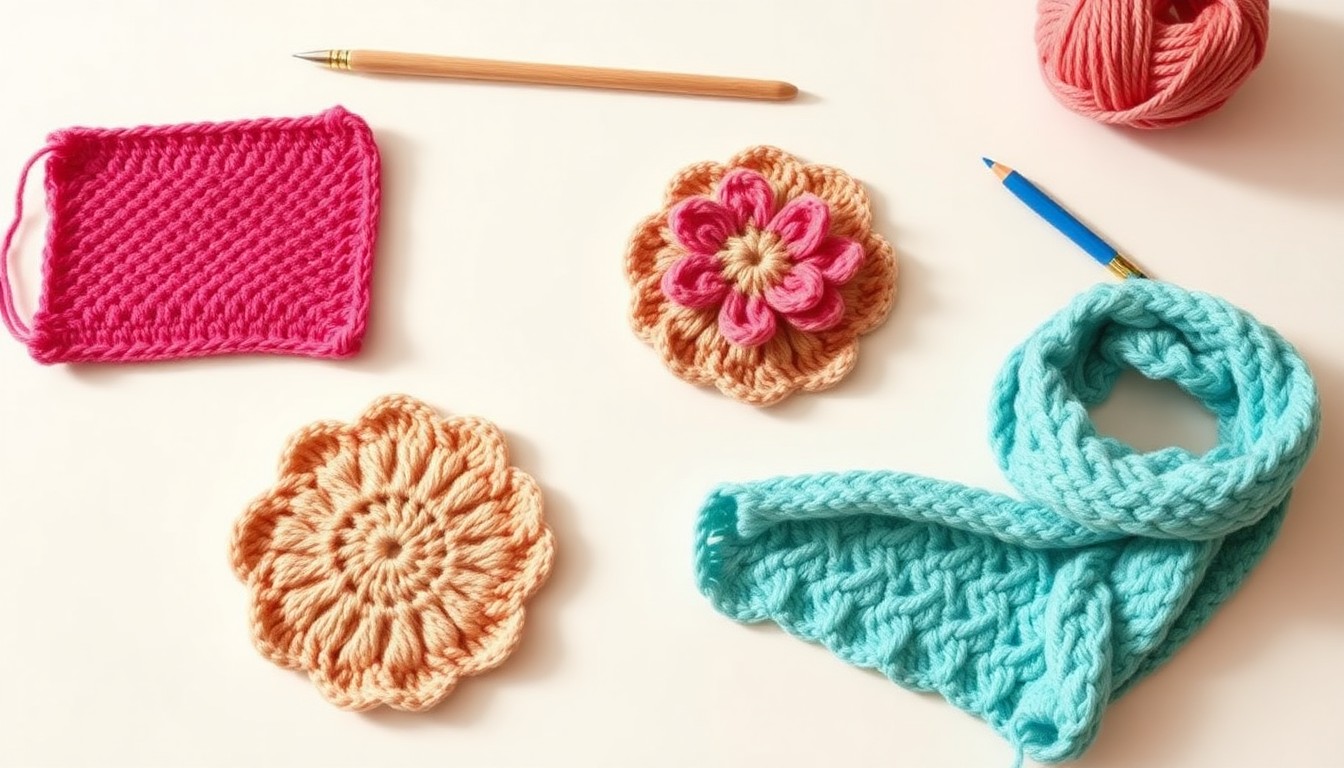
Crochet Patterns for Beginners: 7 Easy First Projects
Crochet Patterns For Beginners at a glance
- Topic: crochet patterns for beginners
- Skill level: beginner
- Main goal: help the reader understand the method, avoid common mistakes, and choose the right next crochet step
- Related topics: crochet hooks, yarn choice, pattern reading, stitch consistency, beginner projects
Crochet Patterns For Beginners gets easier when you focus on the materials, steps, and mistakes that matter most first. This guide gives you the quick answer, then shows you what to do, what to avoid, and which related crochet tutorials to open next.
Crochet Patterns For Beginners gets easier when you use the right materials, follow a clear sequence, and avoid the mistakes that slow beginners down. This guide gives you the quick answer first, then the practical steps, examples, and next tutorials that help you improve faster.
What you will learn
- the quick answer
- why beginners struggle
- step-by-step fixes or methods
- common mistakes
- helpful next steps
Crochet Patterns For Beginners is easier when beginners focus on the few variables that actually change the result: materials, stitch control, counting, and simple repeatable corrections.
Picking your first crochet project can feel weirdly stressful. You want something cute, but not too hard. You want fast results, but you also want to actually learn skills you’ll use later. And if you’ve ever clicked on a “beginner” pattern that secretly assumes you already know five stitches and three finishing techniques… you’re not alone. This guide is packed with crochet patterns for beginners you can use immediately.
This guide is here to make your first choices easy. You’ll learn what counts as truly beginner-friendly, which supplies make learning smoother, how to read basic instructions, and (most importantly) which crochet patterns for beginners are worth your time. If you want a full roadmap from “I’ve never held a hook” to “I can make projects,” start with Start Here and the Beginner Crochet hub.
What makes a crochet pattern truly beginner-friendly?
“Beginner” can mean different things on different websites. Before you commit to a pattern, look for these green flags:
- One main stitch (or two at most). Repeating one stitch builds confidence and consistent tension.
- Minimal shaping. Straight rows are easier than increasing, decreasing, or complex construction.
- Clear stitch counts. The pattern tells you how many stitches you should have at the end of each row/round.
- Photos or diagrams. Visuals help you confirm you’re on track.
- Basic finishing. A beginner pattern shouldn’t require tricky seams, invisible zippers, or advanced assembly.
Beginner patterns aren’t “baby patterns”—they’re patterns designed to teach you one skill at a time, without piling on confusion. That’s what we’re aiming for.
What you need to start crocheting (and what you can skip)
You can absolutely start with the basics. Here’s what genuinely helps, and what is optional.
The essentials
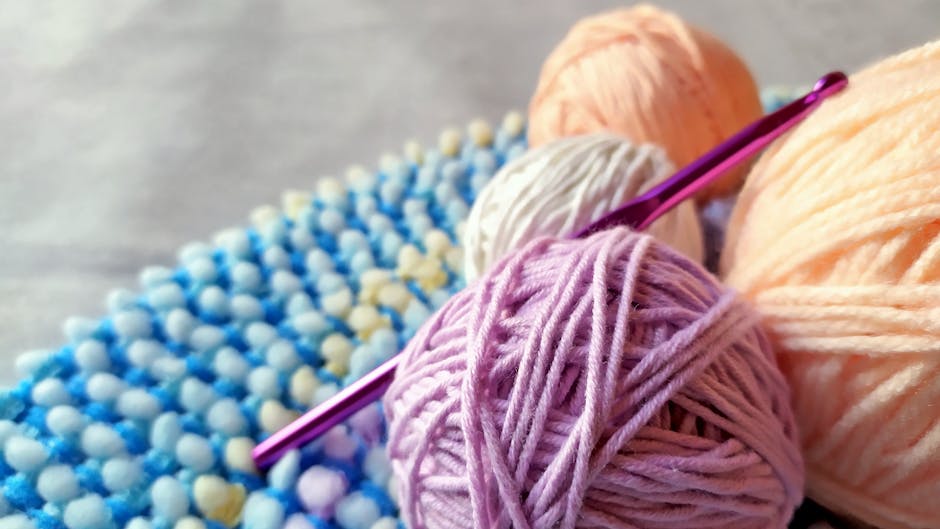
- Yarn: smooth worsted/medium weight in a light color. Acrylic is affordable; cotton is great for dishcloths.
- Hook: usually 5.0 mm / H-8 for worsted yarn (check the label).
- Scissors
- Yarn needle for weaving in ends
Very helpful add-ons
- Stitch markers: especially for the first and last stitch in a row
- Tape measure: for checking size (and later, gauge)
What you can skip for now
Expensive hook sets, fancy project bags, blocking boards, and specialized tools are nice—but you don’t need them to learn. Start simple, and upgrade when you know what you enjoy making.
Beginner stitches to learn first (the small set that unlocks most patterns)
You do not need to learn every stitch in crochet to start making projects. This core set will cover a huge number of beginner patterns:
- ch (chain): the foundation of most projects
- sc (single crochet): tight, sturdy fabric
- hdc (half double crochet): a great balance of speed and thickness
- dc (double crochet): faster, drapier fabric (used in granny squares)
- sl st (slip stitch): joining and moving your yarn
If abbreviations feel like a new language, don’t worry—most patterns use standard terms. For a reliable reference, see Craft Yarn Council crochet abbreviations.
How to read a crochet pattern (quick basics that prevent frustration)
Reading crochet patterns becomes easy once you know what you’re looking at. Here are the pieces that matter most for beginners.
1) US terms vs UK terms
Many patterns use US terminology. In UK terms, some stitch names mean something different (for example, UK “double crochet” is US “single crochet”). Patterns usually state which system they use near the top. If you’re ever confused, check that line first.
2) Parentheses ( ) and brackets [ ]
These usually mean repeats. A typical instruction might look like: “(sc in next 3 sts, inc) repeat 6 times.” That means you repeat the sequence inside the parentheses six times. Beginners often skip repeats accidentally, so slow down and re-read repeat lines twice.
3) Stitch counts
Stitch counts are your best friend. If a pattern says “Row 5: 30 sts,” take 20 seconds to count. Counting feels tedious at first, but it prevents the #1 beginner problem: edges that get wider or narrower over time because you added or missed stitches.
4) Gauge (when it matters)
Gauge is how many stitches and rows fit into a measured square (often 4 inches / 10 cm). For scarves, blankets, and dishcloths, gauge is usually not critical. For wearables (sweaters, hats) it matters more. As a beginner, don’t let gauge scare you—just know it exists, and treat it as “important for sizing.”
The best crochet patterns for beginners (first projects that teach real skills)
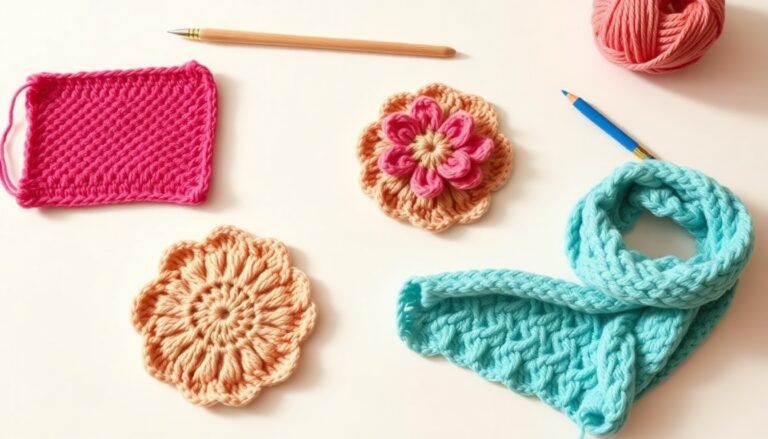
Below are beginner project categories that I recommend again and again, because they build skills in a predictable way. Choose one that matches your attention span and what you actually want to use.
1) The practice swatch that becomes something useful
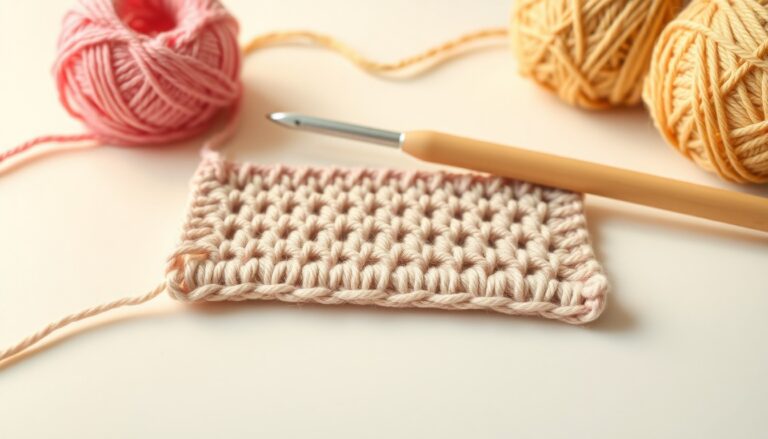
Many beginners start with a “practice square,” then feel like they wasted time. Instead, choose a small square that becomes a coaster, potholder (check yarn heat-safety), washcloth, or face cloth. You’re practicing… but you also end up with a finished item.
Why it’s great: you learn chaining, straight rows, turning, and even edges. If your tension changes, it’s a small piece—so you don’t feel trapped in a long project.
2) Simple dishcloth or washcloth (perfect first win)
Dishcloths are iconic beginner projects for a reason. They’re small, repetitive, and forgiving. They also teach you how to keep your stitch count consistent and how to recognize the last stitch in a row (the one most beginners accidentally skip).
Yarn tip: cotton yarn makes a great dishcloth because it’s absorbent and washable.
3) Granny squares (the gateway to blankets, bags, and cardigans)
Granny squares are one of the most satisfying beginner patterns because the progress is visible quickly—each round adds a clear “frame” around your work. They teach you working in the round, corners, chain spaces, and joining.
If you want a full step-by-step tutorial, follow How to Make a Granny Square, then explore more ideas in Granny Squares.
4) Basic scarf (tension training in slow motion)
A scarf is basically a long rectangle, which makes it a gentle way to build consistency. The trick is choosing the right stitch for the look you want:
- Single crochet scarf: thicker, warmer, slower
- Half double crochet scarf: faster with nice texture
- Double crochet scarf: drapier and very quick
Beginner edge tip: place a stitch marker in the first stitch and the last stitch of each row for the first few rows. This alone fixes most “my scarf gets wider” issues.
5) Simple beanie (learn rounds and basic shaping)
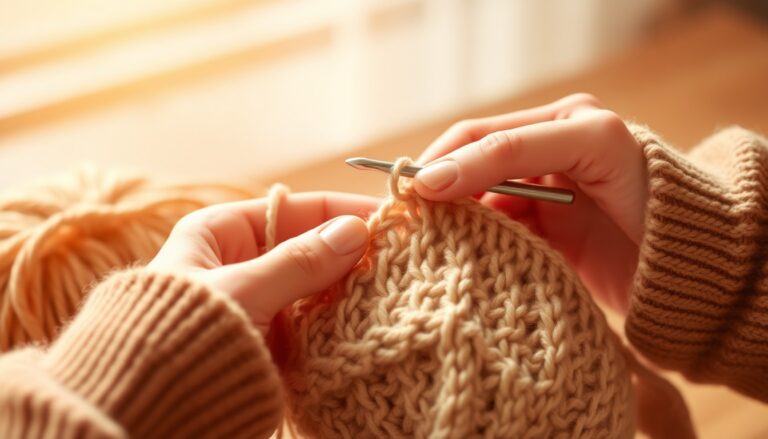
A hat is a fantastic early project because it’s wearable, giftable, and teaches you how increases work. Many beginner beanies start at the top and work down, which means you begin with a small circle and increase until it’s wide enough, then crochet without increasing to build the sides.
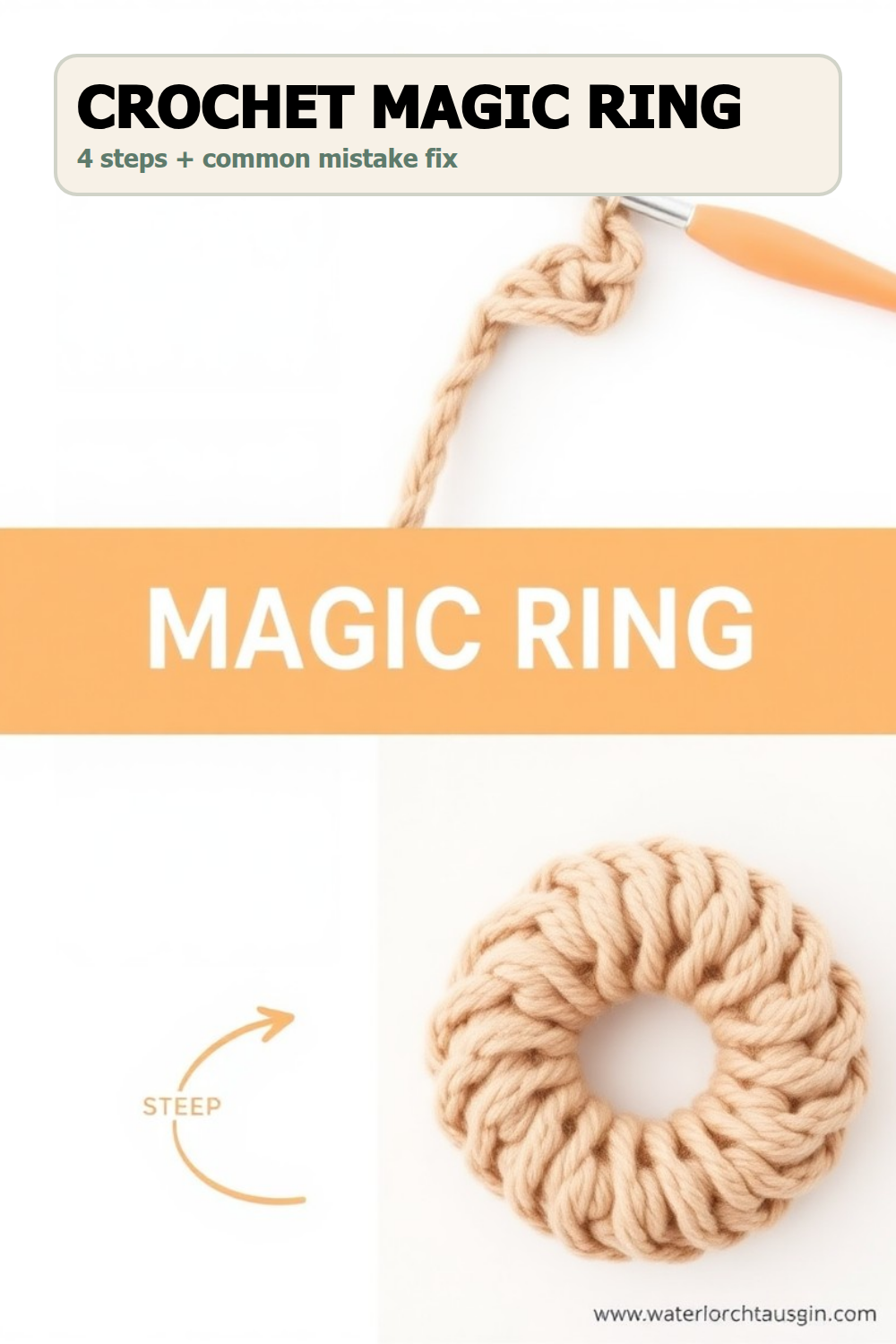
If starting the circle feels tricky, learning the crochet magic ring can make your hat look much neater because the top center tightens closed.
6) Cozy headband or ear warmer (fast, wearable, low-commitment)
Headbands are quicker than hats and use simple rows or simple rounds. They’re great if you want something you can finish in one or two sittings. Many headbands also introduce you to seaming (joining the ends) without advanced construction.
7) Simple tote bag (straight seams + instant usefulness)
A basic tote bag is often just two rectangles sewn together (or one long rectangle folded). It teaches you sturdy stitches, simple shaping, and durable seaming. You can also add granny squares to the front and back for a cute upgrade once you’re comfortable.
8) Baby blanket / lap blanket (only if you enjoy repetition)
Blankets are wonderful beginner patterns, but they’re large. If you enjoy repetitive stitching while watching a show, they can be perfect. If you get bored easily, start with granny squares or smaller items first, then build up to blankets once your tension is steady.
How to pick your first project (a simple decision guide)
If you’re stuck between too many options, use this quick guide:
- You want something fast: coaster, dishcloth, headband
- You want to learn “rounds”: granny square or beanie
- You want something wearable: scarf or headband
- You want something impressive: granny square bag or a striped scarf in a pretty yarn
Whatever you choose, give yourself permission to make an “ugly first version.” That’s not failure—that’s literally how muscle memory is built.
Common beginner mistakes (and fixes you can do immediately)
Mistake: edges get wider or narrower
This is almost always a stitch count problem. Beginners often miss the last stitch because it hides near the turning chain, or they accidentally crochet into the turning chain as if it were a stitch.
- Count stitches for the first few rows.
- Use stitch markers in the first and last stitch of the row.
- Slow down at the row ends and look carefully at where the last stitch sits.
Mistake: fabric looks uneven or “lumpy”
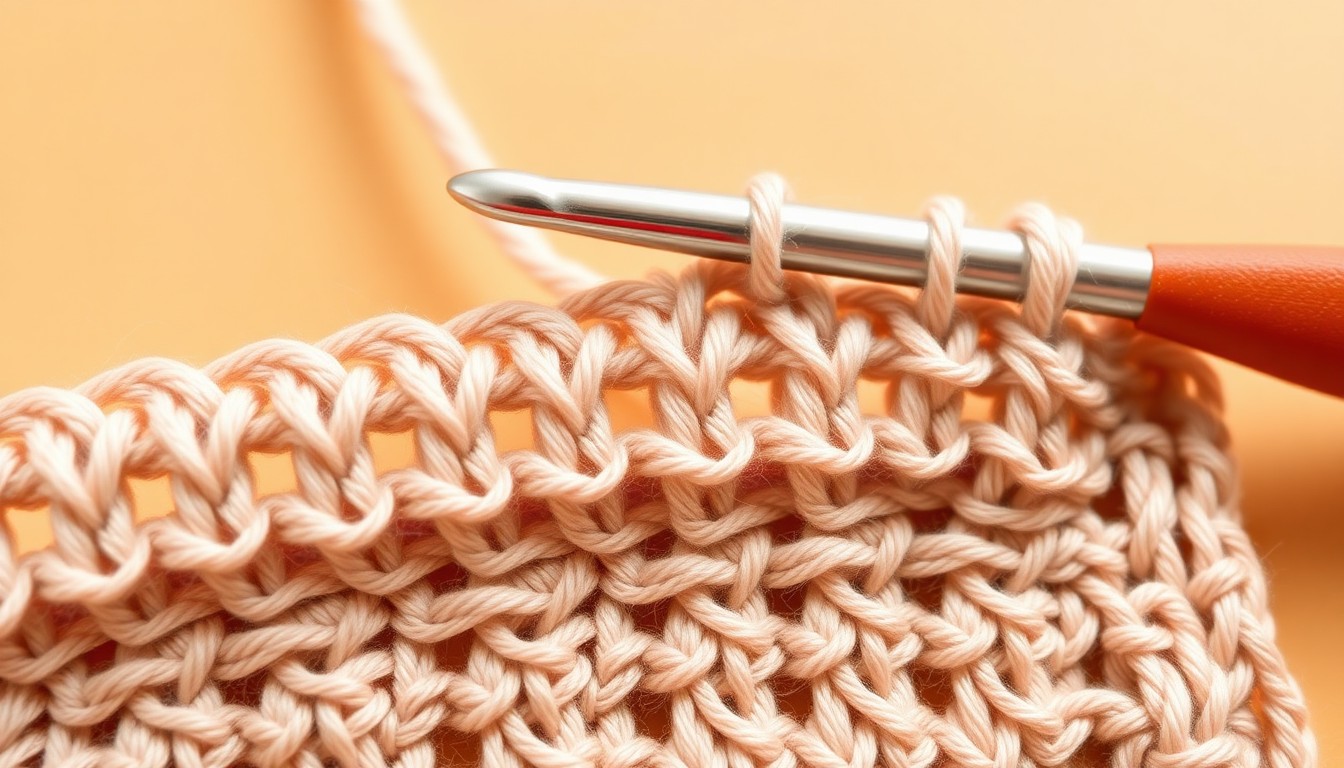
Uneven fabric usually comes from inconsistent tension. Your hands will improve naturally with practice, but you can speed it up by making your loop height consistent (especially for taller stitches like dc).
If your stitches look too loose or full of holes, try a smaller hook. If your hands hurt and stitches are hard to insert into, try a larger hook. Small hook changes make a big visual difference—this is one of my favorite crochet tips for making beginner work look more polished.
Mistake: trouble starting in the round
Starting circles is awkward at first. The two beginner-friendly solutions are:
- Magic ring: adjustable and closes tight (great for hats and amigurumi)
- Chain ring: chain 4 and join, then crochet into the ring
If you want the magic ring method step by step, go to Crochet Magic Ring.
Mistake: finishing looks messy (even when stitches are okay)
Finishing is what makes your project look “real.” Two finishing habits help immediately:
- Weave ends securely: weave back and forth, change direction, and hide tails on the wrong side.
- Block when needed: even light blocking can straighten edges and improve drape.
Where to find beginner patterns you’ll actually want to make
Once you understand what “beginner-friendly” looks like, you can find patterns almost anywhere. I recommend starting with a small, curated library so you don’t get overwhelmed. You can browse Free Patterns on KnotToYarn and choose one project at a time.
If you’d like a path that builds skills in order, try this sequence:
- Dishcloth (rows, edges)
- Scarf (consistency, turning)
- Granny square (rounds, corners, joining)
- Beanie (increases, simple shaping)
How to choose the right first yarn (so learning feels easier)
Yarn can either make crochet feel smooth and satisfying—or like you’re fighting a tangled, fuzzy mystery rope. For beginners, stitch visibility matters more than luxury fibers.
Here’s what usually works best when you’re learning:
- Smooth texture: avoid fuzzy, halo, eyelash, or highly textured novelty yarn until later.
- Medium weight: worsted/aran weight is a sweet spot—big enough to see, not so big it feels clumsy.
- Light color: light neutrals, pastels, or bright solids help you see where your hook goes.
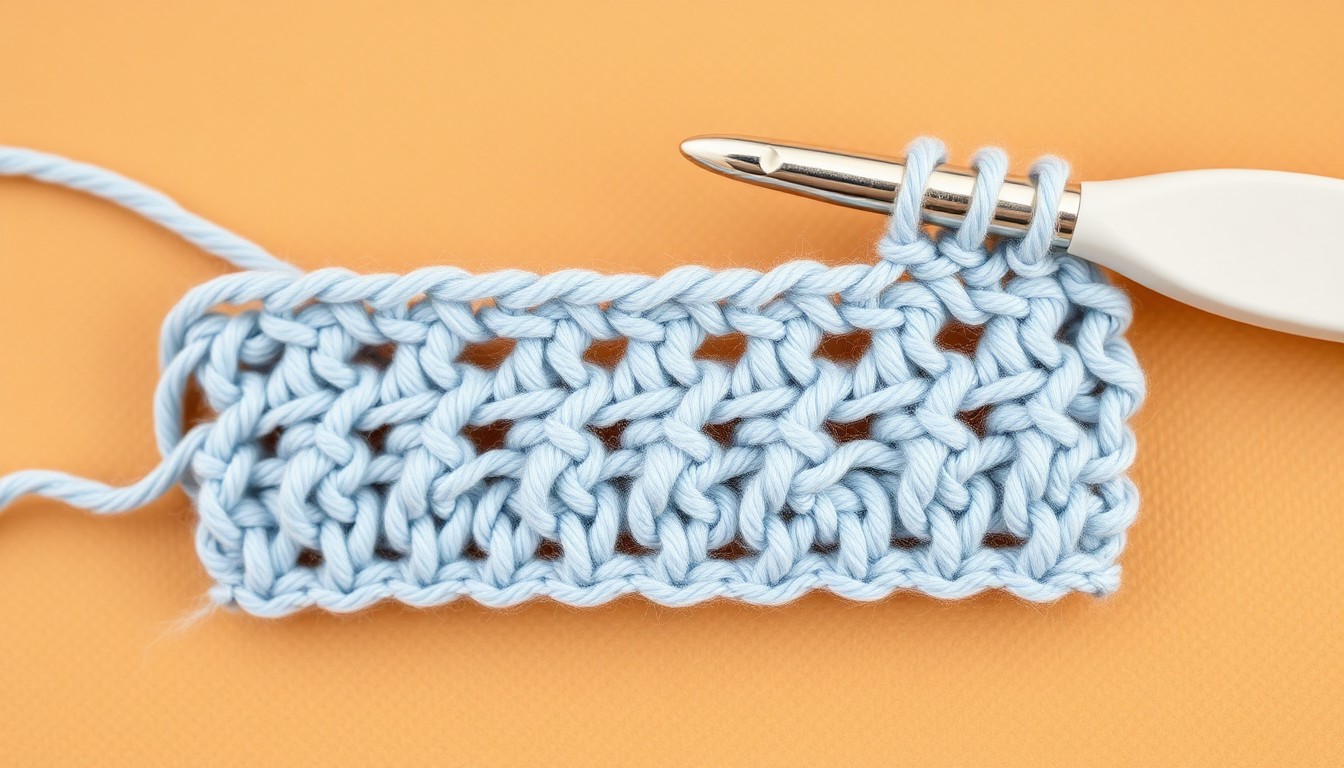
- Good stitch definition: plies that show the “V” shape of stitches clearly make it easier to count.
If you want an easy rule: pick a light, smooth worsted yarn and a matching hook from the label. You can experiment later once your hands know what they’re doing.
Beginner pattern checklist (save this for shopping and browsing)
When you’re searching for crochet patterns for beginners, copy this checklist into your notes and use it as a filter. If you can say “yes” to most of these, you’re probably looking at a good first project.
- ✅ Uses 1–2 basic stitches (sc, hdc, dc)
- ✅ Has stitch counts per row/round
- ✅ Has a clear materials list (yarn weight, hook size)
- ✅ Explains any new technique (or links to a tutorial)
- ✅ Includes photos of key steps or progress points
- ✅ Minimal shaping and minimal assembly
How to “practice” without wasting time: the 3-project skill ladder
A lot of beginners quit because they bounce between random patterns and never feel progress. If you’d like a simple, confidence-building ladder, try these three projects in order:
- Project 1: a small square (dishcloth/coaster) in sc or hdc to master rows and edges
- Project 2: a granny square to learn rounds, corners, and joining (see How to Make a Granny Square)
- Project 3: a simple beanie to practice increases and a clean start (magic ring helps: Crochet Magic Ring)
By the time you finish these, most “beginner” patterns will feel truly doable, and you’ll also know what kinds of projects you enjoy making.
What to do when you get stuck mid-pattern
Every crocheter gets stuck sometimes—even experienced ones. The difference is that experienced crocheters have a routine: they pause, check the pattern language, and verify stitch counts before they keep going.
If you hit a confusing line in a beginner pattern, try this quick process:
- Re-read the last two lines (many mistakes happen one step earlier than you think).
- Check the stitch count at the end of the row/round.
- Look for repeats in ( ) or [ ] and make sure you did them the right number of times.
- Compare your piece to the photo at the same stage.
- Rip back one row/round if needed—undoing 5 minutes of work is better than crocheting 30 minutes in the wrong direction.
This habit alone makes learning feel calmer and helps you finish more projects—because you spend less time “hoping it works out.”
FAQ: Crochet patterns for beginners
What is the easiest crochet project for a total beginner?
A small square in single crochet—like a coaster or dishcloth—is one of the easiest because it’s short, repetitive, and teaches the basics: chaining, rows, and counting. If you prefer working in the round, a granny square is also a great first project.
How do I know if a pattern is too hard for me right now?
If the pattern includes lots of shaping, many different stitches, complicated assembly, or unclear instructions, it might be better saved for later. A truly beginner pattern will be repetitive, explain new steps clearly, and include stitch counts and photos.
Should I learn to read patterns, or can I just follow videos?
Videos are great, especially at the start. But learning to read a simple written pattern will give you a lot of freedom—most patterns follow a consistent “language.” You don’t have to choose one forever; many crocheters use both depending on the project.
Do I need to buy expensive yarn to make a project look good?
No. Beginner-friendly yarn is often affordable acrylic or cotton. The biggest difference in how “professional” your project looks usually comes from tension, stitch consistency, and finishing (weaving in ends and blocking), not price.
How long does it take to learn crochet?
Most people can learn basic stitches in a weekend with short practice sessions. The key is consistency: 15–30 minutes per day works better than one long session once a week.
Related guides on KnotToYarn
More tutorials and patterns to keep going:
Next steps
- New here? Start with Start Here.
- Build skills in order at Beginner Crochet.
- Learn a classic motif: How to Make a Granny Square (and browse Granny Squares).
- Pick a project you’ll finish: explore Free Patterns.
FAQ
What is the best crochet pattern for beginners?
The best beginner patterns use repeated stitches, clear shapes, and simple counting so new crocheters can build rhythm quickly.
How many crochet patterns should a beginner try first?
A small group of beginner-friendly patterns is better than jumping between too many project types too early.
Continue with these related guides
- How to Read a Crochet Pattern
- Best Yarn for Beginner Crochet
- Easiest Crochet Projects for Beginners
- Free Crochet Patterns for Beginners
What matters most for ranking and results
The strongest beginner crochet pages answer the search intent directly, solve the most common problems, and point the reader toward the next useful tutorial instead of leaving them stuck.
Related search questions
What should beginners focus on first?
Beginners usually improve fastest when they start with a simple, repeatable project or technique and build confidence before adding complexity.
Why do beginners struggle with this?
Most beginner problems come from trying to learn too many new variables at once. A simpler process usually leads to better-looking crochet much faster.
Continue with these closely related guides
- Beginner Crochet hub
- Free Crochet Patterns for Beginners
- How to Read a Crochet Pattern
- Best Yarn for Beginner Crochet
Crochet Patterns For Beginners: what beginners should remember
The simplest progress usually comes from repeating one small correction at a time until the result feels more consistent.
Crochet Patterns For Beginners FAQ
How long does it take to get comfortable with crochet patterns for beginners?
Most beginners improve quickly when they practice in short repeatable sessions and keep the materials simple enough to see the stitch shape clearly.
What mistakes slow progress the most?
The biggest slowdowns usually come from rushing, inconsistent stitch counts, unclear patterns, and switching tools or yarn before the basic motion feels steady.
What should I learn after crochet patterns for beginners?
The next step depends on your goal, but most beginners improve faster when they move into one related tutorial immediately and reinforce the skill while it is still fresh.
Related beginner crochet guides
- How to Crochet for Beginners
- How to Read a Crochet Pattern
- Best Yarn for Beginner Crochet
- Best Crochet Hooks for Beginners
- How to Fix Crochet Tension
- Easiest Crochet Projects for Beginners
Bottom line
If you want better results with crochet patterns for beginners, keep the setup simple, practice the same method long enough to judge it properly, and use one closely related guide as your next step instead of jumping around randomly.