Double Crochet Stitch (DC) Tutorial: 7 Easy Steps for Beginners
What you will learn
- the quick answer
- why beginners struggle
- step-by-step fixes or methods
- common mistakes
- helpful next steps
If you already learned single crochet and half double crochet, the double crochet stitch is your next big milestone. Double crochet is taller and faster, which makes it perfect for blankets, scarves, and beginner-friendly projects that work up quickly.
Below is a step-by-step DC tutorial with beginner checkpoints (so you don’t accidentally add stitches, twist your turning chain, or end up with wobbly edges).
If you searched for how to double crochet, follow the 7 steps below slowly once, then repeat them on a small practice swatch until the rhythm feels automatic.
Double Crochet Stitch at a glance
- Topic: double crochet stitch
- Skill level: beginner
- Main goal: help the reader complete the technique, fix common mistakes, and know the next useful crochet step
- Related topics: crochet hooks, yarn choice, pattern reading, tension, stitch control
Quick answer
Double crochet stitch (DC) is a beginner crochet stitch used for faster blankets, scarves, and beginner-friendly projects that work up quickly. Rhythm: YO → insert → YO pull up (3 loops) → YO pull through 2 → YO pull through 2. The most common beginner mistake is forgetting the first yarn over or missing the last stitch—say the rhythm out loud and mark the last stitch each row.
Tip: if your edges look messy, mark the last stitch of each row with a stitch marker until your stitch count stays consistent.
At a glance
- Skill level: Beginner
- Abbreviations: ch, DC, YO
- Turning chain: Usually ch 2–3; may or may not count as a stitch depending on the pattern.
- Best practice yarn: medium weight (#4), light color
Common mistakes → quick fixes
- Tight stitches: loosen grip; size up 0.5 mm if needed.
- Crooked edges: count stitches; mark the last stitch.
- Wrong height: repeat the rhythm slowly and pull through the right number of loops.
Mini glossary
ch (chain), DC (Double crochet stitch), YO (yarn over), turning chain, stitch marker, tension, loops, stitch count.
Double crochet stitch at a glance
If you want the quick version first, use this short reference before you start. It helps you remember the rhythm when you come back later.
Tip: most double crochet problems come from two things: (1) forgetting the first yarn over, and (2) missing the last stitch because it hides near the turning chain.
| Skill level | Beginner |
|---|---|
| Main stitch | Double crochet (DC) |
| Abbreviations | ch, dc, YO |
| Best yarn to practice | Medium weight (#4), light color |
| Hook size | 5.0–5.5 mm (or yarn label) |
| Beginner checkpoint | Use a stitch marker on the last stitch of each row |
What is the double crochet stitch?
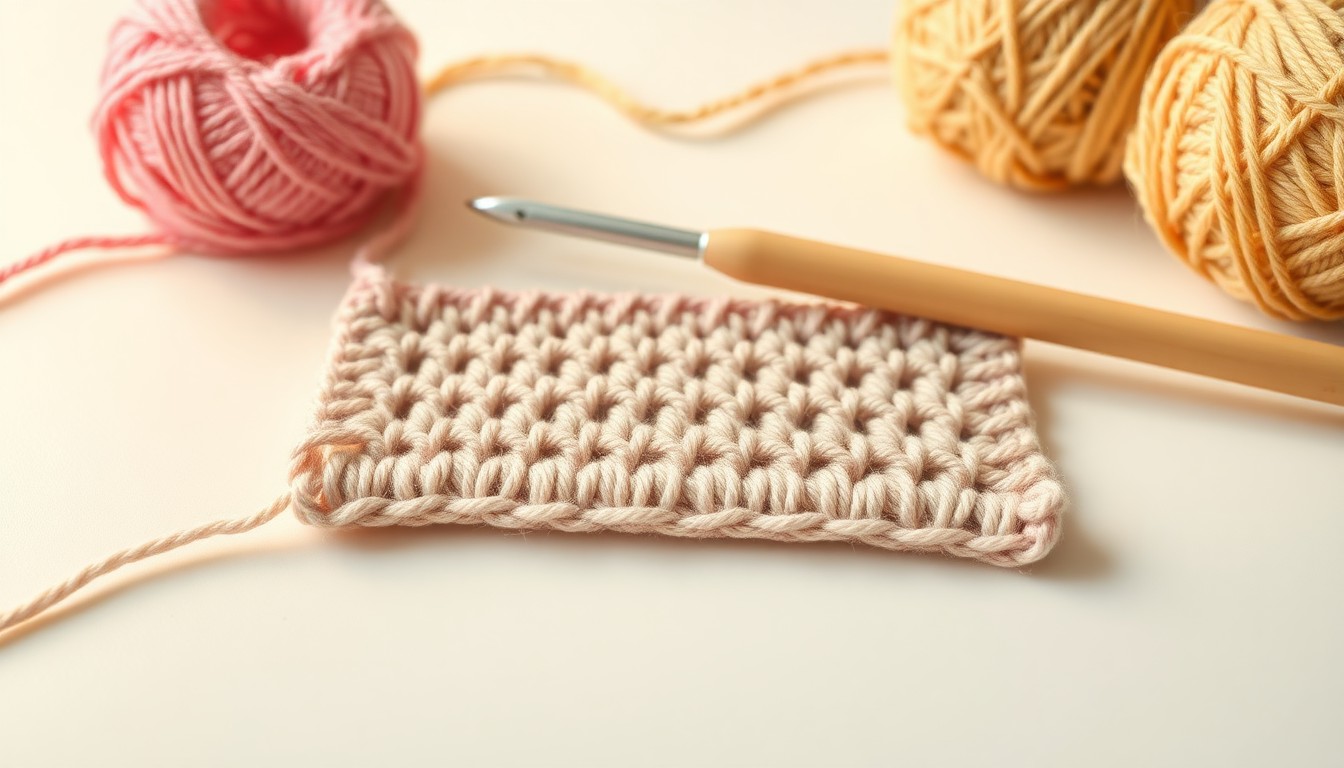
The double crochet stitch (DC) is a basic crochet stitch that is taller than single crochet and half double crochet. Because it’s taller, it creates a lighter fabric and grows faster—great for wearables and blankets.
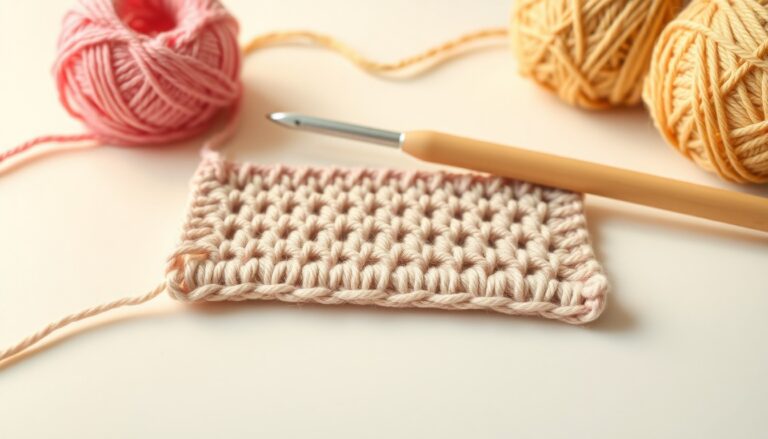
Checkpoint: DC stitches should look like tall “posts” with a small “V” on top. If your fabric looks messy, slow down and focus on pulling through two loops at a time.
What you need (beginner checklist)
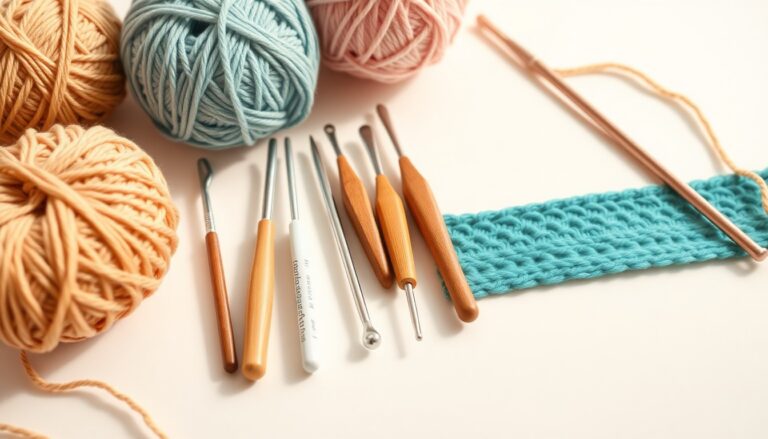
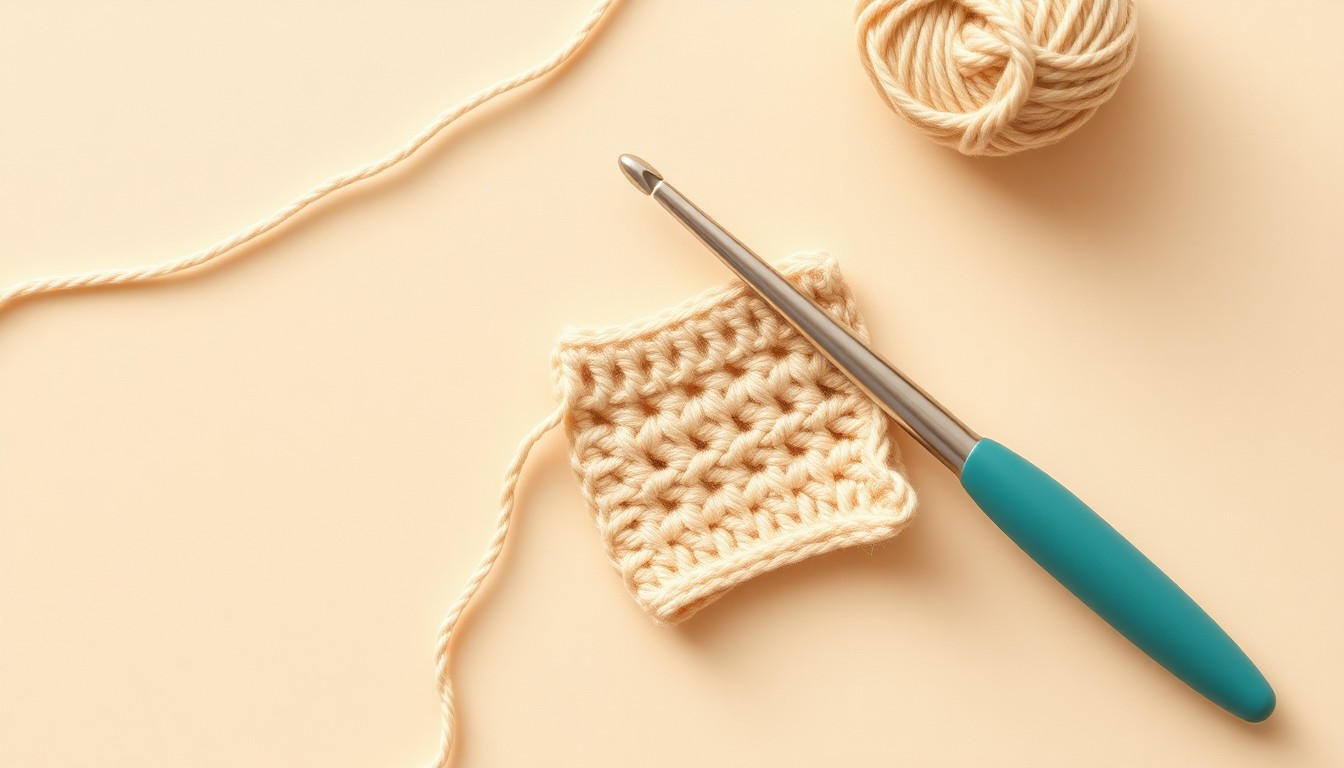
Use a smooth yarn and a comfortable hook so you can see stitch anatomy clearly. If you’re practicing, a light color yarn will make counting and troubleshooting easier.
Tip: don’t start with fuzzy yarn. It hides loops and makes double crochet much harder to learn.
- Medium weight yarn (#4) in a light color
- 5.0 mm–5.5 mm crochet hook
- Scissors + yarn needle
- 2 stitch markers (recommended)
Double crochet stitch (DC): 7 easy steps
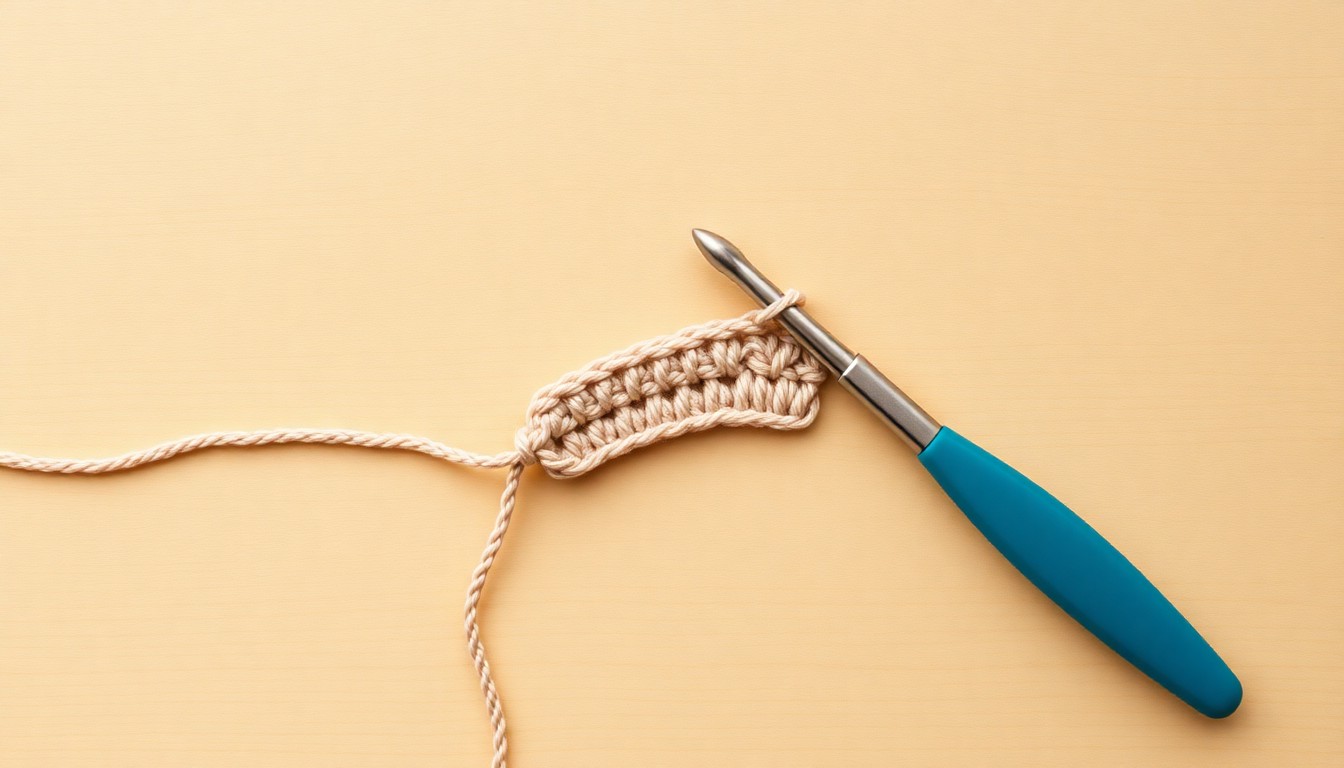
Step 1) Make a slip knot and chain a foundation
Start with a slip knot and chain a foundation for practice (try 16–21 chains). Keep the chain even, not tight.
Tip: if Row 1 feels impossible, your starting chain is too tight. Go up 0.5 mm for the chain only, then switch back.
Step 2) Yarn over (YO) first
Before you insert the hook into the chain or stitch, yarn over once. This is the key difference between DC and shorter stitches.
Checkpoint: if you forget this yarn over, you’ll accidentally make a half double crochet-like stitch and your row height will be wrong.
Step 3) Insert hook into the stitch
Insert your hook into the correct chain (for the first row) or the correct stitch (for later rows). Keep your hook tip slightly downward so it slides in cleanly.
Tip: beginners often insert into the wrong loop. Pick one method and stay consistent (both loops for most patterns).
Step 4) Yarn over and pull up a loop (3 loops on hook)
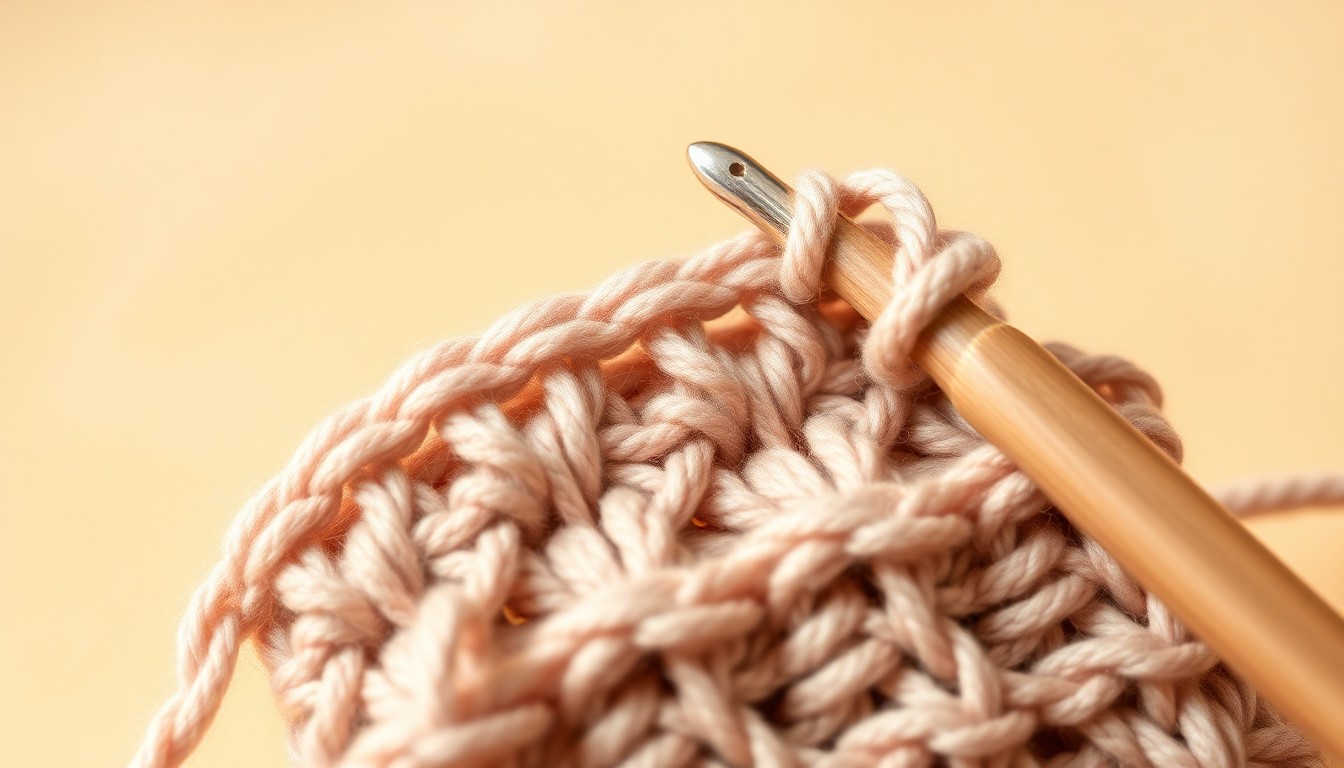
Yarn over and pull up a loop through the stitch. You should now have 3 loops on your hook.
Checkpoint: if pulling up the loop is hard, your tension is too tight. Relax your grip and let the hook do the work.
Step 5) Yarn over and pull through 2 loops (2 loops left)
Yarn over again and pull through the first two loops on your hook. This is the first “pull through two” of the stitch.
Tip: keep your loops a similar size. If the stitch looks uneven, slow down and make sure you’re not yanking the yarn.
Step 6) Yarn over and pull through the last 2 loops
Yarn over one more time and pull through the last two loops. That completes one double crochet stitch.
Checkpoint: DC has a clear rhythm: YO → insert → YO pull up → YO pull through 2 → YO pull through 2. Say it out loud while you learn.
Step 7) Turn your work and start the next row cleanly
At the end of the row, turn your work and create your turning chain (commonly 2 or 3 chains depending on the pattern). Then begin the next row.
Tip: edges get messy when the turning chain is treated inconsistently. Decide whether your turning chain counts as a stitch and do it the same way every row.
Common double crochet mistakes (and how to fix them)
Your edges look uneven
This is usually because you’re missing the last stitch of each row or changing how you treat the turning chain. The last stitch is easy to hide near the chain.
Fix: place a stitch marker in the last stitch of each row and always crochet into it on the next row.
Your stitches look too loose or too tall
Loose DC stitches often happen when you pull your loops up too high. This makes the stitch look sloppy and uneven.
Fix: pull up loops to a consistent height and keep the hook close to the fabric when you pull through.
Helpful reference (crochet abbreviations)
If you ever get stuck on pattern abbreviations (like DC, ch, YO), use this quick reference: Craft Yarn Council crochet abbreviations.
Tip: always check whether a pattern uses US or UK terms. In UK patterns, the US double crochet is often called treble crochet.
FAQ: double crochet stitch
How many chains do you need for double crochet?
For practice, chain 16–21. For real projects, follow the pattern’s foundation chain and turning chain instructions.
Checkpoint: if your first row pulls tight, loosen your chain or use a slightly larger hook for the chain.
Is double crochet the same in US and UK terms?
No. US and UK crochet terms differ. Always check the pattern’s terminology section before starting.
Tip: when in doubt, look at the stitch instructions rather than the stitch name.
How many turning chains for double crochet?
Most patterns use a turning chain of 2 or 3 chains for double crochet. The right choice depends on your tension and whether the pattern counts the turning chain as a stitch.
Checkpoint: keep it consistent across the whole project. If your edges look bumpy, try chaining 2 instead of 3 (or vice versa) and see which matches your stitch height better.
Related guides on KnotToYarn
More tutorials and patterns to keep going:
Next steps
Want more beginner practice? Learn the crochet magic ring (great for working in the round), and bookmark our list of free crochet patterns for beginners for easy projects you can start today.
Tip: pick one small project (coaster or washcloth) and practice double crochet for 10 minutes a day—consistency beats long sessions.
Now that you know double crochet, you can make faster projects and start exploring classic crochet textures.
Next, review single crochet stitch, then practice half double crochet (HDC) and keep everything organized in our Beginner Crochet hub.
Continue with these related guides
Double Crochet Stitch FAQ
What is the easiest way to improve double crochet stitch?
Beginners improve faster when they simplify the process, practice in shorter focused sessions, and move to the next related skill only after the basics feel stable. This reduces frustration and makes the result more consistent.
Why do beginners struggle with double crochet stitch?
Beginners improve faster when they simplify the process, practice in shorter focused sessions, and move to the next related skill only after the basics feel stable. This reduces frustration and makes the result more consistent.
What should I do next after learning double crochet stitch?
Beginners improve faster when they simplify the process, practice in shorter focused sessions, and move to the next related skill only after the basics feel stable. This reduces frustration and makes the result more consistent.
Double Crochet Stitch common mistakes
The most common mistakes usually come from rushing, skipping stitch counts, changing several variables at once, or using materials that hide the stitch shape. A simpler setup and slower repetition usually creates a much cleaner result.
Double Crochet Stitch tips that help most
- Use clear beginner-friendly materials
- Check your stitch count often
- Repeat the same method long enough to judge the result
- Use related tutorials to reinforce the next step naturally
- Keep practice pieces small enough to finish
Final advice on double crochet stitch
You do not need to master everything at once. The best progress usually comes from cleaner repetition, better observation, and moving one step at a time through the skill cluster.
Bottom line
If you want better results with double crochet stitch, keep the setup simple, check the most likely cause first, and use one closely related crochet guide as the next step so your practice keeps building in the right direction.