Crochet Butterfly Pattern: 7 Designs + a Free 10-Minute Butterfly
This is KnotToYarn’s own original pattern, free to use, and you’re welcome to sell what you make from it.
As an Amazon Associate we earn from qualifying purchases: some supply links in this post are affiliate links, at no extra cost to you.
This butterfly is a single round: four wings fanned from one magic ring, antennae included. Ten minutes flat, and the seven design ideas below build on exactly this anatomy.
Quick weekend make or a sweet add-on for your latest blanket, butterflies are one of the most rewarding small motifs. They work up fast, use barely any yarn, and add color and whimsy to almost anything. This guide covers seven designs, from simple appliqués to 3D wings and mini amigurumi butterflies, plus yarn tips, blocking, and ways to use them.
Why a Crochet Butterfly Pattern Is the Perfect Beginner Project
If you already know the basics, you’ve got everything you need. Most butterfly motifs use just three stitches, chain, single crochet, and double crochet, no cables or colorwork required.
Another reason they’re great for newcomers is speed. A standard appliqué butterfly takes 20 to 45 minutes start to finish, and that quick payoff is a real motivator while you’re still building confidence.
Butterfly motifs also teach several important crochet fundamentals in one compact project:
- Working in the round: many butterflies start with a magic ring or chain loop.
- Increasing and decreasing: wing shaping relies on controlled increases on one side and skip-stitch decreases on the other.
- Reading a pattern: butterflies follow straightforward row-by-row instructions, making them excellent practice for crochet abbreviations for beginners.
- Color changing: multi-color butterflies give you a low-pressure way to practice joining new yarn mid-project.
They cost almost nothing in yarn, too. Leftover scraps from bigger projects are perfect, so each butterfly is essentially free. Not sure what to use? Our best yarn for beginners guide has affordable picks.
Best Yarn and Hook Choices for Your Crochet Butterfly Pattern
Choosing the right materials makes a big difference in how your finished butterfly looks and holds its shape. Here is what we recommend for any crochet butterfly pattern:
Yarn Weight
For most butterfly appliqués and motifs, DK weight (category 3) or worsted weight (category 4) yarn is ideal. These weights give you enough structure for crisp wing edges without making the butterfly feel bulky or heavy. You can reference the Craft Yarn Council’s yarn weight system for detailed information about each category.
Fiber Type
Cotton yarn is the top choice for butterflies that will be stiffened or blocked, because cotton holds its shape beautifully after starching or steaming. Acrylic blends work well too and come in a wider range of colors. For a luxurious feel on gift toppers or ornaments, try a cotton-acrylic blend.
Hook Size
The sweet spot is a 3.5 mm to 4.0 mm hook (US E-4 to G-6). Going a bit smaller than the yarn label suggests gives tighter, neater stitches that define the wing edges. If your wings come out floppy, drop down half a millimeter.
Color Palette Tips
- Use 2-3 colors maximum for a clean, modern look.
- High-contrast combinations (like navy and yellow or coral and mint) make the wing patterns pop.
- Solid colors show stitch definition better than variegated yarns for intricate wing details.
7 Stunning Crochet Butterfly Patterns to Try
Ready to start? Here are seven butterfly variations, easiest to most detailed. Each works on its own or as part of a bigger project.
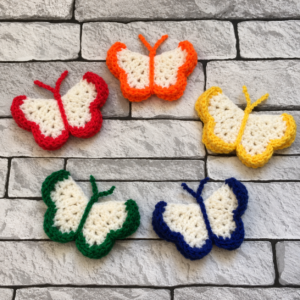
1. Simple Appliqué Butterfly
This is the classic version and the best place for absolute beginners to start. You make two triangular wing panels (upper and lower), join them with a chain body, and add two tiny chain antennae. It’s worked flat in rows, then folded and stitched, well suited to sewing onto baby blankets, hats, or totes.
Free pattern: Butterfly Applique by Maria’s Blue Crayon, flat wings and a chain body, exactly the beginner version described here.
2. 3D Wing Butterfly
Want more dimension? This version makes each wing separately with double crochet shells and picots, then layers them slightly and joins them at a chain body for a lifelike, fluttering look. It’s especially nice pinned to a corkboard or used as wall art.
Free pattern: 3D Butterfly by Adele Uyan Crochet, layered wings that lift off the fabric.
3. Granny Square Butterfly
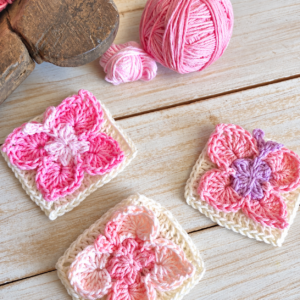
If you love granny squares, this crochet butterfly pattern combines the familiar square motif with butterfly-shaped color changes. You work a standard granny square base and then add butterfly wing clusters in the corner spaces using chain loops and double crochet groups. These squares can be joined together to make butterfly-themed blankets, cushions, or bags.
Free pattern: Butterfly Granny Square by Moara Crochet, the wings built from color changes inside a standard square.
4. Filet Crochet Butterfly
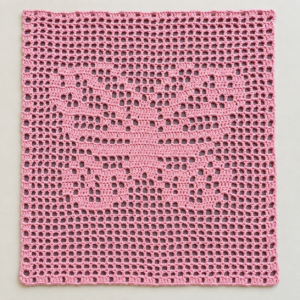
Filet crochet uses a grid of open and filled meshes to create pictures, and a butterfly is one of the most popular filet designs. This crochet butterfly pattern works best in a fine cotton thread with a 2.0-2.5 mm hook to create an intricate, lace-like butterfly panel. Filet butterflies make gorgeous curtain inserts, table runners, or framed wall hangings.
Free pattern: Filet Butterfly Square by Stitches n Scraps, a charted butterfly on mesh, thread or yarn.
5. Mosaic Crochet Butterfly
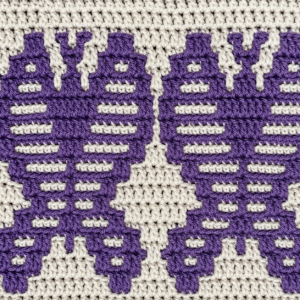
Mosaic crochet is a trendy colorwork technique that uses only one color per row, with dropped double crochets creating the pattern two rows below. A mosaic crochet butterfly pattern produces a dense, cushiony fabric with a stunning geometric butterfly design that looks woven. This technique works well for pillow covers, tote bags, and blanket borders.
Free pattern: Mosaic Crochet Butterfly by Juniper and Oakes, chart plus written rows, a 24-stitch repeat.
6. Puff Stitch Butterfly
The puff stitch adds beautiful texture and volume to any crochet butterfly pattern. In this variation, you work puff stitches along the outer edges of each wing to create a soft, padded effect. The puffy wings give the butterfly a whimsical, almost cloud-like quality that suits children’s items: think mobiles, nursery décor, and soft toy accents.
Free pattern: Uma Butterfly by Stitching Together, puffy textured wings with a full photo tutorial.
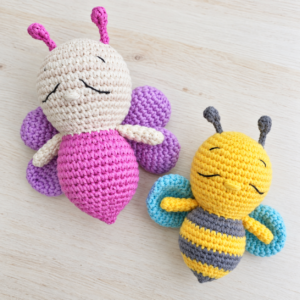
7. Mini Amigurumi Butterfly
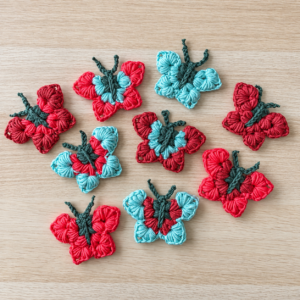
This tiny 3D butterfly is worked in the round using single crochet and is stuffed with a small amount of fiberfill. A mini amigurumi crochet butterfly pattern is ideal for keychains, bag charms, or playful additions to a child’s toy collection. You can also use them as cupcake toppers for a garden-themed birthday party. If you enjoy this style, explore more amigurumi patterns on Ravelry’s butterfly pattern collection.
How to Stiffen and Block Your Crochet Butterfly Pattern
Blocking is what takes a butterfly from good to polished. Whether yours is a flat appliqué or a 3D motif, shaping it makes the wings lie evenly and the stitches look crisp.
Wet Blocking (Best for Cotton and Wool)
- Pin the butterfly to a blocking mat or towel-covered ironing board, shaping the wings symmetrically.
- Mist lightly with water using a spray bottle, do not soak the piece.
- Let it dry completely (usually 4-8 hours, depending on humidity).
- Remove the pins and enjoy your perfectly shaped butterfly.
Starch Blocking (Best for Structured Appliqués)
For butterflies that need extra rigidity, like garland pieces or brooches, use fabric starch or a mixture of equal parts white glue and water:
- Submerge the finished crochet butterfly pattern piece in the starch solution.
- Gently squeeze out excess liquid.
- Pin into shape on a non-stick surface.
- Allow to dry overnight for maximum stiffness.
Steam Blocking (Fastest Method)
Hold a steam iron about an inch above the butterfly (do not press directly on the yarn). Steam each wing for 5-10 seconds, then pin and let cool. This works well for acrylic yarn, which holds its shape once cooled.
Creative Uses for Your Crochet Butterfly Pattern
One of the best things about these is how versatile they are. A few of our favorite ways to use finished butterflies:
Garden Garland
String 10-15 butterflies along a length of jute twine or cotton cord, spacing them about 4 inches apart. Hang the garland across a mantle, along a nursery wall, or draped above a dessert table for a garden party. This pairs beautifully with a crochet garland pattern that includes flowers and leaves.
Hair Clips and Bobby Pins
Glue a small butterfly onto a snap clip or bobby pin for an instant hair accessory. These make wonderful handmade gifts for little girls and are a hit at craft fairs.
Bookmarks
Attach a butterfly to the top of a crocheted chain-strip bookmark. Add a tassel at the bottom for extra charm. Bookworms of all ages will love this thoughtful, handmade gift.
Gift Toppers
Skip the store-bought bow and tie a stiffened butterfly onto a wrapped gift instead. It doubles as a small bonus gift the recipient can keep forever.
Wall Art
Arrange a collection of butterflies in a shadow box or frame them in a floating frame for a three-dimensional art piece. Use butterflies in graduated sizes and a cohesive color palette for a gallery-worthy display.
How to Attach Butterflies to Blankets, Bags, and Hats
Once you have finished your crochet butterfly pattern, you will want to secure it to your project. Here are the best methods for different surfaces:
Sewing onto Fabric and Crochet
Use a yarn needle and the same yarn you used for the butterfly (or a matching thread). Whipstitch around the center body of the butterfly, catching just the back loops of the project fabric. For a clean look, sew only the center chain, this allows the wings to lift slightly, creating a natural fluttering effect.
Gluing onto Hats and Bags
For items that will not be washed frequently (like decorative hats or tote bags), a fabric glue or hot glue gun works well. Apply a small dot of glue to the center body only, avoid getting glue on the wings so they remain free to move.
Safety Pin Brooch
Sew a small safety pin or brooch backing to the center of the butterfly. This lets you wear it on a sweater, scarf, or hat and remove it for washing.
Keychain or Bag Charm
Before fastening off, leave a long tail and attach a small jump ring through the top of one antenna. Add the ring to a keychain or bag zipper for a playful accessory.
For more inspiration on combining butterfly motifs with floral designs, be sure to explore our easy crochet flower pattern guide, butterflies and flowers are a match made in crochet heaven.
Frequently Asked Questions
Is a crochet butterfly pattern good for beginners?
Yes, definitely. A butterfly is one of the best projects for advanced beginners, only chain, single, and double crochet, and done in under an hour. It’s small, so mistakes are easy to fix, and it looks charming even before your tension is perfect. Start with the simple appliqué (number one above) and work toward the more detailed designs as you go.
How do I stiffen a crochet butterfly?
How you stiffen one depends on the yarn. For cotton, mix equal parts white school glue and water, dip the butterfly, squeeze out the excess, and pin it flat on a non-stick surface to dry overnight. For acrylic, steam blocking works better, hold a steam iron an inch above, shape, pin, and let it cool. Commercial fabric-stiffener spray works on all fibers and is handy for big batches.
What size hook is best for a crochet butterfly pattern?
The ideal hook size for most butterfly motifs is 3.5 mm to 4.0 mm (US sizes E-4 through G-6), paired with DK or worsted weight yarn. A slightly smaller hook than what the yarn label recommends will give you tighter stitches and crisper wing definition. For filet crochet butterflies using thread, you will need a much smaller hook, 2.0 mm to 2.5 mm, to achieve the delicate, lace-like mesh.
Can I use a crochet butterfly as an appliqué?
Yes, a crochet butterfly pattern makes an excellent appliqué for blankets, hats, bags, pillows, and clothing. The simplest method is to whipstitch the butterfly’s center body directly onto your project using a yarn needle and matching yarn. For a dimensional effect, sew only at the center so the wings can lift naturally. If you want a permanent attachment on items that get frequent wear, consider using a felting needle to fuse the butterfly onto a wool surface.
How long does it take to crochet a butterfly?
Most butterflies take 20 to 45 minutes, depending on the design and your speed. A simple appliqué is about 20; a detailed 3D amigurumi with color changes is closer to 45. Since they’re small and barely use any yarn, they’re great for batching, make a few in one sitting for garlands or gift toppers.
Free pattern: Mini Butterfly Amigurumi by RaffamusaDesigns, worked in the round and lightly stuffed, perfect for charms.