Crochet Placemat Pattern: 7 Free & Easy Designs
Crochet Placemat Pattern at a Glance
- Topic: crochet placemat pattern
- Skill level: beginner to intermediate
- Main goal: help the reader crochet beautiful placemats for their dining table
- Related topics: crochet table runner, crochet coaster, crochet dishcloth, crochet home decor
Quick Answer
A crochet placemat pattern is a set of instructions that guides you through stitching a flat, decorative piece to protect your dining table. Here at KnotToYarn.com, we believe every crocheter should try making placemats because they are quick projects that use basic stitches and transform your table setting instantly. Whether you prefer a simple striped rectangle or an intricate lacy round design, the right crochet placemat pattern makes all the difference.
Tip: Always measure your dinner plates before starting so your finished placemats are large enough to catch spills while leaving a clean border around each plate.
At a Glance
- Skill level: beginner to intermediate
- Time needed: 2-5 hours per placemat
- Best yarn: cotton or cotton-blend worsted weight
- Hook size: 4.0mm (G/6) to 5.0mm (H/8)
Common Mistakes → Quick Fixes
- Placemat is curling: Block it after finishing or add a border round of single crochet
- Placemat is too small: Add more pattern repeats or use a larger hook size for better drape
- Stitches are uneven: Count your stitches at the end of every row and use stitch markers
Mini Glossary
DC (double crochet), SC (single crochet), HDC (half double crochet), ch (chain), sl st (slip stitch), sp (space), BLO (back loop only)
Looking for the perfect crochet placemat pattern to refresh your dining table? You are in the right place. Crocheted placemats are one of the most practical and rewarding home decor projects you can tackle. They protect your furniture, add a personal touch to every meal, and make wonderful handmade gifts for friends and family.
In this guide, we will walk you through seven stunning styles, the best yarn choices, sizing tips, and beginner-friendly stitch patterns so you can start your first crochet placemat pattern with confidence. Let’s dive in.
Why You Should Try a Crochet Placemat Pattern
Crochet placemats sit right at the intersection of beauty and function. Unlike larger projects like afghans or garments, a single crochet placemat pattern can be finished in just a few hours. That makes it the ideal weekend project or a low-pressure way to practice new stitches.
Beyond speed, placemats let you experiment with color and texture without committing to a massive skein count. You can test bold color palettes, try lace-weight yarn, or work a complex stitch repeat on a small canvas before scaling up.
If you are new to crochet, start with our how to crochet for beginners guide, then come back here. The skills overlap heavily, and you will feel ready to tackle any design.
7 Types of Crochet Placemat Patterns
Not every crochet placemat pattern looks the same. Below are seven popular styles worth exploring, each with its own personality and difficulty level.
1. Granny Square Placemats
Granny squares are a classic crochet motif, and they translate beautifully into placemats. You simply join several small granny squares together in a rectangle or arrange one large square beneath each plate. This style works up quickly and looks charming in multi-color palettes.
Use two to four rounds per small square, then join with a slip-stitch border for a clean finish. This is a great option if you want a crochet placemat pattern that uses up scrap yarn from previous projects.
2. Lacy Doily-Style Placemats
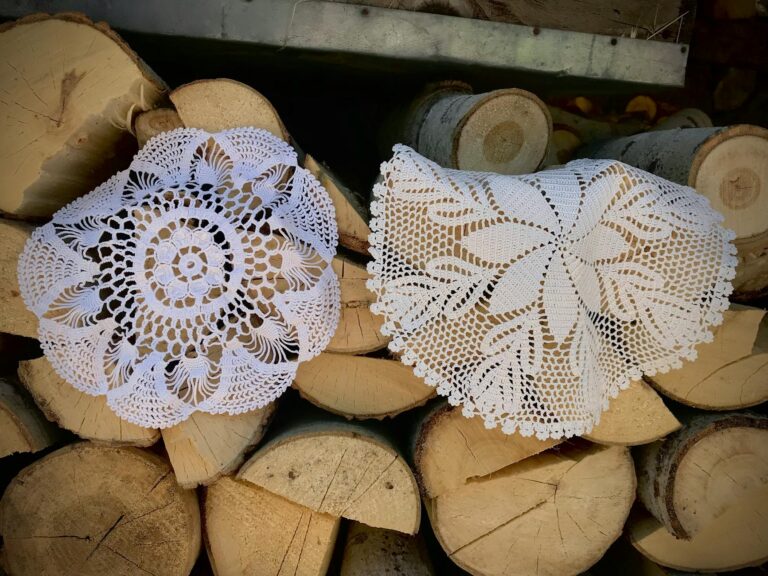
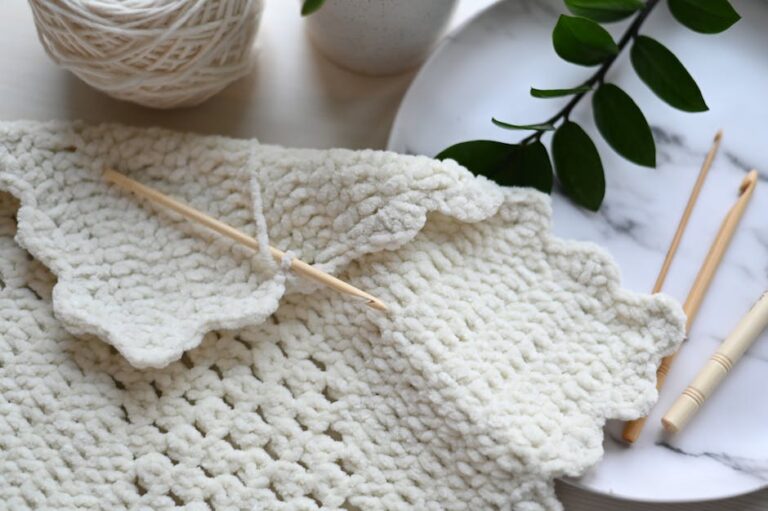
For a more elegant, traditional look, try a lacy doily-style design. These patterns use chains and double crochet clusters to create open, airy motifs. They pair beautifully with fine china and formal table settings.
Lacy designs do require blocking to lie flat, so plan for an extra fifteen minutes of steaming or wet-blocking once your piece is complete. The result is a delicate, heirloom-quality placemat that guests will admire.
3. Oval and Round Placemats
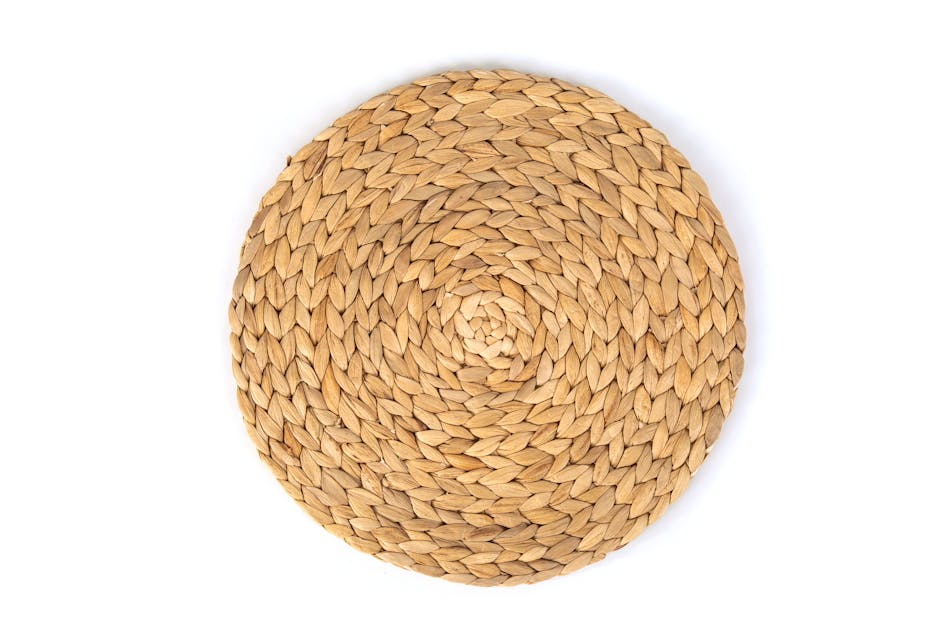
Round placemats are a fresh alternative to the standard rectangle. They are worked in the round from the center outward, and you control the size simply by adding more rounds. An oval crochet placemat pattern is similar but begins with a longer starting chain to form an elongated center.
Rounds and ovals work especially well under circular dinner plates. Choose a solid color with a contrasting border for a modern, restaurant-quality look.
4. Striped Placemats
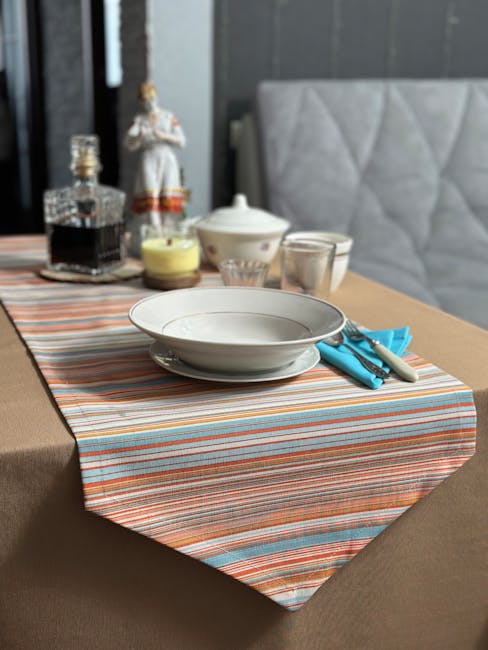
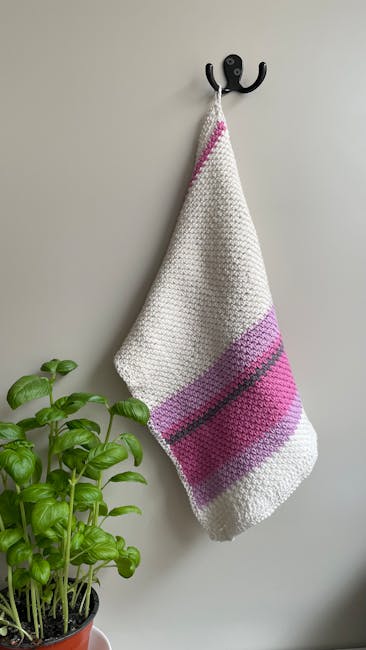
Stripes are one of the easiest ways to add visual interest. Alternate two or three colors every few rows for a bold, graphic effect. A striped crochet placemat pattern is ideal for beginners because the stitch repeat stays the same while only the color changes.
You can do even stripes, wide bands, or a gradient fade by switching shades within the same color family. Carry your yarn up the side to reduce the number of ends you need to weave in.
5. Filet Crochet Placemats
Filet crochet uses a grid of open and filled mesh squares to create pictures and geometric designs. While it looks intricate, the technique only involves chain stitches and double crochet, making it more approachable than it appears.
A filet crochet placemat pattern can feature simple geometric borders, floral motifs, or even monogrammed initials. It is a wonderful choice for personalized wedding or housewarming gifts.
6. Textured Stitch Placemats
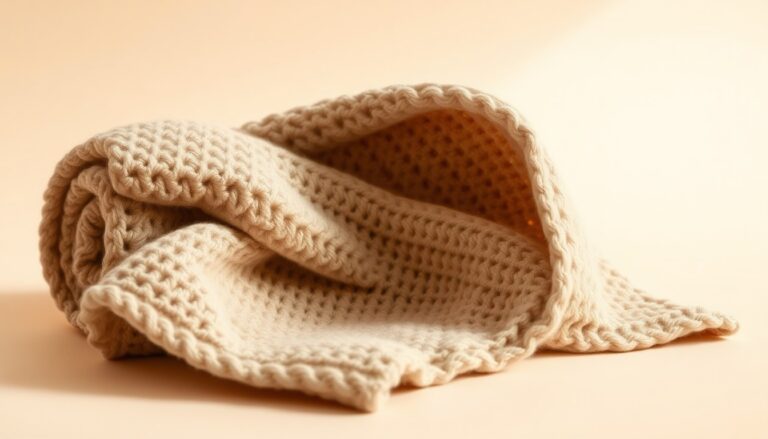
If you love the look of knit fabric, try a textured stitch pattern like the basket weave, waffle stitch, or bobble stitch. These create a thick, cushioned surface that feels substantial under a plate and adds warmth to your table.
Textured patterns are forgiving of minor tension fluctuations, which makes them a great choice when you are still building consistent gauge. Learn more about controlling your tension in our how to fix crochet tension article.
7. Chevron and Ripple Placemats
Chevron and ripple patterns create a wave-like effect that is eye-catching and fun to make. The peaks and valleys of the ripple add movement to an otherwise flat piece. Use two to four colors for maximum impact.
Chevron designs do require careful stitch counting at the increases and decreases. Place a stitch marker at each peak and valley to keep your ripple even from row to row.
Best Yarn for Crochet Placemats
Choosing the right yarn is arguably the most important decision for any crochet placemat pattern. Placemats take a lot of wear: plates slide across them, sauces drip on them, and they get washed frequently.
Cotton yarn is the gold standard. It is durable, absorbent, machine washable, and does not stretch out of shape over time. A worsted-weight cotton like Lily Sugar’n Cream or Bernat Handicrafter works beautifully. If you want a softer hand, try a cotton-acrylic blend.
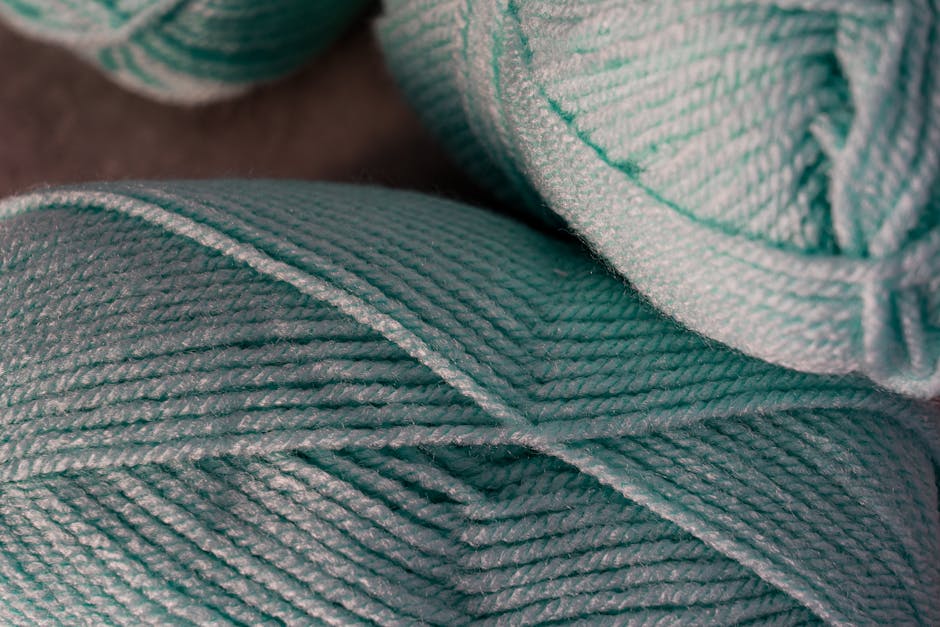
Avoid pure wool or delicate fibers for everyday placemats. They pill, felt, and cannot handle frequent washing. For more guidance on choosing materials, visit the Craft Yarn Council website, which offers excellent fiber education resources.
You can also explore our best yarn for beginner crochet recommendations, many of which work perfectly for home decor projects like placemats.
Standard Placemat Sizing
The typical placemat measures approximately 12 inches by 18 inches (30 cm by 46 cm). This size fits comfortably under a standard dinner plate with a few inches of border on every side.
That said, sizing is flexible. A round placemat might measure 14 to 16 inches in diameter. An oversized rectangular mat can reach 14 by 20 inches for a more dramatic, modern look.
To customize the size of your crochet placemat pattern, simply adjust the number of foundation chains or the number of pattern repeats. Always crochet a gauge swatch first so you know exactly how many stitches equal one inch in your chosen yarn and hook combination.
Easy Crochet Placemat Pattern for Beginners
Here is a simple pattern to get you started. It uses only single crochet and double crochet, so it is perfect if you have mastered the basic stitches.
Materials:
- Worsted-weight cotton yarn, approximately 200 yards
- 5.0mm (H/8) crochet hook
- Scissors and yarn needle
Gauge: 14 SC stitches = 4 inches (10 cm).
Instructions:
- Chain 54 (plus 3 for turning). This gives you roughly 13 inches wide.
- Row 1: DC in the 4th chain from hook and in each chain across. Turn. (52 DC)
- Row 2: Chain 3 (counts as first DC). DC in each stitch across. Turn.
- Repeat Row 2 until the piece measures approximately 18 inches long.
- Do not fasten off. Work one round of SC around the entire perimeter, placing 3 SC in each corner. Join with a slip stitch.
- Fasten off and weave in ends.
- Block the placemat flat and allow it to dry completely before using.
This straightforward crochet placemat pattern produces a dense, sturdy fabric that protects your table and looks clean and modern. Once you are comfortable, swap the DC rows for any stitch pattern you like: half double crochet, basket weave, or even a filet grid.
How to Make a Matching Set
A single placemat looks nice, but a complete set transforms your entire table. Here are a few tips for creating cohesive sets:
- Count your rows. Write down the exact number of rows in your first placemat and replicate it for every subsequent piece.
- Use the same yarn dye lot. Buy enough skeins from the same batch to avoid subtle color differences between mats.
- Block all pieces identically. Pin every placemat to the same dimensions and let them dry together so they match perfectly.
Consider adding matching accessories to your collection. Our crochet coaster patterns and crochet table runner patterns pair beautifully with placemats for a fully coordinated table.
Borders and Finishing Touches
A well-chosen border elevates any crochet placemat pattern from homemade to handcrafted. Here are a few border ideas to try:
- Crab stitch (reverse single crochet): Creates a tight, corded edge that resists fraying.
- Shell border: Work (DC, ch 1, DC) groups evenly spaced around the perimeter for a scalloped finish.
- Two-round contrasting border: One round of SC followed by one round of a contrasting color adds a pop of visual interest.
- Fringe: Cut 4-inch lengths of yarn, fold in half, and pull the loop through the edge stitches with your hook for a boho-chic fringe detail.
Remember to block your placemats after adding the border. Blocking sets the stitches, evens out the shape, and gives your finished piece a professional, polished look.
Seasonal Color Ideas for Your Crochet Placemat Pattern
One of the joys of making your own placemats is swapping them out with the seasons. Here are some color palette suggestions to inspire your next project:
- Spring: Soft pastels like lavender, mint, blush pink, and butter yellow.
- Summer: Bright, cheerful tones like coral, turquoise, sunshine yellow, and white.
- Fall: Rich earth tones like burnt orange, deep burgundy, mustard gold, and forest green.
- Winter: Cool, elegant shades like icy blue, silver grey, cream, and deep cranberry.
- Everyday neutral: Natural beige, charcoal grey, and ivory work in any season and match virtually any dishware.
For more pattern inspiration, browse the free patterns at Yarnspirations, which offers a wide library of seasonal home decor designs.
Care Instructions for Crochet Placemats
To keep your crochet placemat pattern creations looking their best for years, follow these care guidelines:
- Machine wash: Cotton placemats can go in the washing machine on a gentle cycle with cold water. Place them in a mesh laundry bag to prevent snagging.
- Drying: Lay flat to dry or tumble dry on low. Avoid high heat, which can shrink cotton fibers and distort the shape.
- Stain treatment: Treat food stains promptly with a mild dish soap or a baking soda paste. Avoid bleach, which can weaken cotton fibers over time.
- Storage: Store flat or rolled. Folding cotton placemats along the same crease repeatedly can create permanent lines.
- Re-blocking: If a placemat starts to curl or lose its shape after many washes, simply wet-block it again to restore the original dimensions.
Frequently Asked Questions
What is the best crochet placemat pattern for beginners?
A simple double crochet rectangle is the easiest crochet placemat pattern for beginners. It uses only chains and double crochet stitches, works up in a few hours, and produces a sturdy, functional placemat. Once you are comfortable with that foundation, you can explore lacy or textured designs.
How much yarn do I need for one crochet placemat?
Most placemats require 150 to 250 yards of worsted-weight cotton yarn, depending on the stitch pattern and finished size. A dense basketweave design will use slightly more yarn than an open lace pattern at the same dimensions.
Can I use acrylic yarn for a crochet placemat?
While acrylic yarn is affordable and easy to find, it is not ideal for placemats. Acrylic is less absorbent than cotton, tends to slide around on the table, and can melt if a hot dish is placed directly on it. Cotton or a cotton-blend yarn is always the better choice for table linens.
How do I keep my crochet placemat from curling?
Curling usually happens when your tension is too tight or the stitch pattern naturally pulls inward. To fix it, try blocking the finished piece, adding a border round of single crochet, or going up one hook size. You can learn more about tension issues in our crochet tension guide.
How long does it take to crochet one placemat?
Most crocheters can complete a standard 12 by 18 inch placemat in two to five hours, depending on the complexity of the stitch pattern and their experience level. A simple double crochet rectangle may take as little as two hours, while an intricate filet or lace design could take five or more hours.