Crochet Beanie: 6 Easy and Beautiful Patterns for Beginners
Crochet Beanie at a Glance
- Topic: crochet beanie
- Skill level: beginner
- Main goal: help the reader choose the right crochet beanie pattern for their skill level, understand sizing, and complete a beautiful beanie from start to finish
- Related topics: crochet hat, crochet stitches, magic ring, yarn choice, hook sizes, tension, increasing, working in the round
Quick Answer
A crochet beanie is a close-fitting, brimless hat made entirely with a crochet hook and yarn. Most beginner beanies are worked in the round from the top down, starting with a magic ring and using basic stitches like the half double crochet or double crochet. An average adult crochet beanie takes about 2 to 4 hours to complete and uses less than one skein of worsted weight yarn, making it one of the most affordable and satisfying projects for beginners.
Tip: if your crochet beanie feels too loose, try going down one hook size rather than adding more stitches — tighter gauge creates a warmer and better-fitting beanie.
At a Glance
- Skill level: Beginner
- Time needed: 2–4 hours for a basic adult beanie
- Best yarn: medium weight (#4 worsted) or bulky (#5) for a warmer beanie
- Hook size: 5mm (H/8) for worsted or 6mm (J/10) for bulky yarn
Common Mistakes → Quick Fixes
- Beanie too small: make the crown circle 7–8 inches across before stopping increases — this is the most common cause of tight beanies.
- Visible holes in the crown: use a magic ring instead of chaining and joining, and pull the starting tail tight.
- Slouchy look when you wanted fitted: work fewer even rounds before adding the brim — a fitted beanie should measure about 7.5 inches from crown to bottom edge.
Mini Glossary
magic ring, single crochet (SC), half double crochet (HDC), double crochet (DC), slip stitch (sl st), chain (ch), increasing, working in the round, stitch marker, tension, gauge swatch, fasten off, brim, crown.
A crochet beanie is one of the most popular and practical projects a beginner can tackle. Unlike a regular crochet hat, a beanie is designed to sit close to the head with a snug fit and no brim, which makes it warmer, more streamlined, and perfect for everyday wear during cold weather. Whether you want to make a simple fitted beanie for yourself, a slouchy beanie for a friend, or a tiny beanie for a baby, learning how to make a crochet beanie opens up a world of creative possibilities. In this guide, we will cover everything from sizing and yarn selection to six gorgeous patterns you can start stitching today.
Crochet Beanie Sizing Chart: Get the Perfect Fit Every Time
One of the biggest advantages of making a crochet beanie over a standard hat is that beanies are meant to fit snugly, which means you have less room for error. However, getting the sizing right is still crucial — a beanie that is even one inch too small will give you a headache, and one that is too big will slide down over your eyes. Before you start any crochet beanie pattern, measure the head circumference of the person who will wear it, or use these standard measurements:
- Preemie: 9–10 inches circumference, 4 inches tall
- Baby (0–6 months): 12–13 inches circumference, 5 inches tall
- Baby (6–12 months): 14–16 inches circumference, 5.5 inches tall
- Toddler (1–3 years): 17–18 inches circumference, 6 inches tall
- Child (4–10 years): 19–20 inches circumference, 6.5 inches tall
- Teen: 20–21 inches circumference, 7 inches tall
- Adult Small: 21–22 inches circumference, 7.5 inches tall
- Adult Medium: 22–23 inches circumference, 7.5 inches tall
- Adult Large: 23–24 inches circumference, 8 inches tall
The crown diameter (the flat circle you make before you stop increasing) should measure about half of your total circumference minus one inch. For an average adult head of 22 inches, your crown should be about 7 to 7.5 inches across before you start working even rounds. This is the golden rule of crochet beanie sizing and it applies to almost every stitch pattern. Keeping a tape measure nearby while you work your crochet beanie will save you a lot of frustration and frogging later.
Best Yarn and Hooks for Your Crochet Beanie
Choosing the right yarn for your crochet beanie makes a huge difference in how the finished project looks, feels, and wears over time. If you are not sure where to start, our guide on the best yarn for beginner crochet covers the top options in detail. Here is a quick breakdown of the best yarn types for a crochet beanie:
Acrylic yarn is the most popular choice for a beginner crochet beanie because it is inexpensive, easy to find, and comes in virtually every color imaginable. It is also machine washable, which is a big plus for an accessory that gets a lot of daily wear. Wool yarn is warmer and more breathable, making it the best choice for winter beanies that need to stand up to freezing temperatures. A wool-blend yarn that combines wool with acrylic or nylon gives you the best of both worlds — warmth with durability. Cotton yarn is great for lightweight spring and fall beanies, but it does not stretch as much as wool or acrylic, so pay extra attention to your sizing.
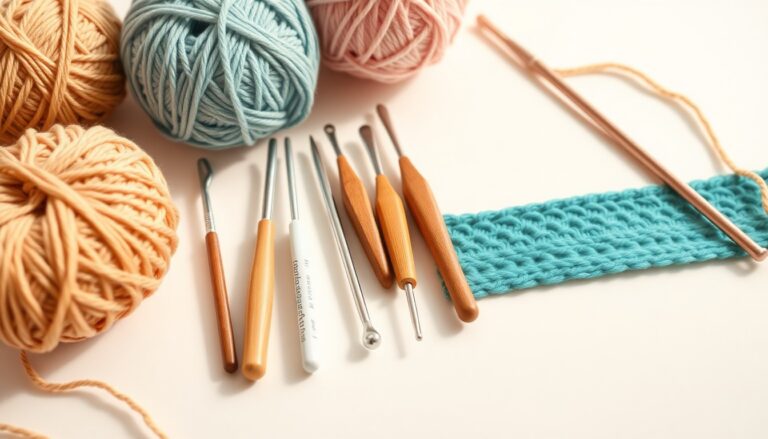
For your hook, a 5mm (H/8) is the standard for worsted weight yarn. Check our crochet hook size chart for the full range of options. If you are using bulky weight (#5) yarn for an extra-warm crochet beanie, step up to a 6mm (J/10) or 6.5mm (K/10.5) hook. Remember — if you want a tighter, warmer stitch, go down one hook size. If you want a looser, drapier fabric, go up one size.
6 Crochet Beanie Patterns You Will Love
Every crochet beanie starts with the same basic technique — a magic ring, increasing rounds for the crown, even rounds for the body, and a finished edge — but small changes in stitch choice and construction create completely different looks. Here are six stunning patterns for your crochet beanie, each with its own personality and style.
1. Classic Fitted Beanie
The classic fitted crochet beanie is the foundation pattern that every crocheter should master first. It uses half double crochet stitches worked in the round, starting from a magic ring at the crown. Increase by 8 stitches per round until your crown measures the correct diameter for your size, then work even rounds until the beanie reaches 7.5 inches tall. Add one round of single crochet as a brim, fasten off, and weave in your ends. This simple crochet beanie looks clean, modern, and works up in about 2 hours. It is the perfect pattern to practice your tension and stitch counting skills.
2. Slouchy Beanie
A slouchy crochet beanie is designed to sit loosely on the head with extra fabric pooling at the back, creating a relaxed and effortlessly stylish look. To make a slouchy beanie, follow the same crown construction as the fitted version but add 3 to 4 extra even rounds to the body before adding the brim. The extra length allows the beanie to drape beautifully at the back. Slouchy beanies also work best with a slightly looser tension — try going up one hook size from what the yarn label recommends. This pattern looks especially good in a soft, drapey yarn like wool or a wool-acrylic blend.
3. Ribbed Beanie
A ribbed crochet beanie is made by working stitches in the back loop only, which creates vertical ridges that look like a traditional knitted ribbing. You can make the entire beanie in back-loop-only single crochet for a very tight and stretchy fit, or use half double crochet for a slightly looser feel. The ribbed pattern creates natural elasticity, so the beanie hugs your head comfortably without feeling tight. Many crafters consider the ribbed crochet beanie to be the most professional-looking beginner pattern because it closely resembles high-end store-bought beanies.
4. Chunky Bulky Beanie
If you want a crochet beanie that works up fast and feels incredibly warm, try using bulky weight (#5) or super bulky (#6) yarn with a larger hook. A chunky beanie uses the same basic construction but each stitch is larger, which means you need fewer rounds to complete the project. Most chunky beanies can be finished in about 60 to 90 minutes, making them perfect for last-minute gifts. Use a simple half double crochet or even the double crochet stitch for the fastest results. The chunky crochet beanie has a bold and cozy aesthetic that is perfect for winter photos and holiday gift giving.
5. Gradient Color Block Beanie
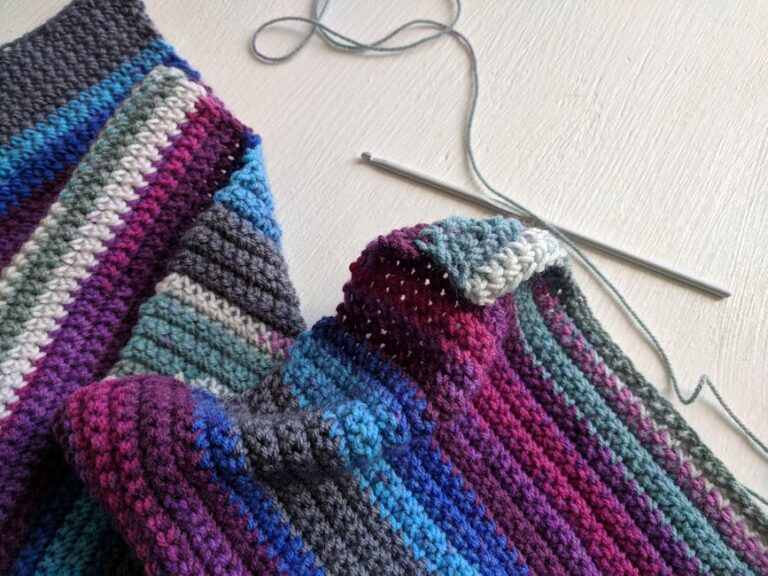
A color block crochet beanie uses two or more yarn colors to create bold horizontal stripes. Start with your first color and work the crown and about half of the body, then switch to your second color and complete the rest of the beanie. You can make clean stripes by changing colors at the end of any round, or create a gradual fade effect by alternating colors every few rounds. Self-striping or gradient yarns do the color work automatically, which makes this crochet beanie pattern effortless. Color block beanies are incredibly popular on social media and at craft markets because they look complex but are actually very simple to make.
6. Bobble Stitch Beanie
A bobble stitch crochet beanie features small raised circles (bobbles) worked into the fabric, creating a fun and textured design that stands out from plain beanies. Bobbles are made by working multiple double crochet stitches into one stitch and then closing them together. This pattern looks impressive but is surprisingly easy once you get the rhythm of making each bobble. A bobble stitch crochet beanie is warm because the textured fabric traps heat effectively, and it is a fantastic pattern for using up leftover yarn in coordinating colors. It also makes a wonderful baby shower gift when made in soft pastel shades.
3 Essential Tips for a Perfect Crochet Beanie
These three tips apply to every crochet beanie pattern and will dramatically improve your results from the very first try.
1. Use a stitch marker at the start of every round. When you work a crochet beanie in the round, it is very easy to lose your starting point and accidentally add or skip stitches. This causes the seam to spiral and the beanie to distort. A simple stitch marker placed in the first stitch of each round eliminates this problem entirely. Count your total stitches at the end of each round until the count stays consistent for at least three rounds in a row. This is the single most important habit for anyone learning to make a crochet beanie.
2. Block your finished beanie before wearing or gifting. Blocking your crochet beanie means misting it with water, shaping it over a bowl or form that matches your head size, and letting it air dry. This smooths out any uneven stitches, helps the beanie hold its shape, and gives the fabric a professional finish. According to the Craft Yarn Council, blocking is especially important for beanies because the round shape tends to curl or warp slightly during stitching.
3. Add a fold-over brim for extra warmth and polish. Working 4 to 6 extra rounds of single crochet at the bottom of your beanie and then folding it up creates a thick double-layered brim. This looks fantastic and keeps your forehead and ears extra warm. You can even make the brim in a contrasting color for a two-tone effect. A fold-over brim is the detail that separates a handmade-looking crochet beanie from one that looks like it came from a boutique.
Crochet Beanie vs Crochet Hat: What Is the Difference?
People often use the terms crochet beanie and crochet hat interchangeably, but there are some important differences worth understanding, especially if you are choosing patterns or writing content. A crochet hat is a broad category that includes any head covering made with crochet — beanies, berets, sun hats, bucket hats, and more. A crochet beanie is specifically a close-fitting, brimless hat that sits snugly on the head. Beanies are always worked from the top down in the round, while other hat styles may use different construction methods.
Another key difference is the fabric density. A crochet beanie is designed to be warm and form-fitting, so it typically uses tighter stitches and denser yarn weights. Other hat styles like sun hats or bucket hats use looser stitches and lighter yarns for breathability. When you are choosing a crochet beanie pattern, look for terms like “fitted,” “slouchy,” or “ribbed” — these are classic beanie styles. The Spruce Crafts beanie pattern collection is an excellent resource for finding your next project once you have mastered the basics.
Whether you make one crochet beanie or fifty, each new project will sharpen your skills and build your confidence. The beauty of a crochet beanie is that it is small enough to finish quickly but detailed enough to teach you important techniques like working in the round, increasing evenly, and creating a polished finished edge. Grab your hook, pick a pattern, and enjoy every stitch!