How to Count Crochet Rows: 7 Easy Essential Tips
How to Count Crochet Rows at a Glance
- Topic: how to count crochet rows
- Skill level: beginner
- Main goal: help the reader learn reliable methods to count and track their crochet rows accurately
- Related topics: crochet tension, crochet gauge, how to read a crochet pattern, how to fix crochet tension
Quick Answer
how to count crochet rows is one of the most fundamental skills every crocheter needs to develop. The simplest method is to count the horizontal V-shaped ridges (or horizontal bars for half double crochet) along the side edge of your work. At KnotToYarn.com, we recommend starting with a stitch marker on the first stitch of every row so you never lose your place.
Tip: Always count from the bottom up, running your finger along the edge, and place a removable stitch marker every 10 rows for fast progress tracking.
At a Glance
- Skill level: beginner
- Time needed: 5-10 minutes to learn
- Best yarn: smooth, light-colored worsted weight acrylic or cotton
- Hook size: 5 mm (H/8)
Common Mistakes to Avoid
- Miscounting the turning chain: The turning chain often looks like an extra row. Always count the turning chain as part of the current row, not a separate one.
- Losing your place mid-row: Use a stitch marker on the first stitch so you know exactly where each row begins.
- Forgetting the foundation chain row: Row 1 is your first row of stitches worked into the chain, not the chain itself. Include it when counting total rows.
Mini Glossary
Turning chain (TCh) — the chain stitches at the start of a new row that bring your hook up to the correct height; row gauge — the number of rows per inch or centimeter in your crochet fabric; stitch marker (SM) — a small clip or ring used to mark a specific stitch; single crochet (SC) — the shortest and most basic crochet stitch; half double crochet (HDC) — a stitch between single and double crochet in height.
Learning how to count crochet rows is one of those skills that separates frustrated beginners from confident crocheters. Whether you are working on a cozy blanket, a wearable scarf, or following a complex garment pattern, knowing exactly which row you are on prevents mistakes and keeps your project looking polished. In this guide, we will walk you through seven proven methods that make tracking your rows simple and reliable.
 KnotToYarn
Subscribe to KnotToYarn!
Get the best free crochet patterns, tutorials & tips delivered straight to your inbox. Join our growing community!
Method 1: Count the V-Stitch Ridges Along the Edge
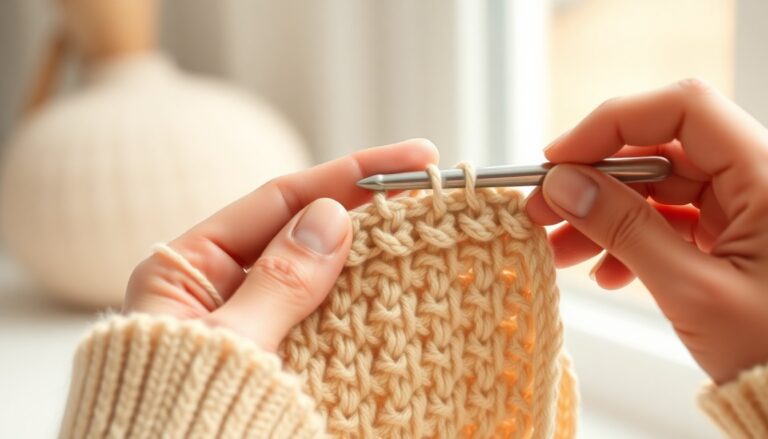
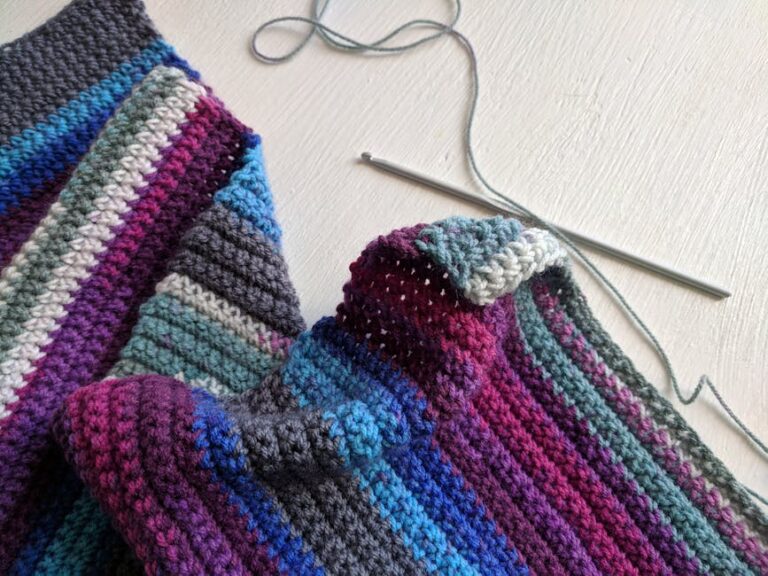
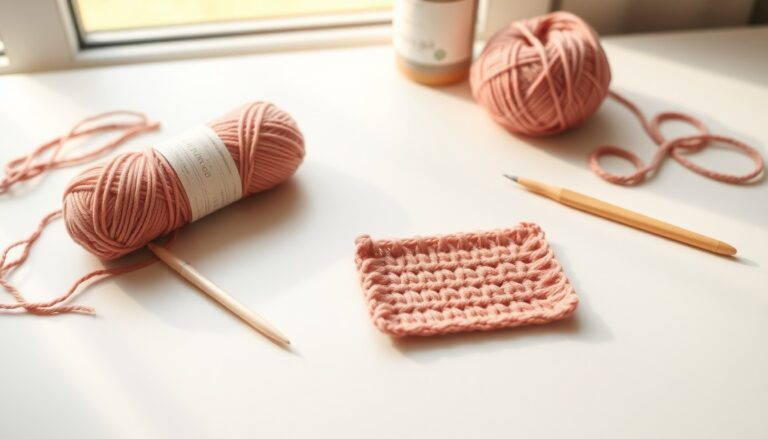
The most straightforward way to figure out how to count crochet rows in single crochet is to look at the side edge of your work. Each single crochet row creates a small horizontal V-shaped ridge along the left or right edge. Simply run your finger along these ridges and count them one by one from the bottom to the top. This is the classic approach to how to count crochet rows.
For half double crochet, the ridges look more like horizontal bars rather than sharp V shapes, but the counting principle remains the same. Each ridge or bar equals one completed row. This method works best with light-colored yarn and when your tension is relatively even throughout.

Method 2: Use a Stitch Marker on the First Stitch
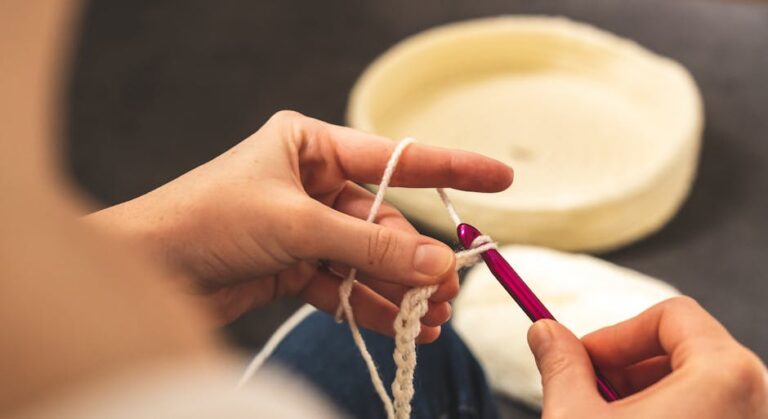
Placing a removable stitch marker in the first stitch of every row is the single most effective habit you can build as a beginner. When you finish a row, insert the marker into the first stitch you made. On the next row, work up to the marker, remove it, make your stitch, and immediately reinsert it into the new first stitch.
This method works regardless of your stitch type and is one of the most reliable ways to learn how to count crochet rows — single crochet, double crochet, or any other stitch. It is especially helpful when you are working on projects where the side edges are not easily readable, such as fuzzy yarn or highly textured stitch patterns like the moss stitch.
Method 3: Run a Contrasting Yarn Through the Edge
If you are working on a long project like an afghan or blanket, thread a thin contrasting yarn through every tenth row along the side edge. This technique is sometimes called a “lifeline” or “progress keeper.” Every time you complete ten rows, weave the contrasting yarn through a few stitches on the edge and leave the tails hanging out.
When you need to check your progress and confirm how to count crochet rows efficiently, simply count the contrasting markers and multiply by ten, then add any additional rows above the last marker. This method is a game-changer for large projects and is one of the smartest strategies for how to count crochet rows that take weeks or months to complete because you never have to count from the very beginning.
Method 4: Use a Digital Row Counter
Digital row counters are inexpensive tools that you click after every row. You can find them as small handheld clickers, phone apps, or even wearable ring counters. The advantage of a digital counter is that you never have to visually inspect your work — you simply click and trust the number.
When deciding how to count crochet rows, using a row counter is helpful. The key to using a row counter successfully is developing the habit of clicking it immediately after completing the last stitch of every row. Place the counter next to your yarn or hook so it is always within reach. If you get distracted and forget to click, you can always cross-reference with the V-ridge method described above to verify your count.

Method 5: Count the Horizontal Loops on the Front
For double crochet and taller stitches, you can also count rows by looking at the horizontal loops visible on the front of your work. Each row of double crochet leaves a visible horizontal loop near the top of the stitch. If you look closely at the front of your fabric, you can trace these loops from bottom to top, which is another effective way to approach how to count crochet rows and count them just like you would count ridges on the edge.
This method works best with smooth, light-colored yarn and a relaxed tension. If your stitches are too tight, the loops may be hard to distinguish. This is one reason why learning proper tension early is so valuable — it makes techniques like counting rows and reading your stitches significantly easier.
Method 6: Track Rows with a Paper Tally
Sometimes the simplest method is the best. Keep a notepad or index card next to your project and make a tally mark after every row. Group your tallies in sets of five for fast counting. This method costs nothing, requires no special tools, and is one of the most accessible approaches to how to count crochet rows, and is completely foolproof as long as you remember to mark after every row.
Many crocheters combine this with a project planner or spreadsheet where they record their row count, date, and any notes about pattern changes. If you are following a written pattern, you can check off each row as you complete it directly on the printed pattern.
Method 7: Read Your Stitches as You Go
The most advanced and ultimately the most useful skill is learning to read your crochet stitches. When you can identify what a completed row looks like versus a row in progress, counting becomes second nature. Practice by working a small swatch of ten rows in single crochet, then examining each row closely until you can see the difference between them.
According to the Craft Yarn Council, understanding stitch anatomy is a foundational skill that supports everything from pattern reading to gauge measurement. Once you understand how to count crochet rows by reading your stitches, you will find that you rarely need external tools to track your rows because the information is right there in your fabric.
Why Counting Rows Matters for Your Projects
Accurate row counting directly affects the quality of your finished projects. If you are making a wearable like a sweater, adding or missing even a few rows can change the fit dramatically. For home decor items like blankets and pillows, uneven row counts lead to pieces that do not lie flat or match your intended dimensions.
Understanding how to count crochet rows also connects to your gauge, which is the foundation of well-fitting crochet garments. If your row gauge says you should have 12 rows per 4 inches but your actual work has 14 rows, your finished piece will be smaller than expected. Knowing how to count rows helps you verify your gauge is correct before you invest hours into a large project.
KnotToYarn
Subscribe to KnotToYarn!
Get the best free crochet patterns, tutorials & tips delivered straight to your inbox. Join our growing community!
Once you have practiced how to count crochet rows across different stitch types, you will find that projects become much more enjoyable. For more beginner-friendly tips and techniques, explore the full library of free guides at KnotToYarn.com. You can also find community inspiration and pattern variations on Ravelry.
Frequently Asked Questions
How do you count rows in single crochet?
Count the V-shaped horizontal ridges along the side edge of your work from bottom to top. Each ridge represents one completed row of single crochet. This is the fastest visual method for how to count crochet rows in single crochet. Run your finger slowly along the edge for accuracy.
Does the turning chain count as a row?
No, the turning chain is part of the current row, not a separate row itself. When counting rows, count completed rows of stitches, not the chains used to transition between rows.
How do you count rows in double crochet?
For double crochet, you can count the horizontal bars along the side edge or the horizontal loops visible on the front of the work. Both methods give you an accurate row count. The bars along the edge are usually easier to see.
What is the easiest way to keep track of crochet rows?
The easiest method for beginners is placing a stitch marker in the first stitch of every row. Combined with a simple paper tally or digital counter, this creates a reliable two-system approach that prevents miscounts.
How do I know if I lost a row while crocheting?
Compare the number of rows on both sides of your work by counting the edge ridges. If the counts match, you likely have not lost a row. This cross-checking approach is one of the most reliable ways to confirm how to count crochet rows. If they differ, count from a known reference point like a lifeline or contrasting yarn marker.
How to Count Crochet Rows: Final Tips
Mastering how to count crochet rows takes practice, but it is one of the most valuable skills you can develop as a beginner crocheter. Start with the V-ridge method for simple projects, then add stitch markers and digital counters as your projects grow more complex. The more you practice reading your stitches, the more intuitive row counting becomes.
Remember that every crocheter — even experienced ones — miscounts occasionally. The important thing is to catch mistakes early by checking your row count regularly rather than waiting until the end of a project. Build the habit of checking your count every few rows, and you will save yourself hours of frogging and frustration.